


More news on this day
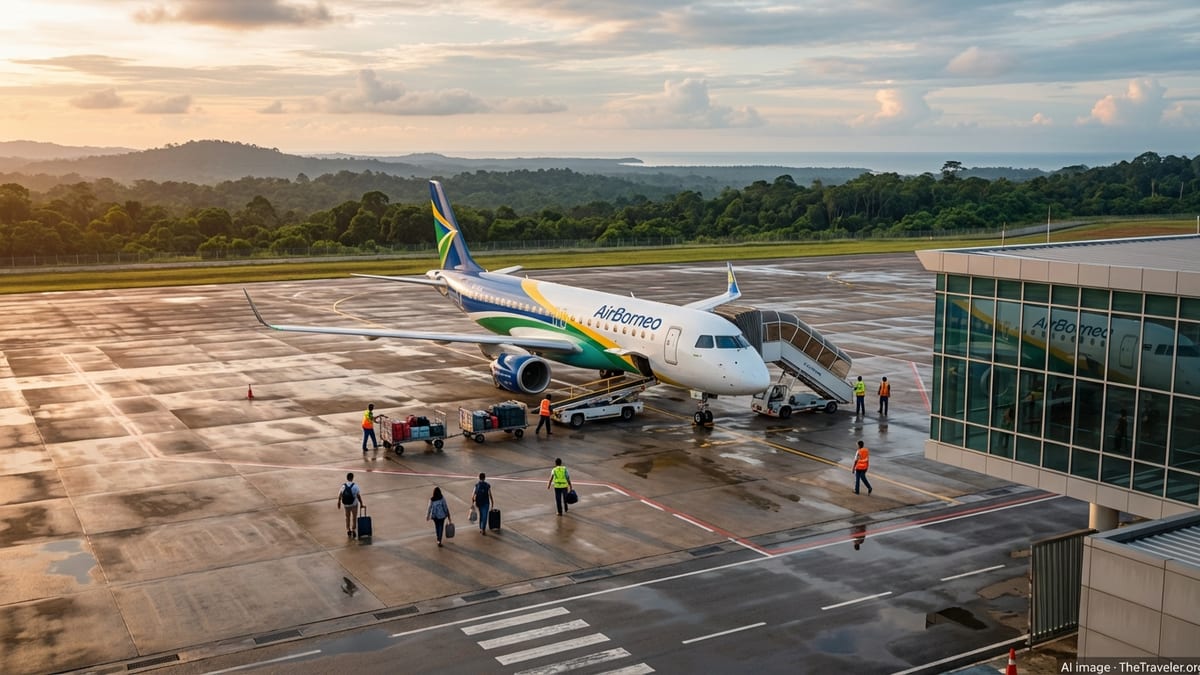
AirBorneo, the Sarawak-owned carrier that took over MASwings operations in January, is facing heightened regulatory scrutiny after a wave of delays and cancellations disrupted travel across Sabah and Sarawak since early June.
Get the latest news straight to your inbox!
Regulator steps up oversight after spate of disruptions
Publicly available information indicates that the Civil Aviation Authority of Malaysia, which now combines technical and consumer oversight functions, has intensified its monitoring of AirBorneo’s performance as the airline grapples with repeated schedule disruptions. The closer scrutiny follows several days of rolling delays and cancellations that began on 5 June, affecting rural and intercity routes across East Malaysia.
Recent consumer reports and regulatory documents show that the restructured authority has been collecting punctuality, cancellation and complaint data from domestic carriers as part of a broader push to tighten standards in the wake of its merger with the former economic regulator. Within this framework, AirBorneo’s on-time performance and service reliability are understood to be under closer watch, alongside how it handles rebooking, refunds and passenger care.
The regulator’s expanded remit, which includes both safety and economic oversight, allows it to compare disruption patterns across airlines and intervene when service issues risk undermining connectivity in regions that rely heavily on air travel. East Malaysia’s dependency on air links for access to healthcare, education and government services has amplified concern over AirBorneo’s recent record.
While no formal sanctions have been reported, observers note that being on the regulator’s radar for repeated disruption can carry reputational risk for a young airline still building trust with travellers and local communities.
Technical issues and fleet constraints at the heart of delays
According to published coverage in Malaysian media, AirBorneo has attributed the ongoing disruptions to a combination of unscheduled technical rectification on several aircraft, simultaneous scheduled maintenance, and crew duty limitations. The confluence of these factors has reduced available capacity and created an operational bottleneck, particularly on short-haul sectors within Sabah and Sarawak.
Reports from regional outlets describe flights across the two states experiencing lengthy delays or last-minute cancellations as the carrier works with a relatively small turboprop fleet inherited from MASwings. When multiple aircraft are grounded at once, even routine maintenance can cascade into widespread timetable changes and tight aircraft rotations that leave little room to absorb further technical glitches.
Industry analysis of similar regional operators suggests that such disruption risks are magnified in airlines with limited spare aircraft and dense schedules serving many short sectors each day. Any unplanned downtime can quickly ripple through the network, especially on routes where alternative transport options are limited or non-existent.
AirBorneo has said through public statements that its teams are working to minimise disruption and re-accommodate affected passengers on the earliest available flights, but has also warned that schedule changes may continue while maintenance and technical checks are completed.
Travellers across Sabah and Sarawak feel the impact
News reports and social media posts over the past several days highlight accounts of travellers facing multi-hour delays, missed onward connections and overnight changes to itineraries. Routes linking Kuching, Kota Kinabalu and secondary towns across Borneo appear to be particularly affected, underscoring vulnerabilities in the region’s transport network.
Passenger advocates and local commentators have pointed out that for many communities in Sarawak and Sabah, especially those in rural and interior areas, air travel is less a discretionary choice and more a basic utility. Disrupted flights can delay urgent medical visits, examinations, business dealings and family events, with limited fallback options by road or river in some regions.
Public frustration has been compounded by perceptions of rising fares on certain domestic routes, with some travellers questioning the value they receive amid ongoing reliability problems. Discussions in local media and online forums indicate that expectations were high when the state-backed airline took over from MASwings, with hopes that connectivity and service would improve for East Malaysian residents.
The current wave of disruption has therefore become a broader test of AirBorneo’s ability to deliver on those expectations while operating under closer regulatory observation and intense public scrutiny.
A young airline under pressure to stabilise operations
AirBorneo formally assumed control of MASwings’ network at the start of 2026, marking a significant shift in Malaysia’s aviation landscape as Sarawak took ownership of the regional carrier serving much of Borneo. In its first months, the airline focused on rebranding, fleet transition and integrating staff and systems while maintaining essential rural air services.
Analysts note that such transitions are often challenging, with new management teams needing to balance commercial targets, political expectations and operational realities. The latest disruptions have arrived at a sensitive moment, as AirBorneo seeks to prove it can be both financially sustainable and dependable for the communities it serves.
Under the combined aviation authority’s consumer-protection rules, carriers are expected to provide clear information on delays, offer rebooking or refunds where appropriate and ensure basic welfare for stranded passengers. How consistently AirBorneo applies these standards during the current disruption period is likely to factor into the regulator’s ongoing assessment of its performance.
A sustained pattern of delays and cancellations could also affect the airline’s longer-term plans, including potential expansion into jet services and new regional routes. Reliability during its formative years may shape both traveller loyalty and the degree of regulatory oversight it faces going forward.
What passengers should know if flying AirBorneo now
Travel advisories issued by Malaysian authorities in recent months urge passengers to monitor flight status closely during periods of heightened operational disruption, and this guidance is especially relevant for those booked on AirBorneo in the coming days. The airline has been encouraging travellers to check for updates before leaving for the airport and to allow extra time for check-in and transfers.
Consumer information from Malaysia’s aviation regulator outlines general expectations that airlines provide timely notifications of schedule changes, options for rerouting or refunds, and appropriate assistance in cases of extended delays or overnight disruption. Passengers affected by AirBorneo’s recent problems are making use of these guidelines to understand what they can reasonably request.
For travellers planning itineraries that connect AirBorneo services with other domestic or international flights, industry observers recommend building in generous buffers or considering more flexible ticket types to reduce the risk of missed onward journeys. Those with time-sensitive travel, such as medical appointments or major events, may wish to review contingency plans given the airline’s ongoing maintenance programme.
With AirBorneo now under closer watch by Malaysia’s unified aviation regulator, developments over the coming weeks will be closely followed by both policymakers and passengers. The carrier’s ability to stabilise operations and restore confidence will be critical not only for its reputation, but for the broader goal of strengthening connectivity across Borneo.