


More news on this day
European defense spending is climbing at its fastest pace in decades, pushing Airbus and a cohort of more specialized defense manufacturers into sharper focus for investors tracking the region’s rearmament cycle.
Get the latest news straight to your inbox!
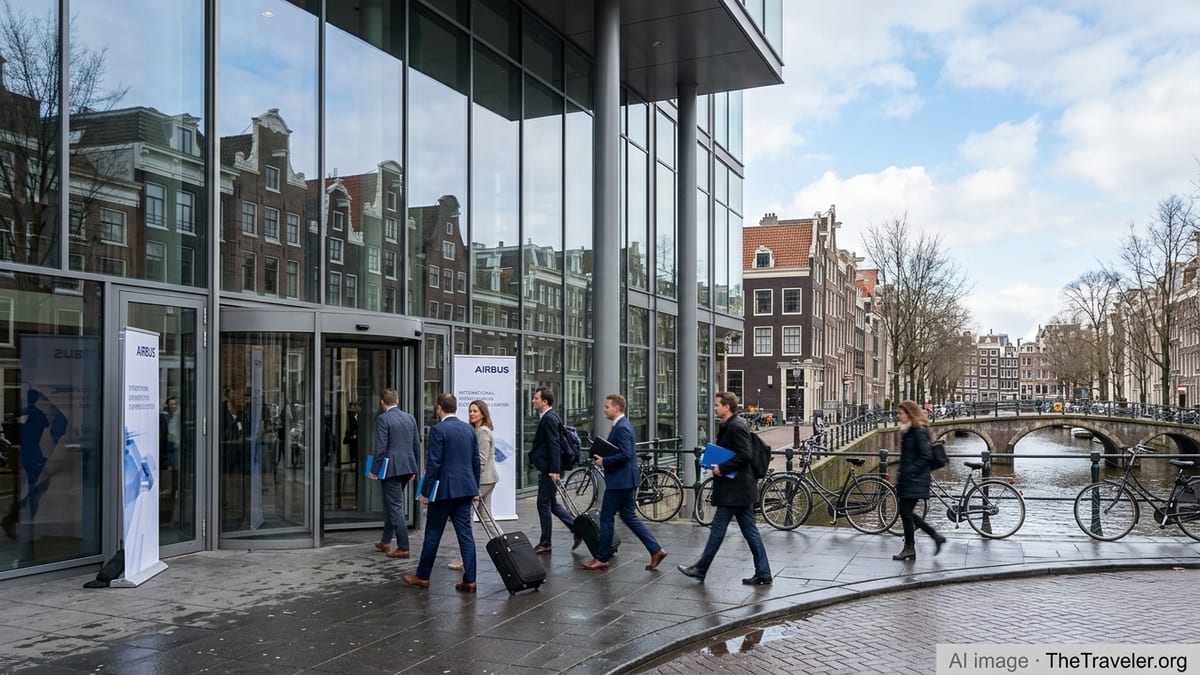
Airbus Sits at the Crossroads of Travel and Defense
Airbus remains best known to travelers for its commercial jets, yet the group’s growing defense and space activities are increasingly central to its investment story. Public filings for 2024 show that the Defence and Space division generated more than 12 billion euros in revenue, accounting for a significant share of group sales even as commercial airliner deliveries dominated headlines. Industry analysis notes that the segment’s order intake has risen, supported by demand for transport aircraft, secure communications, and surveillance capabilities linked to Europe’s evolving security needs.
At the same time, Airbus continues to ramp up production of its A320neo and A350 families, underscoring how aviation demand and defense spending now reinforce one another. As airlines rebuild capacity and open new routes, especially on long haul travel corridors, Airbus benefits from a resilient civil backlog that complements longer dated defense contracts. Publicly available guidance indicates the group is targeting further increases in jet deliveries in the coming years, even as it restructures its space portfolio and expands into cybersecurity.
For travelers, the company’s dual role matters because sustained defense cash flows can support investment in cleaner, more efficient aircraft and in new cabin products that shape the flying experience. For investors, it positions Airbus as a hybrid name that straddles the global tourism recovery and the structural rise in European defense budgets.
European Rearmament Creates a Structural Tailwind
Across the continent, European governments are committing to higher defense outlays after years of underinvestment. Research compiled by policy institutes and financial commentators shows that European Union defense spending has risen by several dozen percentage points since 2022, with multiple NATO members moving toward or above the alliance’s 2 percent of GDP benchmark. This shift has translated into record order books at major contractors and a visible, multi year procurement pipeline for ground systems, air defense, and munitions.
Analysts describe the current environment as a rearmament cycle rather than a short term spending spike. Large ammunition packages, long duration service contracts, and collaborative projects in cyber, space, and missile defense give companies a degree of visibility that is unusual in many industrial sectors. These dynamics are particularly supportive of firms with niche technologies or production capacity that can be scaled, setting the stage for what equity analysts often call “quiet compounders” in the defense space.
Alongside headline names, this ecosystem now includes specialized radar houses, electronic warfare experts, and suppliers of secure communications used by both armed forces and critical infrastructure. Their fortunes are closely tied to policy decisions in European capitals, but also to the broader trend of reshoring and strengthening domestic defense supply chains.
Two Quiet Compounders in the European Defense Universe
Within this shifting landscape, a pair of mid sized European defense focused groups has attracted attention for steadily compounding earnings without the profile of larger primes. Public analysis often highlights Germany’s Rheinmetall and Sweden’s Saab as emblematic of this group. Both companies have long histories, but the past several years of increased demand for armored vehicles, air defense systems, and advanced sensors have transformed their growth trajectories.
Rheinmetall, listed in Frankfurt, is now a core supplier of large caliber ammunition, artillery systems, and armored vehicles to several European armed forces. Recent investor presentations and annual reports point to a backlog that has expanded sharply since 2022, supported by multi year framework agreements and stockpile replenishment programs. Revenue and profit growth have followed, and market data shows that valuation multiples have moved to a premium versus some global peers, reflecting expectations for continued expansion.
Saab, traded in Stockholm, presents a slightly different profile as a high technology platform and systems provider. The company’s portfolio spans fighter aircraft partnerships, airborne early warning systems, and a range of command and control and radar solutions that are integral to integrated air and missile defense networks. Sector research notes that Saab’s backlog to sales ratio has climbed to several times annual revenue, indicating years of work already contracted and underscoring its status as a quiet compounder of orders and earnings in the Nordic and wider European security environment.
How Airbus Connects to the Defense Compounders
While Airbus, Rheinmetall, and Saab occupy different niches, their trajectories are increasingly intertwined. Airbus provides transport aircraft, tankers, and secure satellite and communications infrastructure that underpin European force mobility and resilience. Rheinmetall supplies the munitions, armored vehicles, and air defense systems that many of those aircraft support and transport. Saab contributes the radar, sensors, and command networks that allow air, land, and sea assets to operate as a coherent whole.
Joint programs and cross border industrial partnerships have become hallmarks of this new phase of European rearmament. Airbus Defence and Space participates in space based communication initiatives and secure connectivity projects that rely on a broader consortium of European primes and subsuppliers. Rheinmetall and Saab, for their part, engage in multinational projects on ground systems, missiles, and surveillance platforms. Publicly available material on recent contracts suggests that these collaborations are expanding, with long lead times and multi national funding structures that favor companies able to execute consistently.
For international travelers, the implications are indirect but important. The same policy drivers that sustain demand for Airbus jets on busy transatlantic and intra European routes also support the security architecture that keeps those air corridors open. The financial health of Airbus and of its quieter defense peers therefore influences both the reliability of future fleets and the resilience of the infrastructure that supports global tourism.
Investor Considerations in a Politically Sensitive Sector
Despite robust fundamentals, investing in European defense compounders carries distinct risks and considerations. Public commentary emphasizes that political decisions, export controls, and shifting coalition priorities can materially affect contract timing and profitability. Environmental, social, and governance focused investors may also exclude pure play defense companies, potentially influencing valuations and trading liquidity even as earnings rise.
Airbus, with its strong civil aviation franchise and increasingly visible defense and space arm, sits somewhat between pure defense names and broader industrials. Multi year travel demand forecasts and airline fleet renewal cycles provide one pillar of support, while rising European defense budgets provide another. By contrast, companies such as Rheinmetall and Saab are more directly exposed to defense budget cycles and procurement decisions, which can amplify both upside in times of heightened tension and downside if policy priorities shift.
For now, publicly available data on order books, contract wins, and budget plans suggests that Europe’s defense build up remains in an early to mid phase rather than approaching a peak. Against that backdrop, Airbus and a select group of quiet compounders in European defense stocks continue to play an increasingly prominent role in portfolios seeking exposure to both the resilience of global travel and the long term reshaping of Europe’s security architecture.