


More news on this day
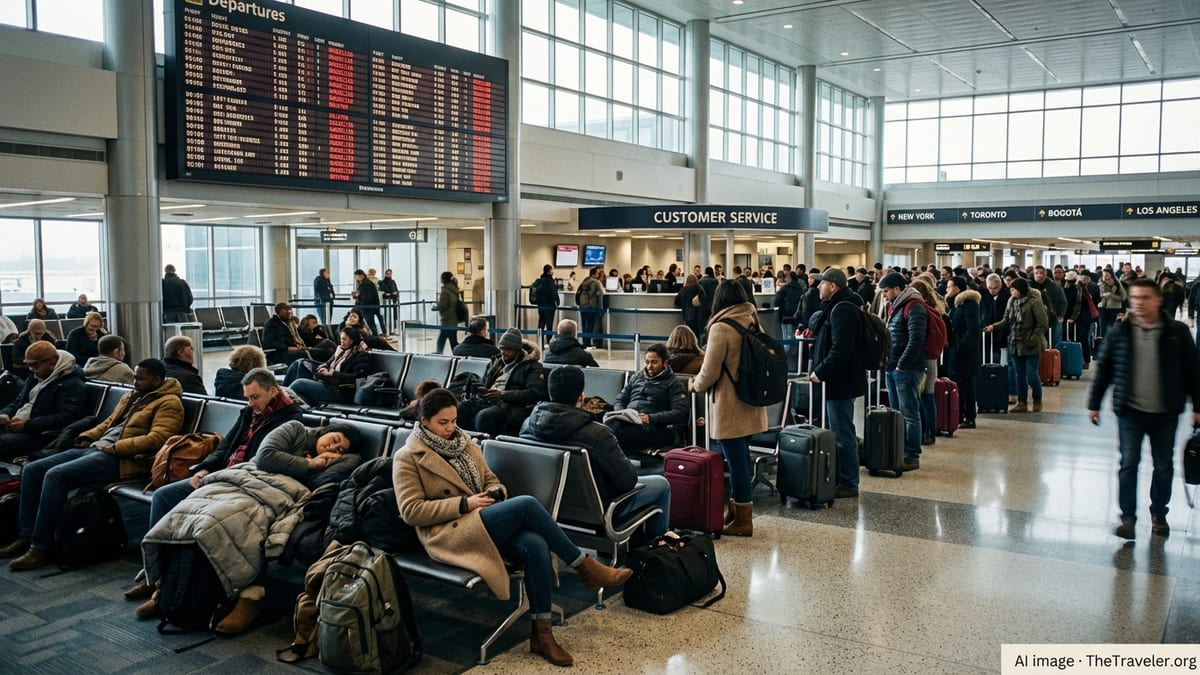
Thousands of air travelers across the United States faced another punishing day of disruption on June 10, as tracking data showed at least 91 cancellations and 3,895 delays affecting Delta, Southwest, Alaska, SkyWest, United, Republic and other carriers from Chicago and New York to San Diego, Houston, Charlotte, Anchorage and Orlando.
Get the latest news straight to your inbox!
Ripple Effects Across Major U.S. Airports
Publicly available flight-tracking dashboards for Monday show a broad, systemwide slowdown rather than a single localized problem, with delays stacking up at some of the country’s busiest hubs. Chicago and New York area airports again featured prominently, alongside heavy disruption in Houston, Charlotte and Orlando, suggesting both weather and congestion played a role in pushing schedules off track.
Reports indicate that Chicago’s dual-role as both a Midwest connector and a transcontinental gateway left airlines vulnerable when early bottlenecks emerged. Once the first wave of departures slipped behind schedule, later turns for the same aircraft and crews struggled to recover, leading to missed connections and rolling gate changes through the afternoon and evening.
New York’s dense airspace, which includes John F. Kennedy, LaGuardia and Newark, also experienced mounting delays as traffic volume increased. Even relatively short ground holds or spacing requirements in the busy Northeast corridor can quickly cascade into hours-long waits for passengers when aircraft miss their planned slots and must be re-sequenced.
Further south, Houston and Charlotte reported clusters of delayed departures and arrivals, complicating travel for passengers seeking to connect to smaller regional cities. For many communities that depend on just one or two daily flights, a delayed inbound aircraft in a hub city can erase same-day travel options entirely.
Carriers Under Pressure at the Start of Peak Season
According to published coverage and operational data, the disruption cut across a wide range of carriers, from major network airlines like Delta and United to large low-cost operators such as Southwest and Alaska, as well as regional specialists SkyWest and Republic that feed passengers into larger carrier networks.
Delta, Southwest and United have each been handling elevated summer schedules, with more flights tightly banked around morning and evening peaks. Industry reports note that while these banks help maximize connections, they also reduce margin for error: when storms, crew constraints or ground congestion appear, multiple departures are affected at once.
Regional operators including SkyWest and Republic play an outsized role in this dynamic. These carriers typically operate on thinner buffers of spare aircraft and crews, which means that a single mechanical issue or late-arriving inbound can ripple through multiple small-city routes within hours. Publicly available on-time performance data from prior years already shows how quickly delays compound for such operators once the system is stressed.
Alaska Airlines and other carriers serving long-haul routes to and from Anchorage faced their own challenges as disruptions in the Lower 48 knocked connecting itineraries off balance. With many Anchorage flights timed to meet banks of arrivals from the U.S. mainland, late departures in Chicago, Seattle or Denver can easily strand travelers overnight in either direction.
Weather, Congestion and Tight Schedules Combine
While no single cause has been identified for Monday’s disruption, the pattern resembles other recent episodes where a mix of unsettled weather, crowded airspace and limited slack in airline schedules led to widespread knock-on effects. Early summer often brings convective storms to the Midwest and South, prompting ground stops or reroutes that occupy precious time and fuel.
Aviation consumer reports describe how such events quickly move from isolated delays to systemic problems. When storms or low visibility force aircraft to fly longer routes or hold in the air, they land behind schedule and depart later for their next legs. Ground crews and gate staff must then juggle aircraft out of order, leading to additional waiting on the tarmac even after weather has improved.
In recent weeks, major carriers have also been operating close to pre-pandemic capacity, supported by tight staffing plans. Public data on earlier disruption days this spring showed that when severe weather coincided with already-busy schedules, the lack of reserve aircraft and crews made it difficult to recover before the next travel peak began.
Travel analysts note that the latest round of delays is arriving just as schools let out in many states, pushing family and leisure travel higher. Full flights mean there are fewer open seats to re-accommodate passengers when cancellations occur, so even a relatively modest number of canceled departures can leave travelers stranded for extended periods.
Travelers Face Missed Connections and Limited Alternatives
For passengers, Monday’s operational strain translated into missed connections, unplanned overnight stays and hours spent in lines or on airline apps rebooking disrupted itineraries. Travelers connecting through Chicago and New York reported tight connection windows evaporating as inbound flights waited for departing slots, forcing last-minute changes to onward routes.
At vacation-heavy airports such as Orlando and San Diego, delays rippled through popular morning and late-afternoon departure banks, complicating cruise connections and theme-park plans. Families arriving hours behind schedule often had limited alternatives, particularly on routes operated just once or twice daily by regional partners.
Anchorage, which relies heavily on seasonal traffic and long-haul links, also saw schedules compressed. Given the distance and time-zone differences involved, a missed connection in a Lower 48 hub can leave travelers waiting an entire day for the next available departure, particularly on routes served only a few times a week.
Consumer advocates point out that these events highlight ongoing questions about how airlines build slack into their schedules and how resilient the U.S. air travel system is to increasingly frequent bouts of disruptive weather. With more summer storms expected and demand forecast to remain strong, passengers may continue to face elevated risk of significant delays even on otherwise ordinary travel days.