


More news on this day
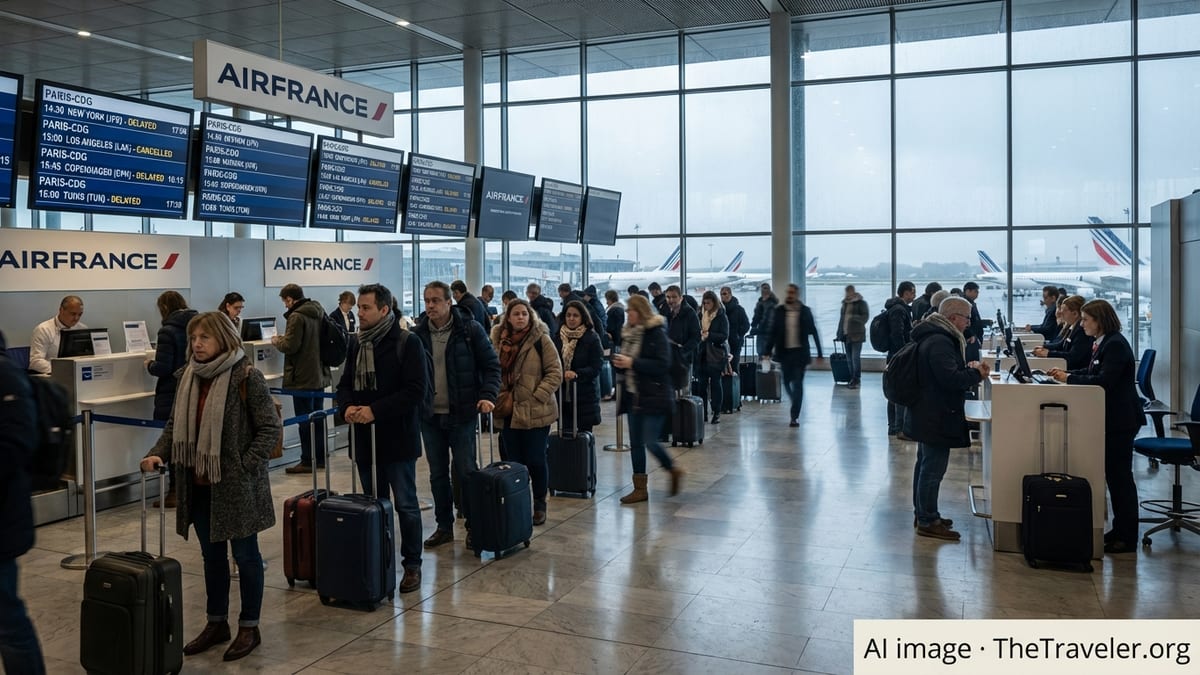
France’s main airports experienced a fresh wave of disruption as 379 flight delays and nine cancellations rippled across Paris, Nice and Marseille, snaring passengers on Air France, easyJet and Ryanair during one of the busiest travel weeks of early summer.
Get the latest news straight to your inbox!
Delays Surge Across Key French Hubs
Operational data from flight-tracking platforms for June 9 and June 10, 2026, indicate that France’s busiest hubs, including Paris Charles de Gaulle and Orly, along with Nice Côte d’Azur and Marseille Provence, recorded 379 delayed departures and arrivals tied to services operated by or marketed through Air France, easyJet and Ryanair. The knock-on effect extended across domestic and intra-European routes, particularly on connections linking Paris with the Mediterranean coast.
Published coverage notes that Paris Charles de Gaulle, already a focal point of wider European disruption this week, has seen repeated departure pushes, extended turnaround times and missed slot windows feeding into late-running rotations. Similar patterns have been reported at Orly, which handles a high share of short-haul and low-cost operations that are especially susceptible to schedule slippage.
At Nice and Marseille, publicly available flight boards and tracking feeds on Tuesday showed clustered late departures in the afternoon peak, with delay intervals often stretching from 30 minutes to well over an hour. While the overall number of outright cancellations remained in single digits on the day, the accumulation of shorter delays created a perception of gridlock for travellers navigating crowded terminals and congested taxiways.
The disruption has unfolded against a backdrop of elevated traffic volumes across European airspace in early June. Regional aviation monitors report that daily flight totals are running ahead of recent summers, leaving comparatively little margin in the system when local bottlenecks emerge in a country such as France, which sits at the heart of many north–south and east–west corridors.
Impact on Air France, easyJet and Ryanair Networks
Air France, France’s flag carrier and a dominant operator at Paris Charles de Gaulle and Orly, has seen delays ripple through both its domestic shuttles and European feeder routes. Tracking data for early June show recurrent late departures on key trunk sectors such as Paris to Milan and Paris to Lyon, which in turn affect onward transatlantic and long-haul departures when aircraft and crews arrive behind schedule.
Low-cost rival easyJet, which maintains a major base at Nice and a strong presence at Paris airports, has also been significantly exposed. As a point-to-point carrier relying on fast aircraft turnarounds, easyJet’s operations are vulnerable when congestion slows ground handling or when slot restrictions compress departure banks. On Tuesday, a sizeable share of its short-haul services touching France were recorded as delayed, particularly in the late morning and evening peaks.
Ryanair, Europe’s largest low-cost airline, operates primarily from secondary airports such as Paris Beauvais but flies extensively through French airspace. While the carrier reported fewer outright cancellations in France on the day in question compared with earlier strike-affected periods, its network performance was nonetheless impacted by airborne holding, reroutes and flow restrictions that lengthened flight times and contributed to late arrivals.
Industry analyses published this week emphasise that carriers with dense short-haul networks feel the strain quickly when France encounters air traffic or capacity constraints. The clustering of delays at multiple French hubs in a single day has therefore had a disproportionate impact on Air France, easyJet and Ryanair, which together account for a large share of intra-European seats touching the country.
Underlying Causes: Capacity, Weather and Industrial Tensions
While no single triggering incident has been identified for Tuesday’s pattern of disruption, several overlapping factors appear to be at work. Operational summaries point to a mix of airspace capacity constraints, localized weather systems and residual staffing pressures in air traffic control and ground operations. These pressures have been visible across Europe in recent days, with more than 2,000 delays logged continent-wide on some dates.
France’s location at the crossroads of many European flight paths magnifies the effect of any constraint in its air traffic management system. Studies by European aviation bodies have previously highlighted how even moderate levels of French airspace restriction or strike activity can cascade into widespread holding patterns, reroutes and missed connections at downline airports as far away as the United Kingdom, Spain and central Europe.
Earlier in 2026, French airports also contended with episodes of industrial action among air traffic controllers and ground staff, producing waves of cancellations and pre-emptive schedule reductions. Although the latest gridlock has not been linked directly to a new national strike, the system remains sensitive to smaller-scale staffing or capacity imbalances, particularly during peak hours when runways, stands and terminal resources are already close to saturation.
Short, intense storms have added a further layer of complexity on some French routes this month, occasionally forcing diversions or extended ground holds. Travel reports from recent days describe aircraft operating into regional airports encountering weather-related delays that then propagate into later rotations, further tightening the margin for on-time performance when those aircraft cycle back through Paris, Nice or Marseille.
Knock-on Effects for Summer Passengers
The timing of the latest disruption is particularly challenging for travellers, coinciding with the build-up to the peak summer season and major events across France and neighbouring countries. Airlines have been operating fuller schedules and higher load factors compared with earlier in the year, reducing flexibility for re-accommodating passengers when services run late or are cancelled.
According to operational tracking, the nine cancellations recorded across Air France, easyJet and Ryanair in France on the latest affected day are only a fraction of the overall schedule but can still displace hundreds of passengers. Rebooking options may be limited on popular leisure routes to Mediterranean destinations, where alternative same-day services are often already close to full.
For passengers facing long delays, European passenger-rights regulations can provide certain protections, including care, rerouting and compensation in defined circumstances. However, the applicability of compensation depends on the precise cause of disruption, and factors such as severe weather or air traffic control restrictions can place events outside an airline’s direct control.
Travel industry commentators are advising passengers flying via Paris, Nice or Marseille in the coming days to monitor flight status closely, allow extra time for connections and consider earlier departures when possible. With European airspace running near capacity, any further localized issues in France could quickly translate into another day of gridlock across its major airports.