


Picking between Airhub and Flexiroam can feel tricky when you just want affordable data that works the moment your plane lands. Both brands sell travel eSIMs that promise easy activation, broad coverage, and lower costs than traditional roaming. Yet their strengths are quite different. This guide looks at how each service performs in real trips, what you actually pay in 2026, and which provider is a better fit for your style of travel.
Get the latest updates straight to your inbox!
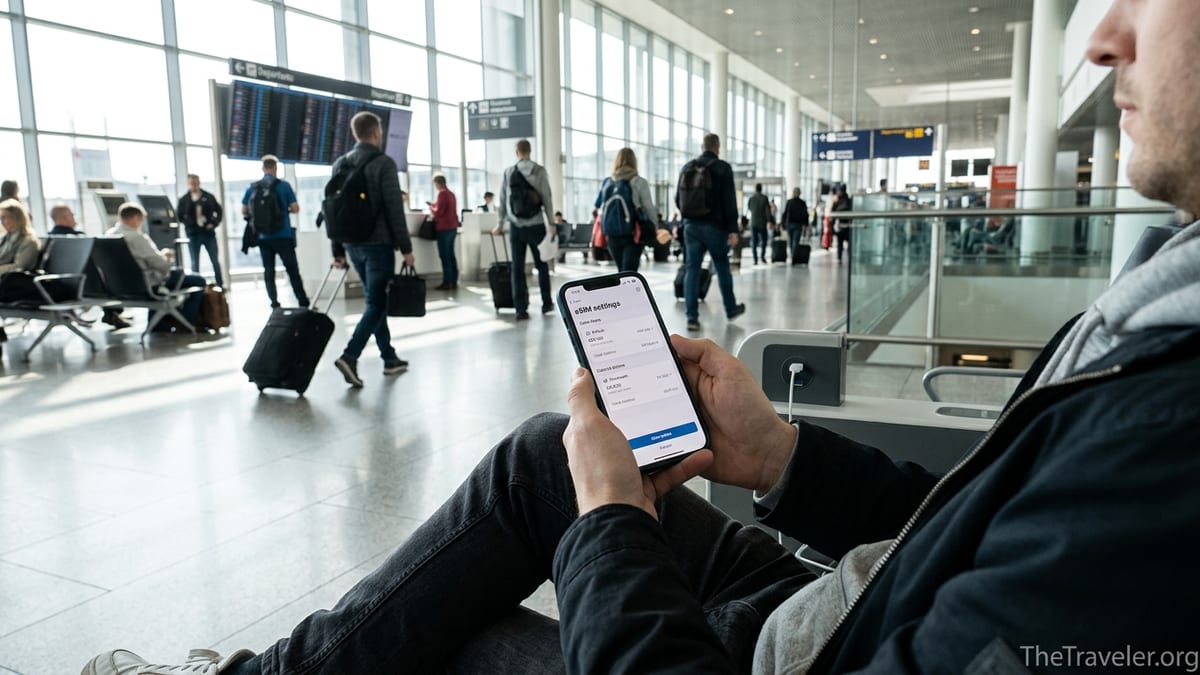
Airhub and Flexiroam at a Glance
Airhub is a relatively new, app-based travel eSIM provider focused on budget-friendly local and regional plans. Its own marketing and recent independent reviews highlight coverage in more than 190 countries, with an emphasis on sharp pricing in Europe and select destinations in Asia. Many plans are data-only, but Airhub also sells some bundles that include local voice minutes and SMS, especially in the United States and parts of Europe.
Flexiroam has been in the roaming space longer and is best known for its global coverage and partnerships with hundreds of networks worldwide. Recent reviews in 2026 note that Flexiroam offers access to more than 500 mobile networks across over 190 to 200 countries and regions, positioning it as a long-haul, always-connected option for frequent flyers and business travelers. Its focus is less on being the absolute cheapest and more on remaining connected almost everywhere, including in the air with inflight data passes.
In practical terms, a short city-break traveler heading to Paris or Tokyo may care more about raw cost per gigabyte for a week. A consultant flying from New York to Dubai to Singapore in the same month may care more about one eSIM that keeps working across borders and in airport lounges. Airhub is generally calibrated for the first traveler, while Flexiroam is calibrated for the second.
Both providers work with modern eSIM-capable phones such as recent iPhone, Samsung Galaxy, Google Pixel, and many newer mid-range Android devices. Before choosing either, travelers should confirm that their device is eSIM-compatible and network-unlocked, as a carrier-locked phone in the United States can block any travel eSIM from functioning, regardless of provider.
Coverage: Where Each Provider Works Best
Coverage is the first big differentiator between Airhub and Flexiroam. Flexiroam positions itself as a near-global solution, with coverage across more than 190 to 200 countries and access to hundreds of partner networks, often multiple in each country. This multi-network approach can help in destinations where one local carrier has weaker signal indoors or in rural areas. For example, a traveler landing in Spain can be automatically routed to whichever partner network offers the best signal at the time.
Airhub also advertises coverage in more than 190 countries and has built a reputation for strong performance in Europe and parts of Asia. Data from recent independent reviews in 2026 suggests that Airhub is particularly competitive in European Union destinations, where it can lean on robust local infrastructure and roaming regulations. One reviewer who tested Airhub in Bosnia and Herzegovina reported stable 4G service throughout a city trip and countryside drives, calling the pricing among the cheapest Bosnia eSIM options they found for that year.
Where Flexiroam pulls ahead is in breadth and special-use scenarios. In addition to regular country and regional plans, it offers niche products such as inflight data packs that work on certain airlines. For example, current inflight passes include 24-hour plans with 1 GB, 2 GB, or unlimited data, typically priced around 10, 18, and 25 US dollars respectively. That is not something Airhub currently matches, and it can be valuable for frequent long-haul travelers who want to work or message during flights without paying airline Wi-Fi rates.
For typical international trips confined to one region, both providers cover the main tourist and business hubs. A two-week vacation through Italy and France or a week in Thailand is comfortably within the reach of each. The differences become more obvious once you start chaining together multiple continents or need connectivity in niche destinations, where Flexiroam’s decades of roaming partnerships give it a slightly broader footprint.
Pricing and Real-World Cost Examples
Pricing evolves quickly, so exact figures change, but current 2026 reviews provide a useful snapshot. Flexiroam’s global and regional plans tend to be mid-range rather than rock-bottom cheap. For example, a recent comparison cited a Spain plan offering 1 GB for 7 days at roughly 8 US dollars. North America regional plans have been listed with entries such as 1 GB for 7 days around 6.50 US dollars. Global starter packs frequently begin near 9 US dollars for smaller data allowances lasting a week.
Flexiroam’s inflight passes illustrate its pricing model. A 24-hour inflight plan with 1 GB of data is priced around 10 US dollars, 2 GB around 18 dollars, and an unlimited option around 25 dollars. These are premium services compared with local SIM cards but can be cost-effective compared with one-off airline Wi-Fi purchases or corporate roaming, especially for travelers who bill this as a business expense.
Airhub, by contrast, leans heavily into value in certain regions. A fresh 2026 review analyzing European plans found that Airhub’s pricing in Europe was roughly 25 to 30 percent cheaper than its own global average, making it one of the more economical options for multi-country EU trips. Concrete examples from independent testers include packages such as a 10 GB, 30-day plan covering around 30 European countries at roughly the low teens in US dollars, undercutting several bigger-name competitors on a per-gigabyte basis.
On the ground, this can be as simple as a digital nomad basing themselves in Lisbon for a month, then taking side trips to Madrid and Paris. Instead of juggling three separate local SIM cards, they can rely on a single Airhub regional plan that continues to work across borders without huge price penalties. If their needs are modest, such as 10 to 20 GB for map navigation, messaging, and occasional streaming, an Airhub plan can comfortably cover the month at a relatively low cost.
App Experience, Activation, and Ease of Use
Both Airhub and Flexiroam follow the same core pattern: you download an app on iOS or Android, choose a destination or region, buy a plan, then install the eSIM via QR code or automatic installation. Once installed, you typically enable data roaming for the eSIM line, set it as the active data line, and you are online as soon as the device latches onto a partner network on arrival.
The Airhub app emphasizes simplicity. On its official listings in the major app stores, Airhub highlights easy activation, prepaid pricing with no surprise roaming fees, and a straightforward “My eSIMs” area where you can see active plans and retrieve activation codes. Plan validity usually starts when the eSIM first connects to a supported network, which means many travelers can safely install the eSIM before leaving home. Some plans are tied to a specific travel date you enter at checkout, so travelers who are cutting it close should read the activation policy carefully or contact support to avoid losing days before they arrive.
Flexiroam’s app is slightly more feature-rich, reflecting its roots as a broader roaming platform. In addition to standard destination-based plans, you can browse global passes, inflight packages, and multi-country bundles from within a single interface. Recent independent testing in 2026 notes that the app offers a large catalog of more than 700 eSIM plans, which can feel overwhelming at first but allows frequent travelers to fine-tune their purchases by validity, region, and data volume.
With both providers, the main point of friction for new users is not the app but device compatibility and carrier locks. Travelers coming from the United States and Canada in particular may assume “eSIM capable” automatically means “travel eSIM ready,” but that is not always true. If a phone is purchased on a contract, or still locked to a specific carrier, that carrier can block third-party eSIM profiles from connecting to foreign networks. In practical terms, that can mean landing in Rome, turning on your shiny new Airhub or Flexiroam eSIM, and seeing no data at all. Verifying that your phone is unlocked, and running on a supported model, is therefore a crucial pre-trip step regardless of provider.
Reliability, Speeds, and User Feedback
Travel eSIM reliability is famously variable because it depends on layers of infrastructure: the eSIM provider, the underlying roaming partner, and the local tower your phone latches onto. Both Airhub and Flexiroam have largely positive coverage, but real-world stories highlight the nuances that matter more than marketing slogans.
On the positive side for Airhub, some digital nomads report excellent experiences using its plans across multiple countries. One long-term traveler described using Airhub over two months in Japan with consistent 4G coverage, and another noted that an eight-country European trip in 2024 worked smoothly, with only minor slowdowns in remote mountainous areas. These accounts align with recent 2026 reviews that praise Airhub’s stability and price-to-performance ratio in Europe and selected Asian markets.
At the same time, negative anecdotes exist. Several older forum threads from 2024 and earlier describe individual Airhub eSIMs failing mid-trip, problems with QR codes that would not activate, or confusion over validity start dates that led to portions of a trip being uncovered. While some of these cases may stem from device-specific issues or misconfigured roaming settings, they underline an important point: for a mission-critical trip, it is wise to have a backup, whether that is a second eSIM from another provider or a plan to buy a local SIM on arrival.
Flexiroam’s reliability record shows a similarly mixed but generally positive pattern. Its multi-network strategy can be a major advantage in places where one carrier has patchy service. Reviews in 2026 often highlight stable speeds in major cities and airports, and frequent flyers appreciate that Flexiroam can transition from a regional plan in Europe to a global pack covering Africa or Asia without forcing a complete reconfiguration of their phone. The trade-off is that its plans are often slightly more expensive than budget-focused rivals, particularly for simple, single-country trips where a local or ultra-cheap regional eSIM might suffice.
Best Use Cases: Which Travelers Should Choose Which?
Because both Airhub and Flexiroam cover a similar raw number of countries, the better question is not “who covers more” but “who is optimized for my kind of trip.” The answer usually comes down to your itinerary, your tolerance for fiddling with settings, and how much you value redundancy.
Airhub tends to be the better fit for price-conscious travelers focused on one region at a time. Think of a couple from Chicago spending three weeks traveling through Spain, Portugal, and France, or a group of friends backpacking through Vietnam and Thailand. In these scenarios, Airhub’s strong regional pricing, especially in Europe, can keep total connectivity costs low without sacrificing too much in speed or coverage. Travelers who are comfortable buying a single 20 or 30 GB plan and watching their usage inside the app will likely find Airhub’s approach straightforward.
Flexiroam shines for frequent flyers, round-the-world trips, and business itineraries that span continents. A consultant flying from New York to London, then on to Dubai and Singapore in a ten-day sprint may care less about squeezing every last cent out of a gigabyte, and more about ensuring that a single global pass or a combination of regional and inflight plans just works everywhere. For this user, the ability to maintain a continuous data connection across 200-plus countries and even during select flights can justify Flexiroam’s slightly higher per-gigabyte pricing.
There is also a hybrid approach. Some travelers pair a cost-effective regional eSIM from Airhub for their main destination with a small global safety-net eSIM from Flexiroam, kept dormant unless they miss a connection or unexpectedly transit through a new country. Since eSIMs do not require swapping physical cards, carrying two or three profiles at once is relatively easy, and switching between them is often as simple as toggling data lines in your phone settings.
The Takeaway
Neither Airhub nor Flexiroam is universally “better” in 2026, but each clearly targets a different type of traveler. Airhub is often the stronger choice if you want low-cost data in Europe or other popular regions, do not need inflight connectivity, and are willing to prioritize value over extensive extras. Its app is simple, its best regional plans can be strikingly affordable, and many travelers report solid performance in mainstream destinations.
Flexiroam, on the other hand, is the more comprehensive roaming solution. Its global coverage, multi-network access in each country, and distinctive inflight data plans cater to road warriors, digital nomads who hop continents, and anyone who values near-continuous connectivity over price. You may pay a slight premium compared with pure budget providers, but in return you gain an ecosystem designed around always being online, from airport to taxi to meeting room.
For most leisure travelers, the practical way to decide is to sketch your itinerary and data habits. If you are spending a week in Italy sharing photos, using maps, and streaming the occasional show, Airhub’s regional plan is likely all you need. If you are circumnavigating the globe with multiple long-haul flights and critical video calls en route, Flexiroam’s global and inflight passes are more likely to earn their keep.
Whichever service you choose, the fundamentals remain the same: check that your phone is eSIM-capable and fully unlocked, install and test your plan before you leave home where possible, and consider carrying a secondary option or the willingness to buy a local SIM if something goes wrong. Doing so ensures that whether you end up trusting Airhub, Flexiroam, or both, your trip is defined by the places you visit, not by the minutes you spend chasing a signal.
FAQ
Q1. Is Airhub cheaper than Flexiroam for most trips?
In many current 2026 comparisons, Airhub is cheaper than Flexiroam for regional plans, especially in Europe and some parts of Asia, while Flexiroam often charges a bit more in exchange for broader global coverage and extras like inflight data.
Q2. Which service has better global coverage, Airhub or Flexiroam?
Both cover more than 190 countries, but Flexiroam is generally regarded as having slightly broader global reach and more partner networks per country, plus options like global passes and inflight plans that Airhub does not currently match.
Q3. Can I use Airhub and Flexiroam on a carrier-locked phone?
Usually not. If your phone is locked to a carrier, particularly common in the United States and Canada, that carrier can block third-party eSIMs from connecting. You should request an unlock from your carrier before relying on any travel eSIM.
Q4. Do Airhub and Flexiroam offer unlimited data plans?
Both providers advertise some form of “unlimited” plans in selected destinations or inflight. However, these often include fair-use limits or speed throttling after a certain amount of high-speed data, so travelers should treat “unlimited” as “generous but not infinite.”
Q5. Which is better for a month-long trip around Europe?
For a focused trip around Europe, Airhub is typically the better value option, with competitive multi-country European plans and low cost per gigabyte. Flexiroam is still viable, but many travelers find its pricing less compelling for purely regional itineraries.
Q6. Which should I choose for a multi-continent business trip?
For trips spanning multiple continents, especially if they include long-haul flights, Flexiroam usually makes more sense. Its global passes, inflight data options, and broad partner network make it easier to stay connected from airport to airport without switching providers.
Q7. How do I avoid problems with eSIM activation on either service?
Check that your phone supports eSIM and is network-unlocked, read the plan’s activation rules carefully, and install the eSIM a day or two before travel so you have time to troubleshoot on home Wi-Fi. If activation is tied to a travel date, ensure that date matches your actual arrival.
Q8. Can I keep my regular phone number while using Airhub or Flexiroam?
Yes. Most travelers keep their primary physical SIM active for calls and SMS and use the Airhub or Flexiroam eSIM purely for data. You configure this in your phone’s SIM settings so that voice and text use your home number while data uses the travel eSIM.
Q9. Is it worth having both an Airhub and a Flexiroam eSIM?
For longer or more complex trips, carrying both can be a smart backup strategy. You might rely on an affordable Airhub regional plan for daily use and keep a small Flexiroam global plan or inflight pass as an emergency option in case your primary eSIM has issues or you change routes unexpectedly.
Q10. How do Airhub and Flexiroam compare with buying a local SIM card?
Local SIM cards are often cheaper per gigabyte, especially for long stays in a single country, but they require time at a shop, local registration rules, and sometimes language navigation. Airhub and Flexiroam cost more than the very cheapest local options but save time, let you connect immediately on landing, and are easier to manage if you are moving between several countries.