


More news on this day
After one of France’s worst outbreaks of urban violence in years, with rioting, looting and arson reported across multiple cities over the weekend of October 17 and 18, many prospective visitors are now asking whether it is still safe to travel to the country.
Get the latest news straight to your inbox!
What Happened During the Weekend of Violence
Large demonstrations over living costs and education conditions on October 17 and 18 escalated into serious unrest in several French cities. Published coverage from international and French media describes groups breaking away from largely peaceful marches to loot shops, set vehicles alight and attack public buildings, including at least one historic city hall.
Reports indicate that around 2,300 to 2,400 people were arrested nationwide over the weekend, with hundreds of police officers, gendarmes and firefighters injured. Violence and looting were documented in Paris, Marseille, Lyon, Bordeaux and other urban centers, particularly after nightfall, when crowds turned more volatile and security forces deployed tear gas and baton charges.
Images widely carried by European outlets show burned-out storefronts, smashed windows and debris in commercial streets that are usually busy with shoppers and tourists. In Lyon, for example, a tourism office building was severely damaged by fire, while in Limoges the city hall suffered extensive destruction after being targeted by rioters.
The unrest forms part of a broader wave of student and social protests that has been building since September 2026. While demonstrations had already caused sporadic disruption, the scale and intensity of the October 17 riots marked a sharp escalation and prompted an emergency security response from the national government.
Current Security Measures and Curfews
In the immediate aftermath, authorities introduced a range of heightened security measures that directly affect how visitors move around certain areas. According to publicly available information from French officials and international news outlets, thousands of additional police and gendarmes have been deployed in major cities, with particular focus on central Paris and larger regional hubs.
Local prefects in some regions have announced partial overnight curfews aimed at preventing further disorder. In Paris, police have imposed night-time restrictions in at least two districts considered at higher risk of renewed clashes, while several cities in northern France, including Lille, have introduced evening and night curfews for minors for at least two days from October 19.
France has also launched what has been described as a large-scale law enforcement operation to identify those involved in the weekend looting. Investigators are reviewing surveillance footage and social media videos, and officials have signaled that further arrests are likely in the coming days. For travelers, that means a visible and sometimes heavy uniformed presence around key squares, transport hubs and commercial districts.
Security alerts and restrictions can be adjusted quickly as conditions change. Travelers planning to visit France in the coming days and weeks should monitor official announcements from local prefectures, city halls and national ministries before entering or crossing major urban areas, especially in the evenings.
Official Travel Advice and Overall Risk Level
Despite the weekend’s violence, many foreign governments have not fundamentally changed their broad assessment of travel risk in France as of October 20, 2026. The most recent advisory from the United States, last updated in 2025, remains at its existing level and continues to highlight the long-standing risks of terrorism and occasional civil unrest, rather than calling for citizens to avoid travel altogether.
Other national advisories, such as guidance from Australia’s Smartraveller service, currently stress that security conditions can deteriorate quickly and that advice levels may change at short notice. They encourage travelers to remain vigilant in public places, avoid demonstrations and follow the instructions of local emergency services when incidents occur.
These advisories underline that protests and strikes are a recurring feature of French public life, and that while most gatherings remain peaceful, some can turn confrontational. The events of October 17 and 18 illustrate how quickly this shift can happen and why foreign visitors are urged to keep a distance from marches, rallies and road blockades, even if they initially appear calm.
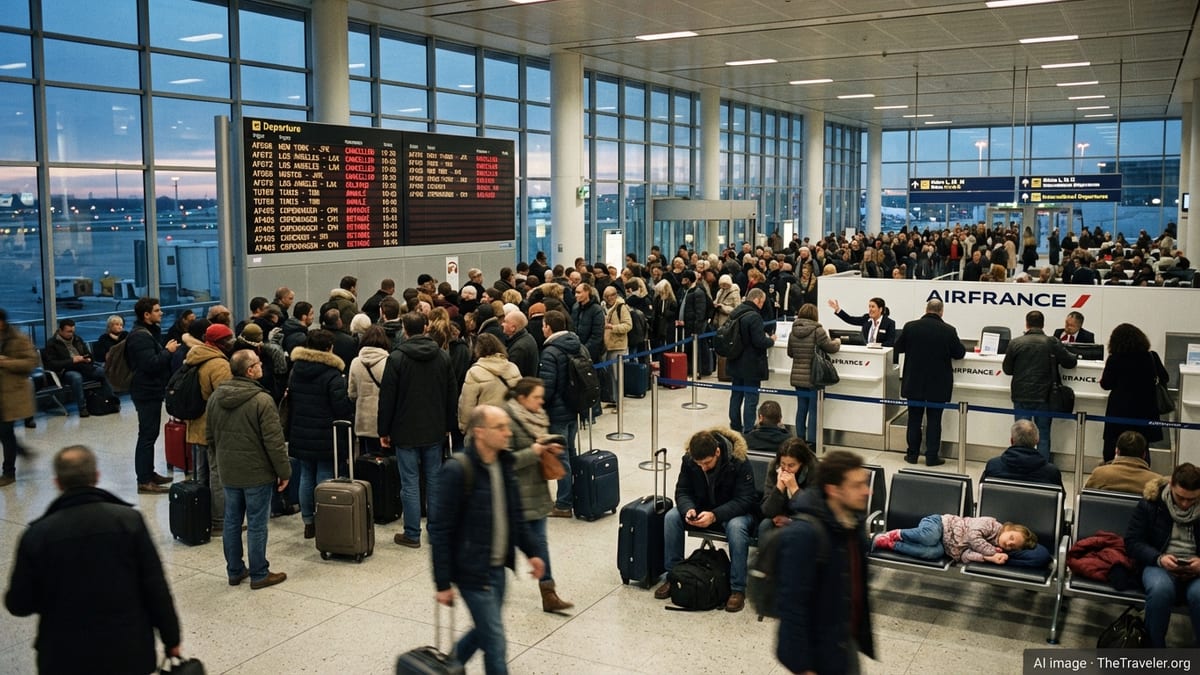
For now, there is no broad closure of French borders, no general ban on tourism and no blanket order to leave the country. Commercial flights, international rail services and intercity trains continue to operate, although individual routes may see changes if future protests target transport infrastructure.
Impact on Paris, Major Cities and Key Attractions
The weekend’s unrest has had a visible but uneven impact on destinations popular with visitors. Central districts of Paris, Marseille, Lyon and some other cities experienced property damage, with shopfronts smashed and some small businesses temporarily shuttered while repairs are carried out and insurance claims are processed.
Coverage in French economic media suggests the tourism sector is concerned about reputational damage but has not yet seen a collapse in demand. Industry data cited in recent reports indicates that hotel cancellations in Paris and other major cities increased on October 18, but only slightly exceeded new bookings. Travel agencies quoted in the French press describe the situation as serious but not yet disastrous, noting that marquee attractions such as the Eiffel Tower still draw visitors.
Some cultural sites have been briefly affected. The Louvre Museum, for example, was closed on Monday, October 19, after being blocked by student protesters campaigning on education and cultural issues. Other museums and monuments, as well as regional attractions and theme parks, remained open as normal, with no reports of violence on their premises.
Outside a limited number of heavily affected neighborhoods, many tourist areas continue to function much as usual, with cafés, restaurants and hotels welcoming guests. However, visitors in large cities should be prepared for occasional last-minute closures, early shutdowns in commercial streets, and short-notice changes to opening hours if demonstrations or police operations take place nearby.
Practical Advice for Travelers Considering France Now
For travelers deciding whether to proceed with imminent trips, much depends on risk tolerance and itinerary. Those planning city breaks in Paris, Marseille or Lyon in the next several days should build flexibility into their schedules, stay informed through local media and official communication channels, and be ready to adjust plans if fresh demonstrations are announced.
Visitors already in France are generally advised by government travel pages to avoid protest sites, steer clear of crowds that appear to be gathering, and leave any area where tensions seem to be rising. If curfews are in place in a particular district, travelers should respect the specified hours and carry identification when outside their accommodation.
Travelers heading to smaller towns, wine regions, coastal resorts or rural areas are less likely to encounter direct unrest, although rail or road links that pass through larger urban centers could still be disrupted if new protests emerge. Checking train operator updates on the day of travel and allowing extra time for transfers can reduce the risk of missed connections.
Those with fully refundable bookings may prefer to wait a few days to see whether the situation calms or whether demonstrations intensify heading into the next weekend. Non-refundable trips might still be worthwhile, provided travelers are comfortable with a more visible security presence and the possibility of localized disruptions.
So, Is It Safe to Travel to France Right Now?
Based on publicly available information as of October 20, 2026, France remains open to visitors but is experiencing a period of heightened tension and uneven security conditions. The risk to an individual tourist remains largely dependent on location, timing and behavior, with the highest concerns focused on dense urban centers during protest days and evenings.
Travelers who stay informed, avoid demonstrations, follow local rules such as temporary curfews, and remain alert in busy public spaces are still able to visit major sights, dine out and move around the country. However, it is reasonable to expect disruptions, from blocked streets and briefly closed shops to delays on certain public transport routes when protests occur.
Anyone with upcoming travel should check the latest advisory issued by their own government, consult local news in the days before departure and during their stay, and register with their embassy if that service is available. Those measures cannot remove all risk but can improve awareness and make it easier to respond quickly if conditions change.
For now, the message from most official travel advice is cautious rather than prohibitive: visits to France can go ahead, but with careful planning, flexibility and a close eye on developments in the streets.