


More news on this day
Kenya’s tourism industry is confronting a sudden jolt at the height of its peak safari season after the United States raised its travel advisory for the country to Level 3, urging Americans to reconsider travel following confirmation of an Ebola Bundibugyo virus outbreak in Nairobi.
Get the latest news straight to your inbox!
Advisory shift comes as Ebola cases confirmed in Nairobi
Publicly available information from the US Department of State shows that on October 19, 2026, the Kenya country page was updated to highlight a new Centers for Disease Control and Prevention Travel Health Notice linked to Ebola Bundibugyo Virus Disease. The advisory, which had long focused on security concerns such as crime and terrorism, now explicitly references the Ebola situation and has been raised for US travelers to Level 3, the second-highest tier in the State Department’s four-level system.
CDC’s Kenya traveler guidance, updated the same week, reports an imported Ebola Bundibugyo case in Nairobi with additional epidemiologically linked infections identified through contact tracing. The agency notes that the current notice is focused on health precautions for travelers, even as broader security considerations continue to influence the overall US advisory level.
Regional press coverage and international news reports indicate that as of October 18, at least eight Ebola cases had been confirmed in Kenya, concentrated in the capital, with no evidence of sustained community transmission outside known contact networks. Neighboring countries, notably Tanzania, have tightened health screening at land borders and regional airports, underscoring concern about cross border spread without imposing outright travel bans.
Africa CDC guidance on the wider 2026 Bundibugyo Ebola outbreak continues to argue against blanket travel restrictions, noting that the risk of international transmission remains low when surveillance, case detection and traveler screening are robust. However, changes in the US advisory system carry significant reputational weight for destinations that rely heavily on American holidaymakers.
Peak safari season exposed at a critical moment
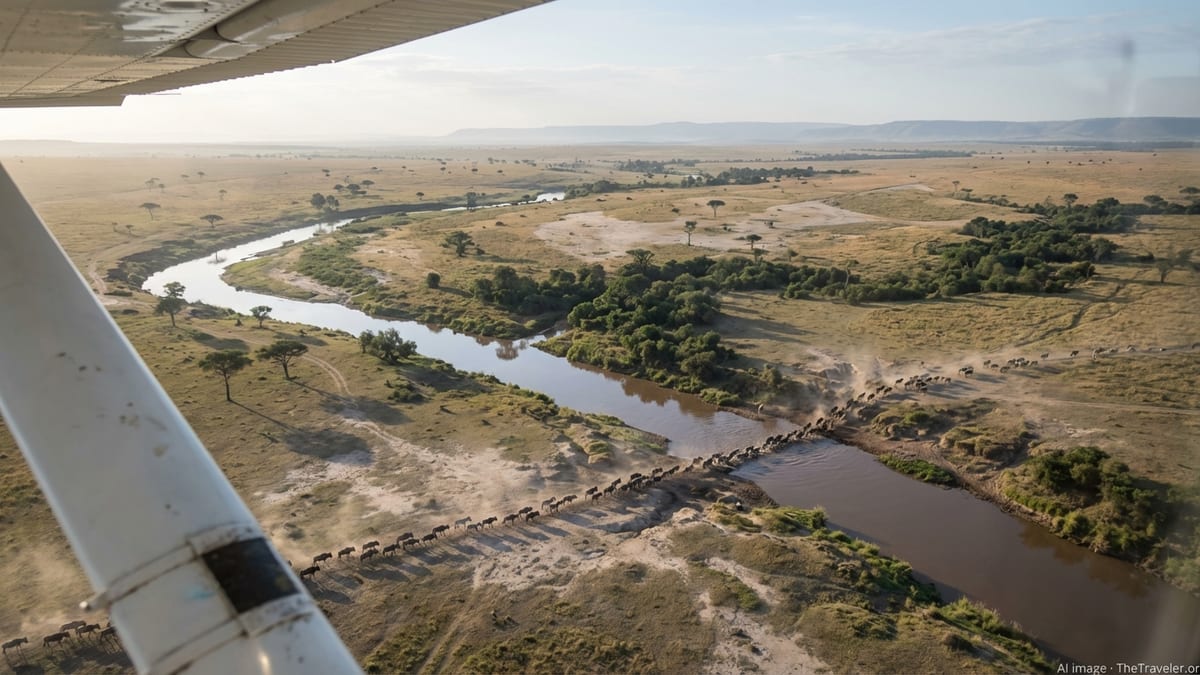
The timing of the advisory shift is particularly sensitive for Kenya. Government economic data compiled by the Kenya National Bureau of Statistics show that international tourist arrivals reached about 2.55 million in 2025, with almost half of visitors travelling for holidays and leisure. Sector performance reports and tourism strategy documents indicate that roughly 40 percent of inbound tourists arrive between July and October, when dry weather and the Great Migration help drive bookings for the Maasai Mara and coastal resorts.
Industry data highlighted in recent local coverage of the 2025 season show that August recorded the highest monthly international arrivals, with more than 277,000 visitors, followed by July and December. The Tourism Research Institute’s 2026 updates point to an 8.3 percent increase in international arrivals in the first quarter of this year and report advance bookings on Kenya’s south coast, including Diani Beach, reaching more than 90 percent capacity for the July to August high season.
Trade publications and sector briefings from the Kenya Association of Travel Agents describe August as the single busiest month for operators, with many agencies designing bespoke packages for US and European markets tied to the migration and school holiday calendars. Local travel media in July reported that Kenyan authorities had been preparing for one of the strongest high seasons since the pandemic, with improved air connectivity and aggressive marketing campaigns in North America and Europe.
The new US Level 3 advisory intersects directly with this period of heavy demand. While no immediate nationwide cancellations have been quantified in official statistics, tour operators serving the US market now face a combination of health related concerns and insurance questions from clients who booked months in advance for travel between July and October.
Tourism operators race to interpret health and policy signals
Publicly available guidance from the CDC on the 2026 Ebola epidemic emphasizes that Ebola spreads through direct contact with the bodily fluids of symptomatic individuals or contaminated materials, not through airborne transmission. The Kenya specific traveler view stresses basic infection prevention measures, notably avoiding contact with sick people, observing hospital hygiene protocols and seeking urgent medical care for fever or unexplained bleeding within 21 days of potential exposure.
At the same time, CDC and US Department of Homeland Security documents on the 2026 outbreak describe enhanced travel screening and entry restrictions for people who have recently spent time in heavily affected parts of the Democratic Republic of the Congo and Uganda. Earlier federal orders introduced 30 day prohibitions on non US citizens entering the United States if they had been in specific outbreak zones within the previous 21 days, underscoring how quickly policy responses can shift as case counts evolve.
For Kenyan safari operators and hotel groups, the practical task now is to translate those complex public health messages into clear information for guests. Travel trade advisories circulated within Kenya in recent weeks have started to include more detailed briefings on Ebola symptoms, incubation periods and the very low risk associated with typical wildlife and beach itineraries that do not involve health care settings or direct exposure to patients.
Regional health and tourism bodies, drawing on Africa CDC guidance, continue to warn that indiscriminate travel bans can damage economies without significantly reducing risk when screening and case management systems are functioning. For a destination like Kenya, which has spent years rebuilding its image after security incidents and the pandemic, the challenge lies in balancing caution with evidence based reassurance.
On the ground: airports, parks and coastal hubs adjust
News coverage of Kenya’s response to the initial Nairobi case indicates that health authorities have concentrated resources on contact tracing, isolation and targeted alerts, while maintaining normal operations in most public spaces. Nairobi’s main international gateway has reportedly designated specific gates and arrival corridors for flights from countries most affected by the broader regional Ebola outbreak, enabling enhanced temperature checks and health questionnaires without disrupting all traffic.
Information from the Kenya Meteorological Department points to typical dry season conditions across much of the country during the June to August safari window, contributing to the continued appeal of wildlife destinations such as the Maasai Mara, Amboseli and Tsavo. Travel industry analysis notes that park visitation in 2025 surpassed 3.9 million visitors, reflecting both international recovery and a growing domestic tourism segment that could partially cushion any downturn in long haul arrivals.
Coastal resorts along the Indian Ocean, including Diani, Watamu and Malindi, have entered the 2026 peak season with high occupancy, based on forward booking data tracked by Kenya’s Tourism Research Institute. Operators in these areas are reported to be reinforcing hygiene protocols introduced during the COVID 19 period, including routine temperature checks for staff, expanded access to handwashing stations, and coordination with local hospitals on referral pathways should guests present with concerning symptoms.
Despite these measures, the perception impact of an Ebola related advisory remains considerable. Travel insurance policies sold in the United States often reference State Department levels and CDC notices when determining coverage for trip cancellation or medical evacuation, increasing the likelihood that risk averse travelers will defer or reroute trips even when their actual exposure on a Kenyan beach or savannah is objectively low.
Uncertain outlook for a sector that had regained momentum
The latest Kenyan economic survey shows hotel bed night occupancy rising by 12.6 percent in 2025, with domestic travelers accounting for 45 percent of occupied beds. That growing local market has been credited in policy papers with helping stabilize employment and revenue in periods when global shocks reduce international arrivals.
However, North American visitors remain a high value segment for upmarket safari camps, conservancies and tour operators. Departing visitor statistics for 2025 place North America among the top long haul source regions for Kenya, alongside Europe and key African markets. A prolonged US Level 3 advisory tied directly to a communicable disease risk would therefore be felt most acutely in higher spending segments that are less easily replaced by regional traffic.
Analysts watching the 2026 Ebola epidemic note that public health responses are evolving quickly. CDC situation summaries and Africa CDC technical briefs continue to stress that outbreaks have, so far, been concentrated in specific provinces of neighboring countries and, more recently, in limited clusters within Kenya. If Kenyan surveillance and containment efforts succeed in preventing sustained community transmission, international health notices could be revised in the coming months.
Until then, Kenya’s tourism stakeholders enter the remainder of the 2026 peak season navigating a complex environment in which their operational readiness, safety protocols and communication strategies may prove just as important as the wildebeest crossing or coastal sunshine in determining whether travelers decide to keep their bookings.