


More news on this day
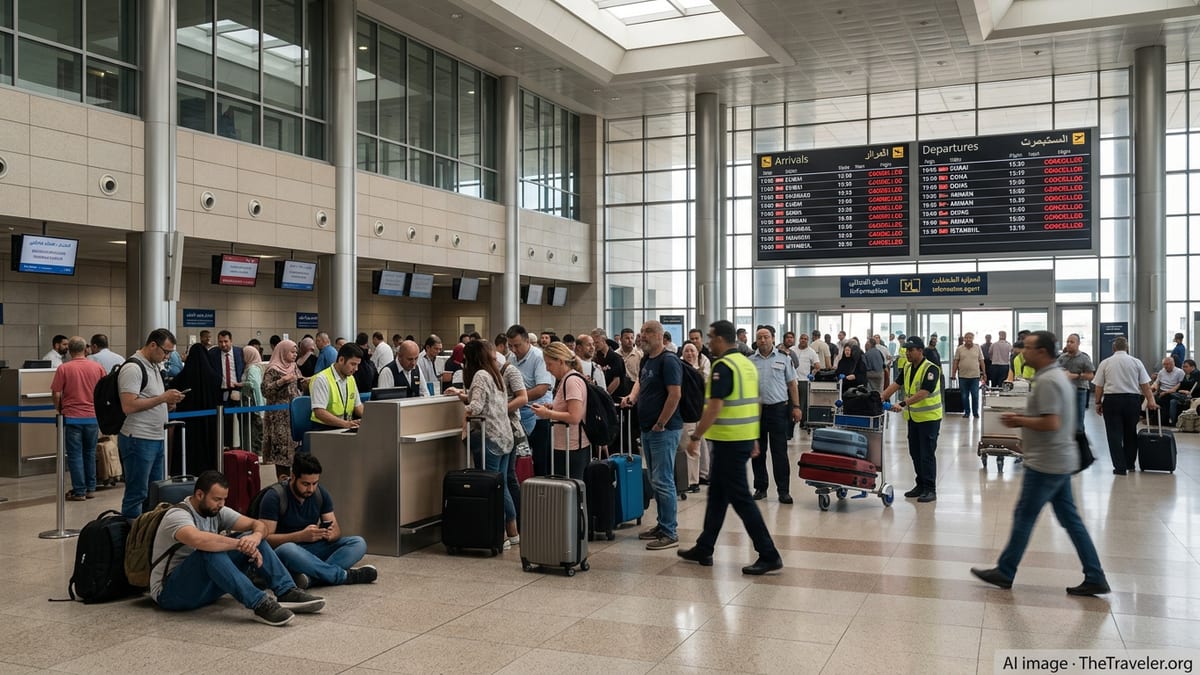
Hundreds of Ryanair passengers were reportedly left to spend a freezing night inside Krakow’s John Paul II International Airport after a last minute cancellation stranded families, students and holidaymakers with limited information and no clear accommodation plan.
Get the latest news straight to your inbox!
Overnight ordeal in sub-zero conditions
According to passenger accounts shared on social media and in local media coverage, the disruption unfolded after a Ryanair service out of Krakow was cancelled late in the evening, when temperatures around the southern Polish city were near or below freezing and public transport options had already thinned out for the night.
Images and videos posted online show travellers wrapped in coats and blankets, clustered around power outlets or stretched out on the terminal floor as they attempted to sleep under the bright lights of the departures hall. Several accounts describe young children and elderly passengers struggling with the cold and fatigue as the night wore on.
Reports indicate that airport shops and cafes closed for several hours overnight, leaving many passengers with limited access to food and hot drinks. Some travellers said they were reluctant to leave the terminal to search for hotels because they feared missing any rebooked flight or last minute announcement about alternative arrangements.
Local weather reports from recent cold snaps in Krakow underline how quickly temperatures can fall around the city’s exposed airport, with freezing fog and icy winds frequently cited as operational challenges. Passengers say those same conditions made the prospect of searching for late night accommodation particularly daunting.
Communication breakdown and confusion over options
Accounts circulating online describe long periods with little or no clear information about the status of the cancelled flight, possible rebooking, or entitlement to care. Some travellers say early messages referred them to the airline’s app, only for updated departure times and options to shift repeatedly during the night.
Several passengers report that text alerts initially framed the disruption as a delay before the service disappeared from departure boards or was later listed as cancelled. That sequence reportedly left some unsure whether to queue at service desks, wait at the gate, or make their own arrangements in the city.
Observers note that the experience in Krakow mirrors a pattern seen in other recent low cost airline disruptions across Europe, where large groups of travellers have relied on social media posts and informal chat groups to share screenshots, rebooking tips and basic information about their rights, rather than receiving consistent guidance at the airport.
Publicly available information on Ryanair’s customer policies refers passengers to digital channels for updates and support, reflecting the carrier’s long running effort to streamline airport staffing. Critics argue that in high stress situations, particularly at night and in severe weather, this model can leave stranded passengers feeling abandoned in crowded terminals.
Questions over passenger rights and airline obligations
The Krakow incident has renewed attention on European passenger protection rules and how they apply when large numbers of people are stranded overnight. Under Regulation EC 261/2004, travellers caught up in long delays or cancellations are generally entitled to assistance such as meals, refreshments and, when necessary, hotel accommodation and transport between the airport and lodging.
Legal specialists note that compensation payments are not automatically due in every case, since airlines are exempt if they can show that the disruption was caused by extraordinary circumstances, such as severe weather or sudden air traffic restrictions. However, the duty of care, including providing basic support and reasonable overnight accommodation, can still apply even when compensation is not owed.
Advocacy groups that monitor air travel disruption say the Krakow stranding highlights a recurring gap between legal obligations on paper and how support is experienced in practice at busy hubs. They point to previous cases at Krakow and other regional airports where passengers reported sleeping on the floor for hours while trying to secure written confirmation of cancellation and proof for later claims.
Consumer advisers urge affected travellers to keep boarding passes, booking confirmations, receipts for food and hotels, and screenshots of app notifications to support any future claim. They also recommend filing complaints both with the airline and with national enforcement bodies responsible for overseeing Regulation 261 compliance in the European Union.
Krakow’s reputation for difficult operating conditions
The latest disruption also shines a light on Krakow’s reputation among aviation observers as a challenging airport during the colder months. Industry analyses have previously highlighted the facility’s susceptibility to fog and low cloud, which can trigger knock on delays, diversions and cancellations when visibility sinks below safe landing thresholds.
Deicing queues, changing wind conditions and intermittent runway closures can quickly ripple through tightly scheduled low cost operations, where aircraft often work multiple short haul sectors each day. When one sector is cancelled late at night, the knock on effect can be particularly severe because there are few later flights or spare aircraft available to absorb displaced passengers.
Past cases involving Krakow flights have already generated legal disputes over whether weather related problems are truly unavoidable or simply exacerbated by aggressive turnround times and scheduling choices. Passenger advocates argue that airlines serving airports with known seasonal challenges should build in more buffers and contingency plans to protect travellers from being stranded at awkward hours.
Recent performance rankings of European airlines show that while Ryanair often posts a relatively low proportion of outright cancellations compared with some legacy carriers, its massive route network means any isolated disruption can still leave hundreds of people in limbo at a single airport on a given night.
Broader scrutiny of low cost disruption handling
The events in Krakow arrive amid broader scrutiny of how low cost airlines manage communication and care when things go wrong. In the past year, separate incidents involving stranded or diverted Ryanair passengers in other European cities have drawn criticism from consumer groups and widespread online attention.
Analysts note that the low fare model depends heavily on tight cost control, including lean staffing at airports, minimal buffers in flight schedules and an emphasis on self service digital tools. While those features help keep base fares low, they can also expose gaps when flights are cancelled at short notice, particularly late at night or in extreme weather.
Travel industry observers suggest that the Krakow stranding may feed into ongoing debates in Brussels and national capitals over whether Regulation 261 should be updated to clarify responsibilities around accommodation and communication during mass disruption events. Proposals discussed in recent years have included stronger enforcement mechanisms and clearer timelines for when airlines must provide written notice of cancellations and rerouting options.
For now, many of the Krakow passengers are left piecing together their night in the terminal with claims forms and email threads, hoping that receipts for hastily booked hotels, taxis and last minute replacement flights will eventually be reimbursed. Their experience adds to a growing catalogue of stories from Europe’s busiest budget airline, illustrating how a single cancelled flight on a freezing night can rapidly become a test case for the continent’s passenger rights regime.