


More news on this day
Air travel remains one of the safest ways to cross borders, but a series of safety investigations, regulatory audits and mounting passenger complaints is sharpening a central question for the global aviation industry: as traffic surges to record levels, is accountability keeping pace with growth?
Get the latest news straight to your inbox!
Safety Metrics Improve While Fatalities Rise
Recent global safety data paints a mixed picture for travelers. The International Civil Aviation Organization reported that airlines carried nearly 5 billion passengers in 2025 with fewer accidents than the year before, yet total fatalities increased. That divergence between falling accident rates and higher death tolls highlights how a small number of rare but catastrophic events can shape the perception of air travel safety.
The International Air Transport Association’s 2025 safety report similarly described a solid year of safety performance, noting incremental improvements in overall accident rates and a very low likelihood of a major accident on any given flight. At the same time, the association acknowledged that even isolated fatal events underline the need for robust investigation, transparent oversight and continuous identification of system gaps.
In Europe, the European Union Aviation Safety Agency’s latest annual safety review found that fatal airline accidents worldwide remain statistically rare, but still accounted for hundreds of deaths. Analysts say this reinforces a structural reality of modern aviation: as traffic grows, keeping individual risk low is not enough; the focus must shift to preventing rare, high-impact failures through stronger accountability up and down the safety chain.
Investigations Expose Systemic Oversight Gaps
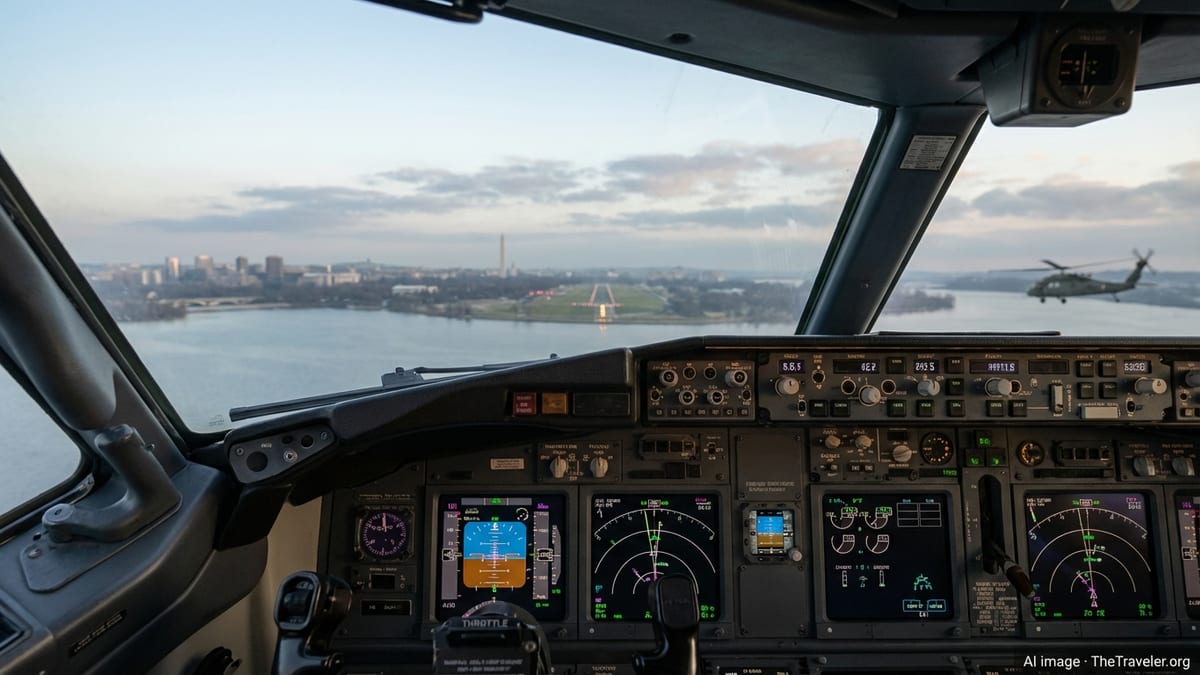
High-profile investigations over the past two years have raised questions about how effectively regulators and manufacturers are managing complex safety risks. In January 2026, a National Transportation Safety Board report on a midair collision over the Potomac River near Washington attributed the event to systemic failures in airspace design, safety oversight and risk management involving multiple institutions. The conclusions underscored how fragmented responsibilities can leave critical hazards insufficiently controlled.
Another major case involved an in-flight mid-exit door plug failure on a Boeing 737 MAX 9, which prompted an emergency landing and global scrutiny of aircraft manufacturing practices. In its June 2025 findings, the NTSB pointed to inadequate training, guidance and oversight for factory workers as the probable cause, illustrating how weaknesses inside production lines can manifest as front-line safety risks for travelers.
Regulatory audits have also placed a spotlight on ongoing oversight challenges. A report released in April 2026 by the U.S. Department of Transportation’s Office of Inspector General found that the Federal Aviation Administration largely followed its policies when responding to toxic fume events on certain aircraft types but recommended deeper assessment of underlying hazards and technology used to evaluate them. Earlier this year, a separate federal watchdog review faulted the FAA’s supervision of one major U.S. carrier’s maintenance practices after a series of safety incidents, signaling appetite for tighter scrutiny of how airlines comply with standards in day-to-day operations.
Passenger Rights and Complaints Enter the Foreground
Accountability in the skies is not limited to rare accidents. Everyday service disruptions, tarmac delays, chronic cancellations and customer service breakdowns are increasingly framed as part of the same ecosystem of responsibility. The latest U.S. Air Travel Consumer Report, released in July 2026, shows thousands of monthly complaints related to flight problems, refunds, baggage, customer service and disability access, even as overall cancellation rates have eased from pandemic-era peaks.
Consumer advocates argue that such complaints reflect persistent information gaps and uneven enforcement of existing passenger protections. While many major markets require airlines to provide meals, accommodation or compensation in certain disruption scenarios, travelers often struggle to secure the benefits that regulations promise. Publicly available data indicates that misunderstandings over refund eligibility, rebooking options and lost or delayed luggage continue to dominate grievances.
In Europe, policymakers are responding by revisiting cornerstone passenger-rights rules. Work is advancing on revisions to the long-standing regulation governing compensation for delays and denied boarding, and on rules covering carrier liability for baggage. Draft measures under discussion include clearer triggers for compensation, mandatory contact points at airports and guarantee funds to protect travelers when airlines collapse financially. Advocates say these efforts signal a broader shift toward embedding consumer accountability more firmly into the business model of air travel.
Global Agencies Push for Proactive Safety Culture
Regulators and safety bodies are attempting to move from reactive investigation toward more predictive and data-driven safety management. The ICAO assessment of oversight performance indicates that the global average implementation of core safety oversight elements improved in 2025, suggesting that more countries are building the technical and institutional capacity needed to monitor rapidly expanding aviation markets.
At the same time, independent organizations such as the Flight Safety Foundation highlight continuing risks linked to runway excursions, midair collisions and ground collisions. Its 2025 safety review identified recurring patterns across recent accidents, including human factors, inadequate risk assessment and gaps in coordination between air traffic control, airlines and airports. Analysts say that addressing these trends requires not only better technology but also stronger cross-border sharing of safety data and best practices.
National accident investigation authorities in Europe, North America and Asia are also publishing detailed reports on a wide range of incidents, from commercial transport events to microlight and general aviation accidents. These case studies, while often technical, feed into safety plans that prioritize emerging threats such as increased airspace congestion, climate-related turbulence and pressures on maintenance capacity as fleets grow and age.
What Accountability Could Look Like for Future Travelers
For travelers, the evolving debate on accountability could reshape both the experience of flying and the expectations attached to a ticket. Safety experts point to several levers that could strengthen trust: clearer disclosure of incident data, firm timelines for implementing investigation recommendations, and more consistent penalties when airlines or manufacturers fall short of regulatory requirements.
On the customer side, passenger-rights legislation under review in Europe and existing enforcement efforts in the United States may push airlines to adopt clearer communication standards during disruptions, standardize refund and rebooking processes, and expand accessibility measures for travelers with disabilities. Industry groups argue that many carriers already invest heavily in safety and service, but concede that transparent reporting and measurable performance targets are increasingly central to public confidence.
Although serious accidents remain rare relative to the billions of journeys flown each year, recent reports and investigations suggest that the next frontier for aviation is not simply making flying statistically safer. Instead, it is about ensuring that when things go wrong, responsibilities are clear, lessons are shared and corrective action is swift and visible. As global demand for travel continues to climb, the extent to which accountability takes flight may prove as important as the technology that lifts aircraft into the sky.