


More news on this day
Airlines are beginning to restore some services across the Middle East after months of severe disruption linked to the Iran conflict, offering travelers new options even as airspace restrictions, rerouting and curtailed schedules continue to reshape global networks.
Get the latest news straight to your inbox!
From Mass Suspensions to a Patchwork Restart
The latest phase of disruption began in late February 2026, when joint United States and Israeli strikes on Iran triggered widespread airspace closures across the region. Published coverage shows that countries including Iran, Israel, Iraq, Kuwait, Bahrain, Qatar and Syria closed skies or imposed tight limits, forcing thousands of flights to divert or cancel and temporarily shutting operations at key hubs in Dubai, Abu Dhabi and Kuwait City.
European and Asian carriers reacted by suspending flights to major Middle Eastern destinations and avoiding Iranian and Israeli airspace. Reports indicate that airlines such as Air France, KLM, British Airways, Lufthansa, Virgin Atlantic, IndiGo and others halted services to cities including Dubai, Doha, Abu Dhabi and Tel Aviv, or rerouted long haul flights between Europe and Asia along longer corridors over Central Asia and the Caucasus.
As the conflict dragged on, capacity was sharply reduced. Industry analysis cited by aviation consultancies and international organizations notes that Gulf super-connectors and regional airlines cut millions of seats in April alone, upending itineraries for travelers relying on the Middle East as a key east–west transit bridge.
A ceasefire agreed in early April opened the door to a partial restart. However, regulators and industry bodies have urged a cautious approach, emphasizing the need for updated risk assessments before airlines return to previously affected flight information regions.
Flag Carriers Lead Limited Route Resumptions
In the weeks following the ceasefire, a growing number of airlines have started to bring back selected routes, often with revised routings and reduced frequencies. According to regional media and airline statements, Gulf carriers including Emirates, Etihad Airways, Qatar Airways and Saudia have progressively restored links between their hubs and key markets in Europe, Asia and within the Middle East, while maintaining diversions around the most sensitive airspace.
In Europe, publicly available information shows that KLM has resumed flights to Israel, the United Arab Emirates and Saudi Arabia after an earlier decision to avoid large parts of Middle Eastern airspace. Other European airlines have followed a similar pattern, cautiously returning to some destinations while keeping suspensions in place on others where perceived risk remains elevated.
At the same time, some national carriers from outside the region are re-establishing important labor and diaspora routes. Philippine Airlines, for example, has restarted flights between Manila and Riyadh using alternate routings, restoring a critical link for overseas workers and their families while still steering clear of higher-risk skies.
In Israel, a gradual reopening of Ben Gurion Airport has allowed a mixed group of regional and international airlines to schedule return dates. Regional operators and smaller carriers moved first, with major European and North American airlines planning staged resumptions over several months, often with limited schedules compared with pre-conflict operations.
Continuing Airspace Warnings Keep Networks Fragile
Despite these green shoots of recovery, the broader operating environment remains fragile. Europe’s aviation safety regulator has extended an advisory urging airlines to avoid the skies over Iran, Israel and parts of the Gulf into April 2026 and beyond, reflecting concern about the possibility of renewed military activity.
International civil aviation bodies report that air navigation authorities across the Middle East are working from a coordinated contingency recovery plan to reopen airspace step by step. This process includes detailed safety assessments for each flight information region and the publication of new notices to air missions that spell out restrictions, altitude limits and routing options for civilian flights.
As a result, many long haul services between Europe and Asia that previously took near-direct paths over Iran or the eastern Mediterranean continue to operate on longer arcs through Central Asia or alternative southern routes. Analysts note that these diversions add flight time and fuel burn, complicating aircraft rotations and crew scheduling while pushing up operating costs.
Industry forecasts released in June underline that the Middle East conflict has become a significant drag on global connectivity and profitability. Economic outlooks for airlines highlight the region’s importance as a transfer hub and warn that recurring shocks to its aviation infrastructure could keep global capacity below potential through the rest of 2026.
Travelers Face Ongoing Cancellations, Longer Journeys
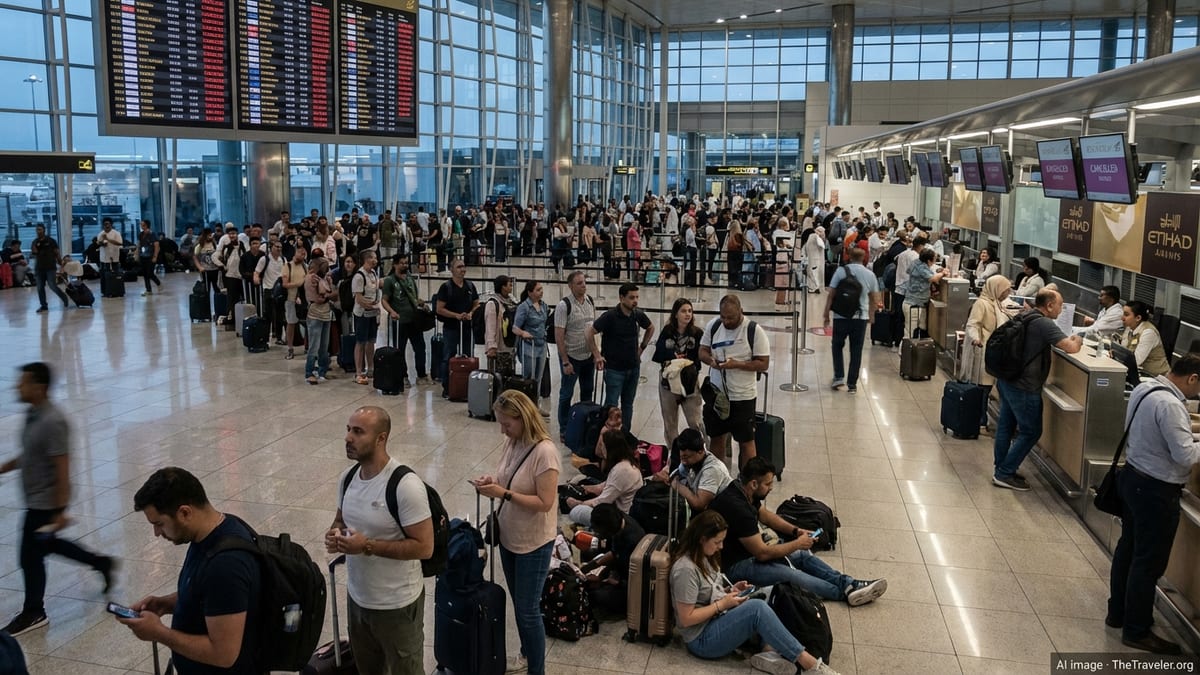
For passengers, the gradual resumption of flights has eased the most acute chaos seen during the height of the airspace closures, when hundreds of thousands of travelers were stranded or diverted at short notice. However, itineraries involving Middle Eastern stopovers still carry an elevated risk of late schedule changes.
According to route updates published by carriers, some airlines are offering only skeletal services to affected destinations, leaving fewer alternative options in the event of cancellation. Others, including several European and Asian operators, continue to block sales to certain cities even as they restart nearby routes, reflecting differing internal assessments of security and insurance constraints.
Travel advisories and independent passenger guidance consistently recommend that travelers connecting through hubs such as Dubai, Doha, Abu Dhabi or Riyadh monitor airline apps closely and verify flight status shortly before departure. Flexibility policies, including fee-free rebooking and refunds on disrupted routes, remain in place at a number of airlines but are changing as conditions evolve.
Longer routings can also affect the passenger experience. Multi-hour detours reduce available connection windows, increase the risk of missed onward flights and, in some cases, require additional technical stops. While some travelers may welcome lower fares on certain routes as airlines compete to rebuild demand, others face higher prices where capacity is still constrained.
Uncertain Outlook as Conflict Risks Persist
Looking ahead, aviation analysts describe the current situation as a precarious recovery rather than a full normalization. The pace and scope of additional route resumptions will depend heavily on how durable the ceasefire proves to be and whether regional tensions can be contained.
Industry research notes that the Iran conflict has layered fresh complexity on top of existing airspace challenges from the Russia Ukraine war and ongoing instability along parts of the Red Sea and Arabian Peninsula. Airlines are already contending with narrow routing corridors, higher fuel costs and limited room to absorb further shocks to global networks.
For now, airlines, regulators and air navigation authorities appear focused on incremental steps: reopening individual city pairs, refining overflight permissions and maintaining alternate routing plans in case conditions deteriorate. For travelers, that means more options than at the peak of the crisis, but also a continued need to plan for disruption when itineraries rely on the Middle East’s critical, and still vulnerable, aviation crossroads.