


More news on this day
Travelers at Switzerland’s two busiest airports, Geneva and Zurich, faced a day of mounting disruption as a total of 283 flights were delayed and eight canceled, tangling domestic and international schedules on routes to major European hubs.
Get the latest news straight to your inbox!
Swiss Hubs Snarled as Delays Ripple Across Europe
Publicly available flight disruption data for Europe shows that a cluster of operational issues resulted in 283 delayed flights and eight cancellations affecting services routed through Switzerland’s Geneva and Zurich airports. The disruption hit at a time of already tight summer schedules, compounding pressure on airlines and airport operations.
Both airports serve as critical gateways for connections between Switzerland and major European cities including London, Paris and Frankfurt. Geneva functions as a key base for SWISS and easyJet, while Zurich is the country’s primary international hub and the main base for Switzerland’s flag carrier. When schedules at these airports come under strain, delays often cascade across the wider European network.
Reports of widespread knock-on delays across the continent indicate that late-arriving aircraft and congested airspace contributed to the build-up. As flights missed their assigned slots, subsequent departures from Geneva and Zurich faced further hold-ups, leaving departure boards dominated by orange and red status updates.
Air travel monitoring services note that such disruption days rarely stem from a single cause. Instead, a mix of tighter schedules, high load factors, localized weather and constraints in surrounding airspace tend to combine, leaving airlines and airports limited room to recover once significant delays take hold.
SWISS, British Airways, Lufthansa, Air France and easyJet Among Affected Carriers
The disruption impacted a broad mix of full-service and low-cost airlines operating to and from Switzerland. Data compiled from flight tracking platforms and passenger-rights advisories indicates that SWISS, British Airways, Lufthansa, Air France and easyJet were among the most visible carriers facing delays and cancellations on the affected day.
Many of the delayed services linked Geneva and Zurich with major European hubs such as London, Paris and Frankfurt, key nodes in the continent’s aviation network. When departures from these hubs run late, aircraft often arrive behind schedule in Switzerland, forcing quick turnarounds or schedule reshuffles that can easily slip further as the day progresses.
Europe-wide disruption reports published in recent months highlight how even modest schedule changes at one hub can ripple outward, particularly on busy days. Once aircraft and crews are out of position, airlines may be forced to cancel rotations entirely, prioritizing routes with the highest demand or the most critical connections.
Low-cost carriers are not immune. easyJet, which maintains a large presence at Geneva, can see multiple departures bunched during peak hours. If air traffic control restrictions or weather-related constraints reduce the available takeoff and landing capacity, flights scheduled in tighter time windows are particularly vulnerable to rolling delays.
Passengers Face Long Queues, Missed Connections and Overnight Stays
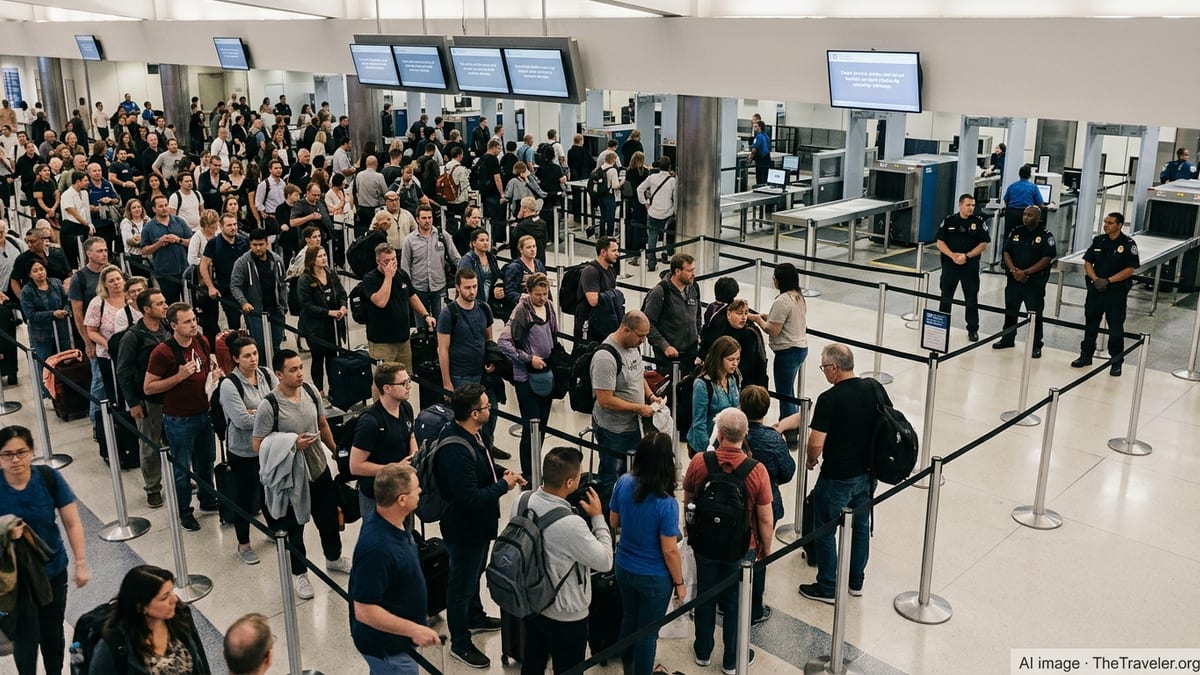
Travelers at Geneva and Zurich encountered the familiar consequences of large-scale operational disruption: long queues at check-in and transfer desks, crowded departure lounges, and a scramble to secure rebooked flights as options narrowed throughout the day.
Publicly available passenger accounts from recent disruption events at Swiss airports describe extended waits for rebooking assistance, with some travelers missing onward connections in London, Paris, Frankfurt and other hubs. Once evening curfews and crew duty-time limits came into play, remaining flights that might have absorbed delayed passengers were themselves subject to cancellation or further delay.
When flights arrive after their scheduled times, connecting travelers often find that onward services have already departed or have been filled by earlier disruptions. At busy hubs, spare seats become scarce, and travelers can be rebooked onto itineraries involving additional stops or longer layovers, sometimes adding many hours to journeys that were originally planned as short hops.
Published guidance from passenger-advocacy organizations notes that disruption at major hubs also affects airport services on the ground. As crowds swell around departure boards and service counters, terminal facilities such as seating, food outlets and restrooms come under strain, further adding to the stress of an already difficult travel day.
What Stranded Travelers Can Do Under European Passenger Rights Rules
Consumer organizations and air-travel rights platforms emphasize that travelers affected by extensive delays and cancellations in Europe benefit from comparatively strong protections, particularly on flights departing from European Union and associated airports or operated by European carriers. Switzerland aligns closely with these frameworks, meaning that many passengers departing Geneva and Zurich may be covered.
Under European-style passenger rights regimes, travelers whose flights are canceled at short notice are generally entitled to a choice between a refund of the unused ticket portion or re-routing to their final destination at the earliest opportunity. When delays extend significantly, airlines may also be obliged to offer meals, refreshments and, if an overnight stay becomes necessary, hotel accommodation and transport between the hotel and the airport.
Where disruption is not caused by extraordinary circumstances such as severe weather or airspace closures, passengers may, in some cases, be eligible for standardized financial compensation, scaled according to the length of the journey and the duration of the delay at arrival. Rights-focused organizations advise travelers to document delay times carefully and retain boarding passes and receipts in case they decide to submit a claim later.
Specialist services underline that travelers do not have to accept travel vouchers in place of cash reimbursements if regulations entitle them to a refund or compensation. However, processing times for claims can vary, and some airlines request additional documentation, so keeping records organized is important.
Practical Steps for Upcoming Trips Through Geneva and Zurich
With European summer traffic building, travel analysts caution that days of intense disruption are likely to recur, particularly at major hubs such as Geneva and Zurich. Passengers planning trips through these airports are encouraged by public advisories to take a few practical steps to reduce the risk of severe inconvenience.
First, travelers are advised to monitor their flight status frequently in the 24 hours before departure and again before leaving for the airport. Official airline apps and airport information channels typically provide the most up-to-date details on delays, gate changes and cancellations, often with options to accept rebooking proposals digitally.
Second, allowing extra time for connections can provide a buffer when schedules tighten. While short minimum connection times may appear attractive when booking, a longer layover at a hub such as Zurich or Geneva can help protect against missed onward flights if the first leg runs late. For critical journeys, some travel-planning resources suggest avoiding the last flight of the day on key segments where possible, to preserve rebooking options.
Finally, travel insurance that explicitly covers delays and missed connections can help soften the financial impact of disruption days like the one that left travelers stranded in Switzerland. Policies vary widely in coverage and exclusions, so passengers are encouraged to review terms in advance, paying close attention to requirements for documentation, time thresholds and claim procedures.