


More news on this day
Airlines are intensifying efforts to use less jet fuel and burn it more cleanly, accelerating investments in efficient aircraft, sustainable aviation fuels and smarter flight operations as pressure mounts to cut emissions and costs.
Get the latest news straight to your inbox!
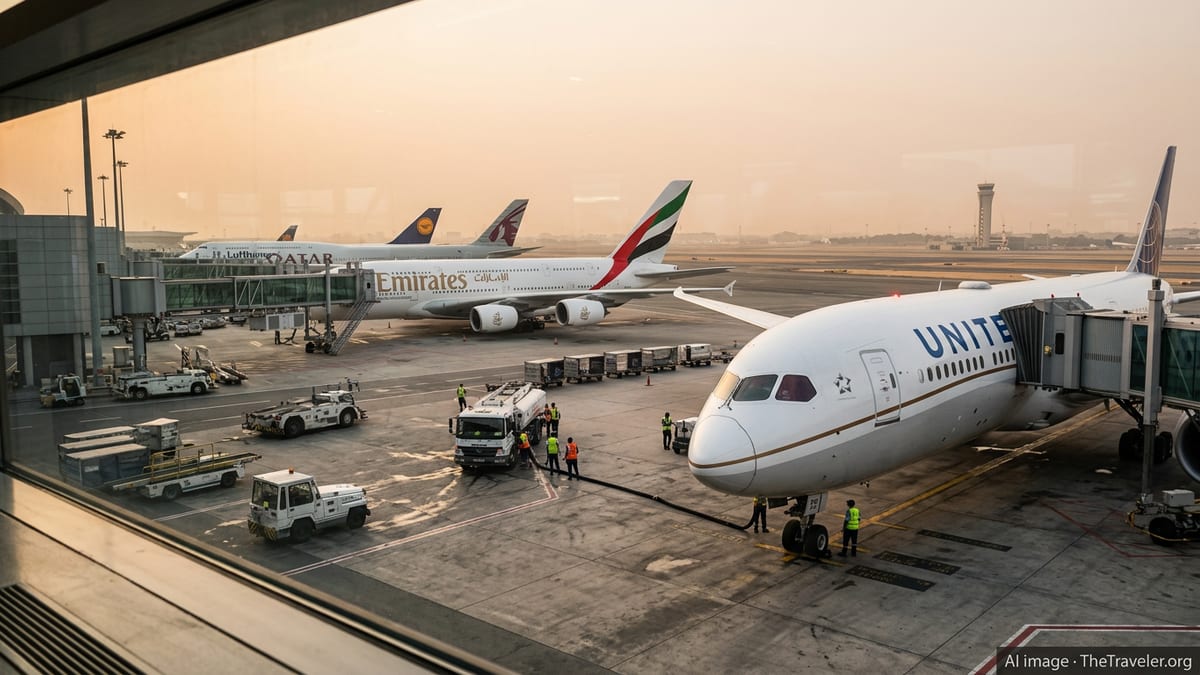
Fleet Renewal Drives Immediate Efficiency Gains
Major carriers are leaning on fleet renewal as their fastest lever to improve fuel efficiency, shifting capacity into aircraft that consume significantly less fuel per seat than the jets they replace. Publicly available order data shows that the Airbus A320neo and A321neo families, along with Boeing’s 737 MAX series and latest-generation long haul types, dominate many airlines’ forward fleets as they phase out older models.
Leasing companies are reinforcing that trend. In March 2026, AerCap placed an order for 100 additional A320neo-family aircraft, describing the jets as in-demand, fuel-efficient technology for airline customers seeking lower operating costs and emissions. The order extends a global pivot toward narrowbody aircraft that can deliver double digit percentage reductions in fuel burn compared with previous generations.
Individual airlines are following a similar playbook. Delta Air Lines reported in early 2026 that its A321neo fleet had grown to more than 90 aircraft, with nearly 100 further jets on firm order. The carrier highlights the Pratt & Whitney geared turbofan engines on these aircraft for delivering fuel burn and noise benefits that support its efficiency and sustainability objectives.
Across Europe, the same logic is reshaping fleets. Aegean Airlines, for example, has expanded its A321neo commitments as part of a broader renewal strategy, while groups such as Air France-KLM have added large numbers of new widebody aircraft to replace older, less efficient long haul jets. These moves are intended to lock in lower fuel consumption for years ahead, even as traffic grows.
Sustainable Aviation Fuel Moves From Pilot to Portfolio
While new aircraft reduce the amount of fuel burned, airlines are also working to change what goes into the tanks. Sustainable aviation fuel, or SAF, remains a small fraction of global jet fuel use, but recent deals indicate that it is becoming a core part of airline fuel strategies rather than a side experiment.
In June 2026, American Airlines and Google announced a large agreement for sustainable aviation fuel certificates covering tens of millions of gallons over three years. The arrangement is structured so that American takes physical delivery of SAF at Chicago O’Hare International Airport, produced from waste feedstocks such as used cooking oil, while Google uses the certificates to address emissions from its business travel. Company disclosures describe the deal as one of the largest corporate SAF certificate agreements to date and estimate that it could avoid hundreds of thousands of metric tons of carbon dioxide equivalent emissions over its term.
Other carriers are signing multi year contracts to secure future supply. Aviation Week reporting indicates that Delta Air Lines recently agreed a five year SAF supply contract with Shell Aviation, with at least 15 million gallons scheduled for delivery in 2026 and options to scale volumes over the life of the deal as the market develops. According to coverage of the agreement, deliveries will occur at multiple airports, supporting Delta’s plan to integrate SAF into day to day operations.
Airlines in Asia and the Middle East are also moving from trials to longer term commitments. Cathay Pacific has entered a joint investment agreement with Airbus worth up to 70 million dollars to advance SAF production in Asia and beyond, while carriers in alliances such as oneworld have launched dedicated funds with investors to back next generation SAF technologies. These programmes aim to close the gap between high demand for cleaner fuel and limited, expensive supply.
Building Regional SAF Supply Chains
Alongside offtake contracts, airlines are increasingly involved in efforts to build local SAF production ecosystems, seeking to reduce exposure to volatile fossil fuel markets and regional supply risks. Partnerships announced over the past year show carriers teaming up with refiners, energy companies and governments to create new fuel value chains.
In the United States, Alaska Airlines and Hawaiian Airlines are collaborating with Par Hawaii and Pono Energy on plans to produce SAF in Hawaii, with initial deliveries targeted for 2026. Public information on the initiative indicates that the project is intended to diversify the state’s fuel mix, improve energy resilience and create agricultural opportunities to supply feedstocks, while helping the combined airline group lower its emissions on inter-island and transpacific routes.
In the Pacific Northwest, Boeing and Alaska Airlines have joined regional partners to launch the Cascadia Sustainable Aviation Accelerator. According to project descriptions, a future research facility at Paine Field in Washington state will focus on developing a regional supply chain for SAF, targeting technologies that can scale production of lower emission jet fuel for airlines operating across the region.
European and Asian carriers are pursuing similar models. Air France-KLM has invested in SAF producer DG Fuels to support development of a plant in the United States, building on an existing long term offtake agreement. In Hong Kong, Cathay’s collaboration with Airbus is framed as a way to accelerate SAF production both in Asia and globally, recognising that regional capacity will be critical if airlines are to meet emerging mandates and voluntary targets.
Operational Tweaks and Digital Tools Cut Fuel Burn
Beyond hardware and fuel, airlines are sharpening their focus on how flights are planned and operated, using data and software to trim fuel use at the margins. Industry reporting shows carriers experimenting with new techniques to avoid contrails, optimise cruise altitudes and speeds, and fine tune weight and balance decisions.
American Airlines has worked with technology partners including Google and specialist flight planning firms on a multi week trial that integrated contrail avoidance into day to day operations. The company’s summary of the trial indicates that by adjusting flight paths in line with atmospheric forecasts, it was able to reduce contrail formation by more than half while maintaining safety and schedule integrity. Although contrails are a climate rather than fuel use issue, the project demonstrates how digital tools can reshape operational decisions in real time.
Other initiatives focus directly on fuel burn. Airlines are extending single engine taxi procedures where feasible, revising performance calculations for takeoff and landing, and using updated aircraft performance software to identify optimal climb and descent profiles. Over thousands of daily flights, these incremental savings compound to meaningful reductions in fuel consumption and associated emissions.
Airport infrastructure and air traffic management also play a role. Industry analyses highlight that more efficient routing, reduced holding times and modernised approach and departure procedures can shave fuel use without any change to aircraft hardware. Airlines are lobbying for these improvements even as they push ahead with their own operational efficiency programmes.
Net Zero Ambitions Strain Against Scale and Cost
Despite rapid activity, the sector’s overarching climate goals remain challenging. The International Air Transport Association has committed its members to net zero carbon emissions by 2050, with published roadmaps indicating that the majority of emissions reductions are expected to come from sustainable aviation fuel, alongside new aircraft technologies and efficiency measures.
Current numbers underscore the scale of the task. IATA’s latest figures put SAF supply at a fraction of global jet fuel demand, and airlines and fuel suppliers acknowledge that production must expand dramatically over the next two decades to align with net zero pathways. Many of the highest profile SAF deals announced in 2025 and 2026 involve volumes that, while large by today’s standards, still represent a small share of individual airlines’ overall fuel needs.
Cost is another constraint. Industry groups report that airlines are paying roughly twice the price of conventional jet fuel for SAF on average, even when supported by tax credits and other policy incentives. This price gap has so far limited uptake to carriers and corporate customers willing or able to absorb higher costs for reputational and regulatory reasons.
Even with these headwinds, the direction of travel is clear. Fleet renewal, SAF investments, regional production initiatives and operational efficiencies are now central to airline strategies, not fringe sustainability projects. For travelers, the shift is most visible in newer, quieter aircraft and a growing number of flights partially powered by alternative fuels, signalling that fuel efficiency has moved to the heart of commercial aviation’s future.