


More news on this day
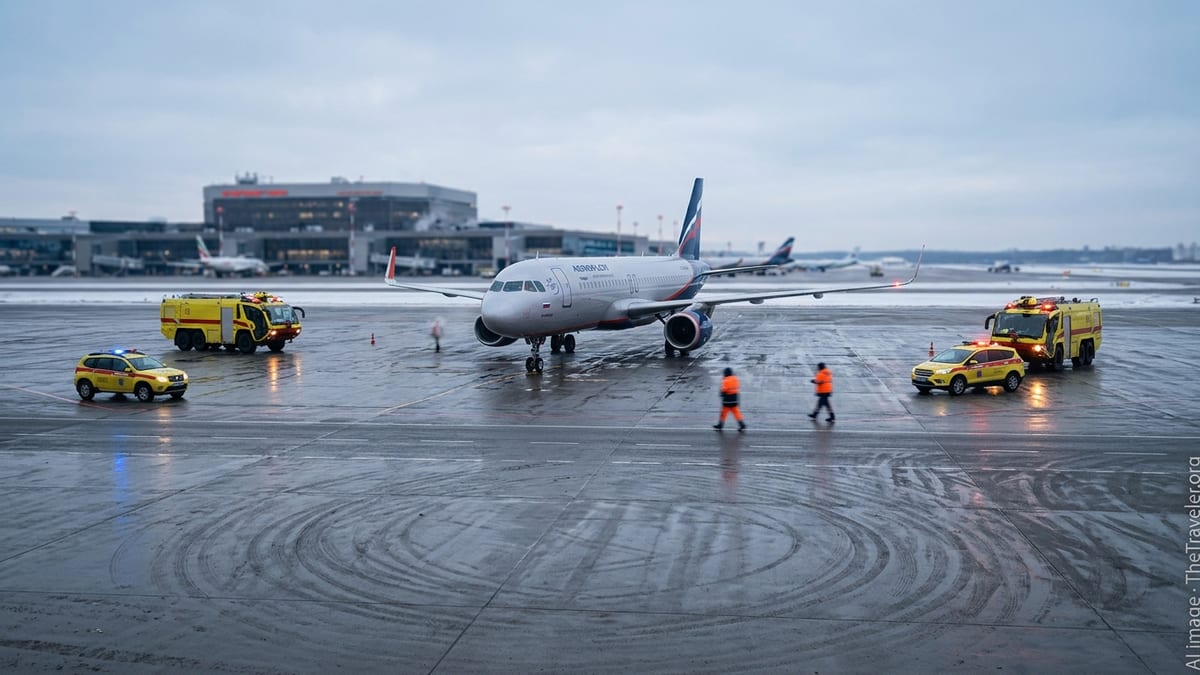
The first Syrian Airlines passenger flight in more than a year and a half has arrived in Moscow, marking a cautious resumption of direct civilian air links between Syria and Russia after a prolonged suspension tied to security concerns and international sanctions.
Get the latest news straight to your inbox!
Symbolic Restart of a Sanctioned Carrier’s Route
According to published coverage from regional aviation trackers and Russian media, the newly restored service is operated by state-owned Syrian Airlines between Damascus International Airport and Moscow’s Sheremetyevo Airport. The arrival represents the carrier’s first scheduled passenger operation on the route in over 18 months, after a period in which only sporadic charter and cargo services were recorded between the two capitals.
Publicly available flight data indicate that the resumed rotation is being flown as a regular scheduled service rather than an ad hoc charter, suggesting that Syrian Airlines and airport authorities on both ends anticipate at least modest, recurring demand. The operation places the Syrian flag carrier back into a long-established corridor that has historically linked Syria with one of its main political and economic partners.
The restart comes against the backdrop of extensive international sanctions that continue to restrict investments, spare parts and financial transactions connected to Syria’s aviation sector. Industry observers note that any expansion of passenger services remains constrained by these measures, as well as by insurers’ assessments of overflight and landing risks.
While specific load factors on the inaugural flight were not immediately available, aviation analysts describe the move as more politically and symbolically significant than commercially transformative. The resumption nonetheless signals a gradual rebuilding of Syria’s limited network of direct international passenger routes, which were dramatically reduced during the country’s long conflict.
What the New Flight Means for Travelers
For passengers, the return of Syrian Airlines to Moscow provides an additional option in a market that has largely been served by foreign and private Syrian carriers in recent years. Travelers previously relied on connections via third countries in the Middle East or through indirect routings that added hours to total journey times between Syria and Russia.
Publicly available booking information suggests the flight is targeting a mix of Syrian expatriates, students, business travelers and individuals with family ties across the two countries. The route may also attract some onward transit traffic via Moscow, although Russia’s own isolation from Western airspace limits the practical connectivity available beyond the region.
Travel industry specialists caution that potential passengers should pay close attention to fast-changing visa rules, payment restrictions and airline schedule reliability. Given the ongoing volatility in both the Syrian and wider regional security environment, they advise monitoring official travel advisories and airport notices before committing to itineraries involving Damascus.
Reports from recent travelers through Moscow indicate that Sheremetyevo continues to function as Russia’s primary international hub, with operational conditions described as relatively stable despite the broader geopolitical climate. This could provide a degree of predictability for those using the new Syrian Airlines service as their main gateway into Russia.
Aviation Recovery Through Syrian Airspace
The reopening of the Damascus–Moscow passenger link comes amid a broader recovery in flights crossing Syrian airspace. Data shared by regional observers show a sharp increase in overflights in the past year, reflecting airlines’ gradual return to routes that had been avoided during the height of the conflict.
Syria charges a flat overflight fee, making the country’s airspace an important revenue source at a time when domestic economic conditions remain severely strained. The uptick in aircraft movements above Syrian territory underscores how regional and international carriers are recalibrating risk calculations as front lines stagnate and major battles recede further into the past.
However, the presence of active military facilities and periodic reports of strikes in and around Syria continue to shape commercial aviation decisions. Flight planners still weigh alternative routings through neighboring states, especially for carriers whose insurers maintain strict limitations on operations in or near conflict zones.
For Syrian Airlines, operating its own metal on a prominent international trunk route reflects a modest but notable step in restoring the national carrier’s visibility in regional skies. The Damascus–Moscow service complements a small portfolio of destinations in the Middle East and other nearby markets that the airline has managed to maintain or revive in recent years.
Geopolitical Undercurrents Behind the Route
The return of Syrian Airlines to Moscow highlights the enduring alignment between Damascus and Moscow. Air links between the two capitals have long mirrored political ties, from regular pre-war schedules to the consolidation of military cooperation once the conflict escalated.
Analysts note that Russia has served as a crucial backer of the Syrian government, providing military support and diplomatic cover in international forums. The restoration of a state-run Syrian carrier’s civilian route into Moscow reinforces the impression of normalized cooperation in areas such as tourism, education and limited trade, even as much of the international community maintains sanctions and political pressure.
From a regulatory standpoint, the new passenger operation exists within a complex matrix of export controls and financial restrictions targeting both Syria’s government and parts of Russia’s aviation sector. Industry reporting indicates that carriers under sanctions often rely on intricate leasing arrangements, third-party maintenance providers and non-Western suppliers to keep fleets airworthy and insured.
Travel experts stress that these geopolitical undercurrents can affect travelers in practical ways, from sudden schedule adjustments to restrictions on the use of certain bank cards or currencies when purchasing tickets. Passengers are advised to verify payment options and refund policies carefully before booking itineraries that involve sanctioned carriers or airports subject to evolving regulatory regimes.
Outlook for Syria–Russia Air Connectivity
Looking ahead, aviation analysts expect the Damascus–Moscow route to remain relatively low-frequency, at least in the near term. Demand is likely to be driven primarily by essential travel rather than large-scale tourism, given Russia’s ongoing economic challenges and Syria’s slow and uneven reconstruction.
Additional frequencies or the introduction of competing services would depend on sustained passenger demand, improved security perceptions and the ability of airlines to source aircraft, parts and insurance in an environment still shaped by far-reaching sanctions. Any further deterioration in the regional security landscape could also quickly reverse recent gains.
For now, the arrival of the first Syrian Airlines passenger flight in more than 18 months at Moscow’s Sheremetyevo Airport stands as a notable development in a constrained market. It demonstrates that, even amid complex geopolitical headwinds, air routes continue to reopen in incremental steps, reconnecting long-standing partners and offering travelers new, if still limited, options across a politically sensitive corridor.