


More news on this day
American Airlines is joining Delta, Lufthansa, Qatar Airways, Emirates and other major carriers in a renewed push to upgrade premium airport lounges, betting that personalized service, elevated dining and smoother ground experiences will sway lucrative business and leisure travelers in a fiercely competitive market.
Get the latest news straight to your inbox!
American Steps Up Its Flagship and Admirals Club Ambitions
American Airlines has been steadily expanding and refreshing its network of Flagship and Admirals Club lounges across key hubs, positioning the ground experience as a core part of its premium strategy. Publicly available information highlights new and upgraded spaces at major gateways such as Dallas Fort Worth, Miami and New York, with a particular focus on long haul and transatlantic traffic.
At Philadelphia International Airport, where American operates a large transatlantic hub, the airline has unveiled both Flagship and Admirals Club lounges in Terminal A-West. Reports indicate that the lounges were designed as a "newest airport oasis" concept, with upgraded interiors, expanded seating and spa-style amenities intended to support connecting traffic between North America and Europe. The lounges serve eligible AAdvantage members, oneworld elites and premium cabin passengers, underscoring American’s effort to tie its loyalty program more closely to the ground experience.
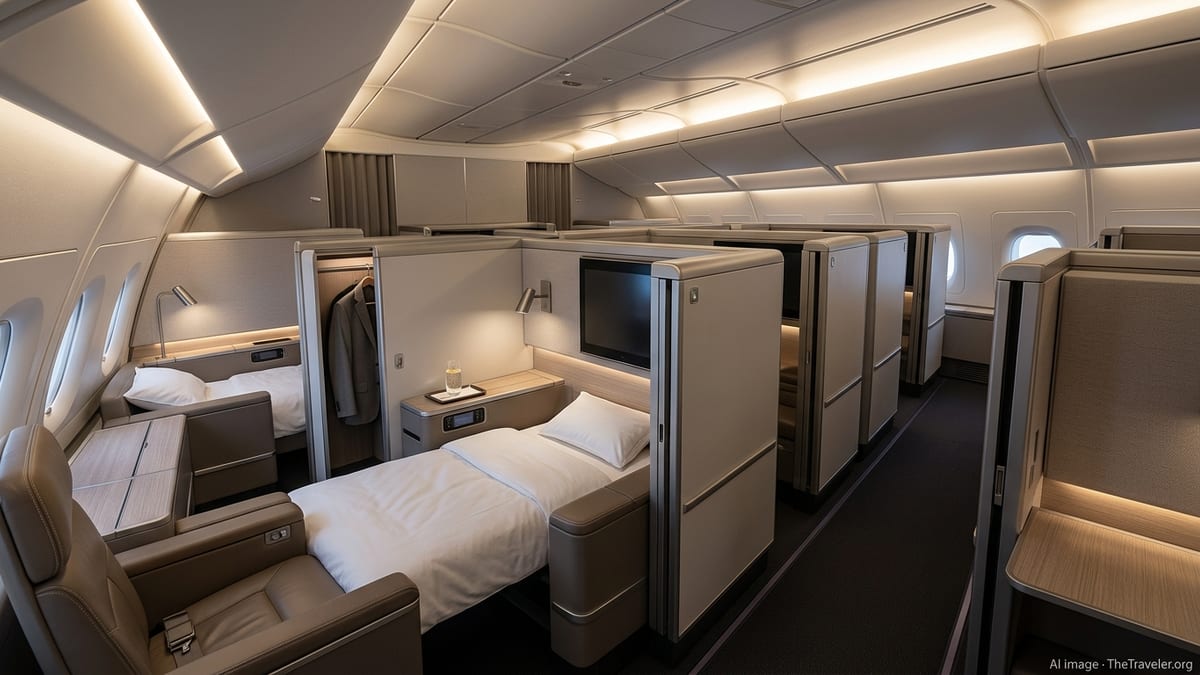
American is also linking its in-lounge offer to the broader refresh of its long haul cabins, including the Flagship Suite product being introduced on new widebody aircraft. The strategy aligns onboard and on-the-ground touchpoints, offering more private seating, enhanced food and beverage and tailored wellness products throughout the journey. Industry coverage notes that the airline describes its premium lounge footprint as one of the most extensive in the United States, with continued capital earmarked for refurbishments and new openings in the coming years.
That investment is framed as a way to win back high-spend corporate travelers while also targeting affluent leisure customers who increasingly book premium cabins for long haul vacations. By improving shower facilities, quiet work areas and family-friendly zones, American is aiming to create spaces that feel less like traditional business lounges and more like multi-purpose extensions of the cabin experience.
Delta Builds an Exclusive Tier of Premium Lounges
Delta Air Lines is pursuing an even more segmented lounge strategy, layering a new class of premium lounges on top of its existing Sky Club network. Company communications released in 2024 and subsequent coverage detail a slate of premium venues at New York John F. Kennedy International Airport, Los Angeles International Airport and Boston Logan, alongside expanded or refreshed Sky Clubs at other busy hubs.
At JFK, Delta opened what has been described as its most expansive premium lounge to date for Delta One and other top-tier customers. The space features a full-service brasserie, chef-assisted market-style dining, wellness zones and multiple bar areas set within a footprint of tens of thousands of square feet. Media reports emphasize that design details reference New York landmarks, part of a broader push to give each premium lounge a distinct sense of place rather than a uniform template.
Delta has signaled that its premium lounges will be more tightly controlled than regular Sky Clubs, with access generally centered on long haul business class passengers and a small pool of top-spending loyalty members. The carrier has also highlighted its intent to offer a "highly personalized" level of hospitality, supported by staff training, curated menus and expanded concierge-style assistance for disruptions and rebooking.
Separate from the premium tier, Delta continues to grow the Sky Club footprint at airports such as Seattle, Miami and LaGuardia, adding new clubs and square footage to ease crowding. This two-tier structure reflects a broader trend in which airlines are not only expanding lounges but segmenting them, reserving the most exclusive spaces for customers with the highest revenue potential.
Lufthansa’s Allegris Concept Extends from Cabin to Lounge
Lufthansa is using its multibillion-euro Allegris program, originally centered on new long haul cabin products, as a template for redesigning its lounges. The airline describes Allegris as its largest product and service offensive in decades, running through 2025 and touching every cabin from Economy to First. Part of that effort is a next-generation lounge concept intended to mirror the customization and variety found onboard.
The first major expression of that concept emerged at Newark Liberty International Airport, where Lufthansa has unveiled a redesigned lounge that aligns with the Allegris aesthetic. Reports from aviation and travel publications describe a warm, residential-style interior with a range of seating types, quiet areas for working, and upgraded showers and refreshment stations. The Newark lounge has been cited as a pilot for the Allegris lounge identity before it is fully implemented at Lufthansa’s hubs in Frankfurt and Munich.
Lufthansa has outlined a goal of offering more choice in both seating and services, allowing passengers to curate their time on the ground in the same way they can select different seat types on Allegris-equipped aircraft. That includes dedicated zones for dining, relaxation, productivity and families, plus technology-enabled features such as improved power access and digital information displays designed to simplify connections.
The investment comes at a time when European network carriers are under pressure from both Gulf rivals and low cost competitors. By coordinating cabin upgrades with new lounges, Lufthansa is seeking to reinforce its position in the premium market and rebuild brand perception among business travelers after several years of disruption and delays to its product roadmap.
Gulf Carriers Elevate the Lounge to Flagship Status
In the Gulf, airlines such as Qatar Airways and Emirates have long treated lounges as an extension of their flagship premium brands, and recent developments suggest that they are doubling down on this approach. Public coverage of new and refreshed lounges in Doha and Dubai highlights expanded fine dining, private suites and family spaces, as well as investment in wellness and spa-style services.
Qatar Airways has continued to refine its lounge offering at Hamad International Airport, including separate facilities for different cabin classes and loyalty tiers. Business and first class lounges feature made-to-order dining menus, barista coffee bars and quiet rooms that resemble hotel suites more than traditional airport seating areas. Observers note that these spaces are designed to complement the airline’s Qsuite business class cabins, giving customers a consistently high level of privacy and service from check-in to arrival.
Emirates, meanwhile, has been upgrading lounges at its Dubai hub and at selected outstations to align with a broader refurbishment of its fleet and cabins. Descriptions of the carrier’s most recent lounge projects point to refreshed interiors, expanded gourmet buffets and à la carte dining, as well as more extensive shower and relaxation facilities. Emirates also continues to integrate lounge access with its Skywards program, using the spaces as both a reward and a tool to encourage higher engagement with the airline.
The Gulf carriers’ focus on large, architecturally striking lounges with restaurant-level cuisine and spa services has raised expectations across the industry. As their networks grow into North America, Europe, Africa and Asia-Pacific, these products help reinforce their premium positioning even on routes where they compete head-to-head with US and European legacy airlines.
Personalisation, Dining and Ground Service Become Competitive Battlegrounds
Across all these airlines, several common themes are emerging that signal how the premium lounge is evolving. Personalisation sits at the top of the list, with carriers experimenting with more diverse seating layouts, quieter zones, family areas and even wellness corners so that travelers can choose how they spend their time before boarding. Some lounge designs are being tied closely to local culture, incorporating regional art, flavors and materials to distinguish one location from another.
Dining has also become a primary competitive battleground. Reports from industry analysts and travel media describe a shift away from basic buffets toward chef-developed menus, staffed stations and made-to-order dishes, particularly in the newest lounges from American, Delta and Lufthansa, as well as the longstanding Gulf carrier flagships. Expanded bar selections, barista coffee, and greater accommodation of dietary requirements are now key points of differentiation.
At the same time, airlines are using lounges as operational tools to deliver better ground service. Enhanced rebooking support during irregular operations, more visible customer service desks and improved digital information screens are all intended to reduce stress during delays and tight connections. For high-value customers, some lounges now facilitate priority security or direct boarding, linking the space more tightly to the overall airport journey.
Industry observers suggest that these investments reflect a fundamental shift in how airlines court business and premium leisure travelers. With competition intense on many long haul routes and aircraft cabins converging in quality, the ground experience has become a powerful way to stand out. As American, Delta, Lufthansa, Qatar Airways, Emirates and their peers continue to commit capital to premium lounges, airport terminals are increasingly turning into branded hospitality environments where personalized service and high quality dining are as important as the seat waiting at the gate.