


More news on this day
As winter trip planning ramps up, some of the Caribbean’s most in-demand islands are appearing on the U.S. State Department’s travel advisory list, prompting many Americans to ask how much weight these notices should carry when booking a beach escape.
Get the latest news straight to your inbox!
How U.S. Travel Advisories Work for Caribbean Trips
The U.S. Department of State assigns every foreign destination a travel advisory level from 1 to 4, based on factors such as crime, civil unrest, health care capacity and natural disasters. Recent advisories show a mixed picture across the Caribbean, with some islands at Level 1, or “exercise normal precautions,” and others at Level 2 or Level 3, which signal higher security or infrastructure concerns for visitors.
Level 2, labeled “exercise increased caution,” currently applies to several high-profile vacation spots in the region, including The Bahamas and Belize, primarily due to crime patterns in certain urban or nightlife areas. Publicly available information emphasizes that these advisories do not ask travelers to cancel trips; instead, they encourage visitors to be more deliberate about where they stay, how they move around and when they venture off resort grounds.
Level 3, “reconsider travel,” has in recent years applied to some Caribbean countries when violent crime or access to emergency medical care rose to the forefront. Past State Department materials and independent analyses note that these higher-level advisories often point to very specific neighborhoods or types of activity, while core resort corridors continue to see heavy tourism.
For travelers, the key takeaway is that the advisory level is a broad risk signal for an entire country, not a block-by-block map. Winter vacation planners are being encouraged by consumer advocates to read the full text of each advisory, which typically details the locations, times of day and behaviors that are associated with the greatest risk.
The Bahamas: Level 2 Advisory Amid Strong Tourist Demand
The Bahamas remains one of the most popular winter getaways for U.S. travelers, and as of late July 2026, it is designated Level 2 due to crime. The latest advisory and related U.S. government safety pages state that violent incidents such as armed robberies, burglaries and sexual assaults have occurred, with most reported crime concentrated in Nassau on New Providence Island and in Freeport on Grand Bahama.
Guidance for visitors highlights particular caution in Nassau’s “Over the Hill” area south of Shirley Street, where authorities have documented gang-related violence, as well as in some vacation rentals that lack private security. Publicly available information also points to recurring problems involving unregulated jet ski and personal watercraft operators around New Providence and Paradise Island, including reports of injuries and sexual assaults connected to those services.
Despite the Level 2 rating, recent data shared by Bahamian officials and U.S. commercial overviews indicate that major crime categories have declined compared with 2025, and resort corridors in Nassau, Paradise Island and the Out Islands continue to post strong visitor numbers. Travelers flying in for winter stays are being advised to arrange transport with licensed taxis or hotel shuttles, confirm whether their resort has controlled access and security staff, and avoid walking alone late at night in poorly lit areas away from the main tourist zones.
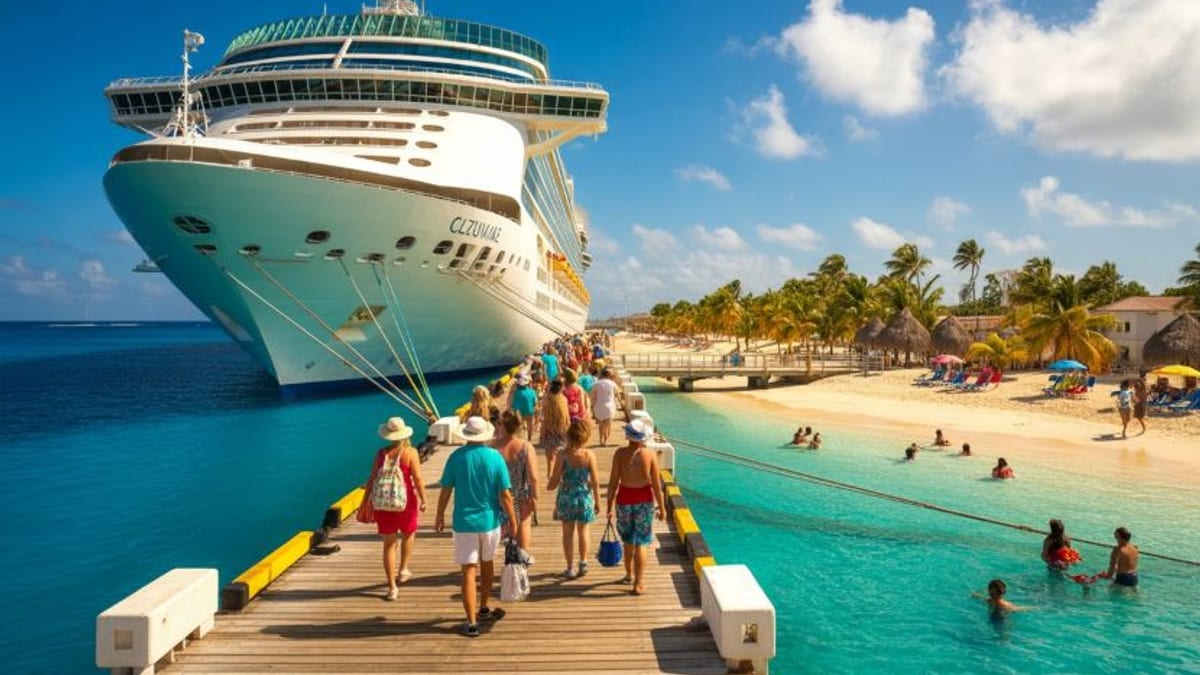
Cruise passengers calling at Nassau or Freeport are being urged to follow ship and tour operator guidance on vetted excursions, keep valuables out of sight and treat jet ski offers or street tours from unlicensed operators with caution. The State Department advisory notes that most visitors complete their trips without incident when they remain aware of their surroundings and follow common urban safety practices.
Jamaica and the Dominican Republic: Reading Between the Lines
Jamaica and the Dominican Republic, two other fixtures of North American winter travel, have seen their U.S. advisory levels change over the past several years in response to shifting crime statistics and public-health conditions. Archived U.S. government travel facts show that Jamaica was previously under a Level 3 advisory that cited violent crime and limitations in medical services, while more recent coverage and third-party summaries point to adjustments in that rating as security conditions evolved.
Similarly, the Dominican Republic saw pandemic-era advisories that focused on Covid-19, while later updates have shifted emphasis toward crime in some urban districts and transportation safety, including guidance against using motorcycle taxis for U.S. government personnel. These patterns illustrate how advisory language can move over time from health-driven concerns to crime-oriented warnings, even as beach resorts on Punta Cana’s coastline or Jamaica’s north shore continue to attract large numbers of winter visitors.
For both destinations, publicly available travel guidance underscores that risks are not evenly distributed. Many of the neighborhoods cited for higher levels of violent crime are far from gated all-inclusive resorts, and some advisories specifically caution against using informal taxis, walking in isolated areas after dark, or exploring inner-city districts without a trusted local contact. Travelers who stick to organized excursions, prearranged airport transfers and well-known resort areas often encounter a very different environment from the one described in the highest-risk city zones.
Prospective winter visitors are encouraged to compare U.S. advisories with information from other national governments, such as Canada or the United Kingdom, to build a more layered picture of current conditions. While wording and emphasis differ, these separate advisories can help travelers identify recurring themes, such as particular parishes, provinces or nightlife strips that appear repeatedly in international safety briefings.
Practical Steps Before Booking a Winter Escape
Regardless of destination, official travel resources in the United States recommend several concrete steps for anyone heading to the Caribbean this winter. The State Department’s Smart Traveler Enrollment Program allows U.S. citizens to register their trip so they receive security updates and so consular staff have contact details in case of emergencies. Safety portals on U.S. and Puerto Rican government sites also point travelers to country information pages that consolidate entry requirements, health notices and recent security developments.
Insurance and documentation are another focus area. Travel and health insurance policies that include emergency medical evacuation are frequently highlighted in public guidance for Caribbean trips, especially where local hospitals may have limited intensive care capacity or where serious injuries could require transport to the U.S. mainland. Travelers are also reminded to verify that passports are valid for at least six months beyond their planned return date, as some Caribbean countries enforce that minimum validity.
On the ground, security-focused recommendations are straightforward but specific: use hotel safes for passports and most of your cash, carry only the cards and amount of money you will need for the day, and rely on licensed taxis, ride services vetted by your hotel, or organized excursions when leaving resort properties. Reports concerning crime in ports and resort towns frequently mention thefts of unattended bags and opportunistic pickpocketing, so keeping phones and wallets out of back pockets and off restaurant tables can significantly reduce risk.
Alcohol and water activities receive special attention in current guidance, with several recent notices linking serious incidents to intoxication combined with late-night swimming, boating or jet skiing. Winter visitors booking snorkel trips, catamaran cruises or motorized water sports are being urged to check that operators appear properly insured, provide life jackets and basic safety briefings, and avoid nighttime or heavily intoxicated outings.
Balancing Risk and Reward for Caribbean Winter Travel
For many travelers, news of a Level 2 or Level 3 advisory for a favorite island can seem at odds with images of crowded beaches and full flights. Tourism experts and regional officials have repeatedly noted that advisories are not bans on travel but risk communications intended to help visitors make informed decisions, particularly about where they stay and how they spend their time off property.
Winter vacation planners weighing a Caribbean escape this season may wish to start by checking the advisory level and then drilling into the detailed sections on crime, health and transportation. Comparing that information with the exact location of a prospective hotel or rental, along with recent news coverage about crime trends or hurricane recovery, can reveal whether the property sits within the areas highlighted in the advisory or well outside them.
Ultimately, the decision to travel is personal, shaped by each traveler’s tolerance for risk and their willingness to follow safety guidance. For many Americans, the combination of warm weather, direct flights and familiar resort brands continues to outweigh the concerns reflected in official advisories. For others, the same notices may be a prompt to choose a Level 1 island or to postpone certain itineraries until security conditions stabilize.
What is clear from the latest available information is that U.S. advisories for Caribbean destinations are now a regular feature of winter trip planning. Travelers who treat them as one input among many, rather than as the sole determinant of whether to go, are likely to be best positioned to enjoy the region’s beaches and culture while taking sensible precautions.