


More news on this day
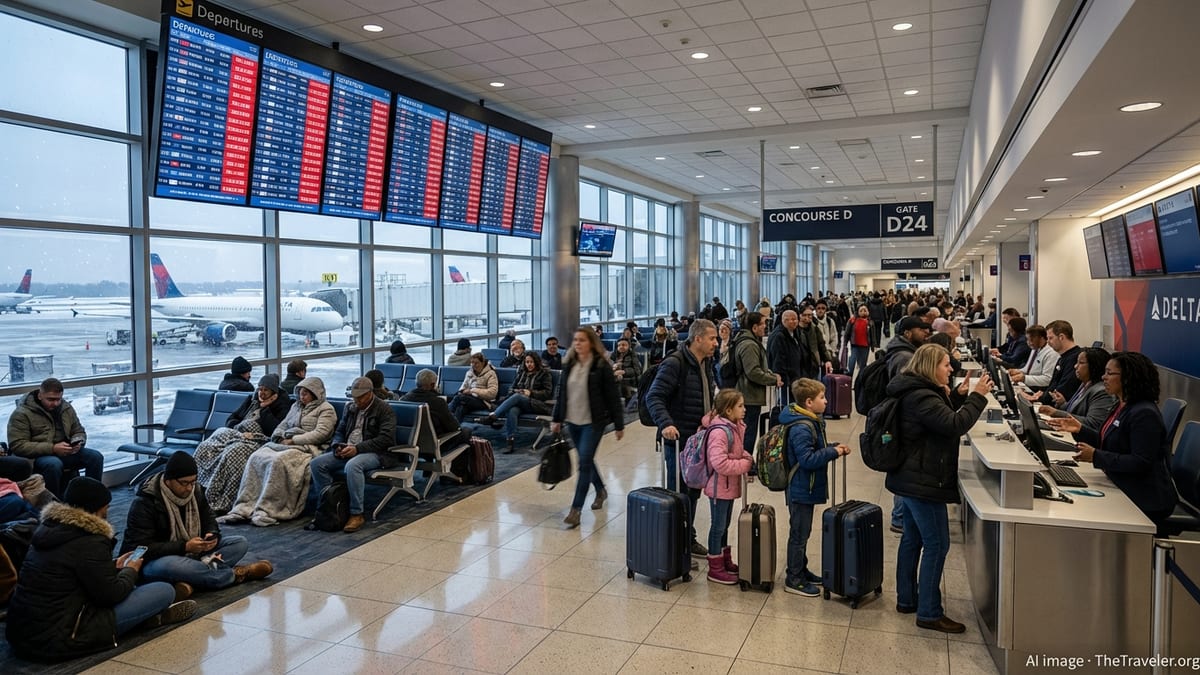
Air travelers across the central United States face growing disruption today as major carriers introduce weather-related travel waivers ahead of a volatile storm system threatening severe thunderstorms in the Midwest and flooding rain across parts of the Southeast.
Get the latest news straight to your inbox!
Major Carriers Move Early As Forecasts Turn More Severe
Airlines are acting preemptively as meteorologists highlight a heightened risk of dangerous storms from the central Plains through the Midwest and into the lower Mississippi Valley on Wednesday, June 17, 2026. Forecast discussions from national and regional weather outlets describe a volatile setup capable of producing tornadoes, damaging winds and large hail across portions of Iowa, Missouri, Illinois, Indiana and Ohio, with additional heavy rain and severe storm potential extending south toward the Gulf Coast.
The NOAA Storm Prediction Center’s latest outlook places a moderate, level four of five, risk of severe weather centered on the Chicago area and northern Illinois, with storms expected to intensify through the afternoon and evening hours. Separate guidance from emergency management agencies in the South points to a broad swath of marginal to slight risk for severe wind gusts and embedded tornadoes stretching from Texas to Alabama and the Florida Panhandle.
With this broad corridor of unsettled weather crossing some of the country’s busiest air corridors, airlines are turning to advance waivers to cut down on last-minute cancellations, reduce congestion at hubs and give customers more control over their itineraries before storms peak.
Delta Targets Southeast As Flood Threat Builds
Delta Air Lines has introduced a focused exception policy for Southeast severe weather covering travel on June 17 and 18, 2026. According to details posted on the carrier’s agency information site, the policy applies to tickets issued on or before June 16 for flights operated by Delta and its regional partners, as well as certain joint venture services.
The waiver zone includes a wide stretch of the central Gulf Coast and neighboring inland markets, among them Alexandria, Austin, Baton Rouge, Birmingham, Columbus in Georgia and Mississippi, Destin–Fort Walton Beach, Dothan, Gulfport–Biloxi, Houston’s Bush Intercontinental and Hobby airports, Jackson, Lafayette, New Orleans, Mobile, Monroe, Montgomery, Panama City, Pensacola, San Antonio and Shreveport. These areas lie beneath a corridor of tropical moisture and slow-moving disturbances that forecasters say could produce intense downpours, localized flash flooding and pockets of severe storms.
Under the policy, eligible travelers can change their itineraries without standard change fees, provided they rebook in the same cabin and complete travel by specified dates. Publicly available guidance indicates that if flights are canceled and suitable alternatives are not available, certain nonrefundable tickets may qualify for refunds under the airline’s disruption rules.
United Extends Waivers Across Midwest Hubs
United Airlines has also activated weather waivers tied to this week’s storm pattern, with particular focus on its Chicago O’Hare hub and several surrounding Midwest cities. Automated postings that track United’s alerts show a newly issued “Midwest Severe Weather Travel Waiver” covering travel on June 17, 2026, for a cluster of airports spanning Missouri, Illinois, Indiana, Wisconsin and Michigan.
The affected list includes St. Louis, Kalamazoo, Moline, Peoria, Decatur, Grand Rapids, Indianapolis, Lafayette in Indiana, Milwaukee, Madison, South Bend and Chicago O’Hare. Many of these locations fall under the more intense severe weather outlook tied to the advancing cold front and upper-level disturbance crossing the region today.
Information shared through United’s waiver tracker indicates that customers with qualifying tickets can voluntarily reschedule their trips, with change fees and fare differences waived so long as travel remains within a defined window, typically through June 20, 2026, and between the same city pairs and cabin types. Separate waivers for Houston and earlier rounds of Chicago-area thunderstorms in recent days underscore how repeatedly active convective patterns are pushing airlines to update their policies market by market.
Storm Impacts Ripple Through Atlanta And Gulf States
While Chicago and the Upper Midwest face the highest risk for damaging storms today, the unfolding weather pattern is also straining operations farther south. Reporting from aviation and travel outlets indicates that Atlanta, the nation’s busiest hub airport, has already seen significant delays and cancellations tied to a combination of thunderstorms and constrained airspace.
At the same time, heavy rainfall and embedded severe storms are spreading from the western Gulf Coast toward the Deep South. Broadcast and digital coverage drawing on national television forecasts points to millions of residents under flood watches from Texas to Mississippi, with several rounds of storms training over the same areas. Local emergency management updates in Alabama describe a marginal risk for severe wind gusts near 60 miles per hour and the potential for a few tornadoes as the disturbance lifts northeast.
These overlapping threats complicate airline scheduling, particularly for carriers with large footprints in both the Midwest and the Southeast. Disruptions at a single major hub can quickly cascade as aircraft and crews miss scheduled rotations, raising the stakes for proactive waivers that let travelers adjust plans before thunderstorms halt departures or trigger extended ground stops.
What Travelers Should Expect And How To Prepare
For passengers with flights today and tomorrow through the impacted regions, airline and weather information suggests a day of heightened uncertainty, even if some locations ultimately see fewer storms than feared. Severe weather outlooks can evolve rapidly, but the combination of forecast tornado potential in the Midwest and flooding rains across parts of the South is likely to prompt additional air traffic management measures and schedule changes throughout the day.
Travel experts generally recommend that customers first confirm whether their itinerary falls within an active waiver area by checking their airline’s travel alerts page or mobile app, then review the specific rules that govern eligible dates, origin and destination cities, and deadlines for rebooking. Many waivers require that new travel be completed within several days and in the same cabin, while more substantial schedule disruptions may open additional options, including refunds in some circumstances.
Passengers transiting through major hubs such as Chicago, Houston, Atlanta or New Orleans may want to consider routing changes or earlier departures while seats remain available. Those who choose to travel as scheduled should plan for potential delays by allowing extra connection time, monitoring flight status frequently and preparing for crowded terminals if storms temporarily shut down arrivals and departures.
Forecasters emphasize that the severe weather risk window spans much of the afternoon and evening across the Midwest, with storms shifting eastward and southeastward overnight. As airlines continue to adjust schedules in response, travelers are likely to see more widespread use of waivers as a primary tool to manage both safety and operational resilience during this midweek outbreak.