


More news on this day
Delta Air Lines is again topping U.S. carriers in flight cancellations for a second consecutive day, as severe summer weather, congested hubs and tight crew scheduling combine to disrupt thousands of passengers ahead of a busy travel weekend.
Get the latest news straight to your inbox!
Delta Once Again Tops National Cancellation Tallies
Publicly available tracking data on major U.S. airlines shows Delta leading the nation in flight cancellations for a second day in a row, with hundreds of scrapped departures concentrated at key hubs such as Atlanta, New York and Detroit. The elevated disruption follows a difficult summer for airline operations, marked by afternoon thunderstorms across the East and Southeast, heavy traffic at major hubs and limited slack in airline schedules.
Reports indicate that Delta’s current wave of cancellations is sizable but still smaller than the multi-day meltdown the carrier experienced after the July 2024 technology outage that affected airlines worldwide. During that episode, Delta ultimately canceled more than 7,000 flights over five days, far outpacing its competitors and prompting an ongoing federal review of how airlines handle large-scale disruptions.
Travel dashboards and airline operation summaries show that, on the latest day of disruptions, Delta accounted for a disproportionately high share of U.S. cancellations compared with its overall market share. Other large carriers are also trimming flights, but Delta’s numbers place it clearly at the top of the list as the system works through earlier delays and aircraft repositioning.
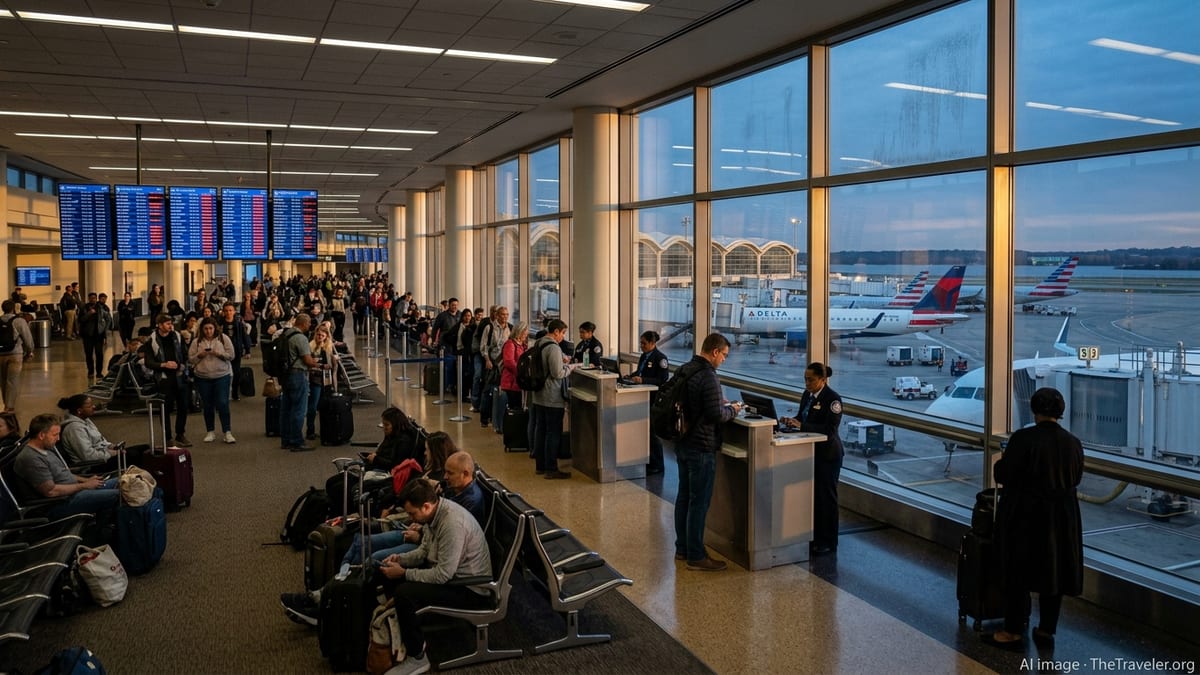
The result is another challenging day for travelers who had expected peak summer schedules to operate normally. Crowded terminals, long customer-service lines and full alternative flights are being reported at several airports across the country.
Weather, Congested Hubs And Crew Limits Drive Scrubbed Flights
Operational data and airline statements in past disruptions suggest that a combination of localized storms, chronic congestion and strict crew duty rules is likely driving Delta’s current round of cancellations. Afternoons along the East Coast and in the Southeast have been punctuated by thunderstorms that periodically shut down arrival and departure corridors, forcing airlines to slow the rate of takeoffs and landings.
When that happens at a key hub such as Hartsfield–Jackson Atlanta International Airport or New York’s LaGuardia and John F. Kennedy airports, the effect can cascade quickly. Aircraft and crew that should feed into evening departures arrive late, leaving tight turn times and limited options if one segment falls behind. If crews reach their legally mandated maximum duty hours before a flight can depart, the result is often a last-minute cancellation.
Analysts who studied the July 2024 meltdown have noted that a shortage of reserve crews and limited flexibility in where aircraft and pilots are based can lengthen recovery from any disruption. Once planes and crews are out of position, each subsequent day starts with gaps in the schedule, which can require preemptive cancellations to prevent rolling delays across the network.
While adverse weather remains a primary trigger for many of the current cancellations, schedule density and lean staffing levels leave little room for error. That reality is evident across the U.S. industry, but current tallies show Delta bearing the brunt of the latest disruption.
Travelers Face Packed Rebooking Options And Shifting Weekend Plans
The timing of Delta’s renewed cancellations is especially difficult for leisure and family travelers heading into a summer weekend. Published coverage of recent disruptions shows that when an airline cancels a large number of flights heading into Friday and Saturday, seats on remaining departures can vanish quickly, leaving limited rebooking choices and long delays between available flights.
Delta and other carriers typically respond to widespread disruption by issuing travel waivers, allowing affected passengers to move their trips to different days or alternate airports without paying change fees. These waivers are designed to spread demand over a wider time window and reduce pressure on the most heavily affected travel periods. Even so, customers often report spending hours in call-center queues or lining up at airport agents in hopes of securing a workable new itinerary.
For travelers already en route, same-day adjustments can be complicated. Connections through congested hubs are particularly vulnerable when incoming flights run late, and itineraries that involve multiple stops or tight layovers are more likely to misconnect. Many passengers may find themselves stranded overnight, relying on hotel vouchers where available or covering their own expenses while they wait for a new seat.
The heightened uncertainty is prompting some travelers to preemptively adjust their plans, opting for earlier flights, nearby alternate airports or different days of travel to avoid the peak of the disruption. Others, constrained by work or vacation schedules, are left to navigate the unfolding situation as best they can.
Memories Of 2024 Meltdown Shape Expectations
The latest wave of cancellations arrives as memories remain fresh of Delta’s extensive operational breakdown in July 2024, when a technology outage linked to third-party software triggered a prolonged recovery. Federal summaries of that episode describe how Delta’s cancellations continued at elevated levels for several days after other large carriers had largely stabilized their schedules.
That history is influencing both public perception and regulatory scrutiny. Government transportation officials have previously classified many of the 2024 cancellations as within the airline’s control and opened investigations into how passengers were accommodated, compensated and informed during the disruption. Consumer advocates argue that those findings place additional pressure on airlines, including Delta, to manage current and future disruptions more proactively.
Industry observers note that Delta has touted investments in technology and operations intended to improve resilience since last year’s meltdown. However, the fact that the carrier is again leading national cancellation statistics for consecutive days underscores ongoing challenges in balancing tight peak-season schedules with unpredictable weather and air traffic constraints.
For travelers, the distinction between weather-related and controllable cancellations matters less than the practical question of how quickly they can reach their destinations. The latest disruption is likely to renew attention on airline commitments regarding meal vouchers, hotel accommodations and refunds when flights do not operate as booked.
More Cancellations Likely Through The Weekend
Looking ahead, forecast patterns and current operational data point to additional flight cancellations through the upcoming weekend. Summer convective storms are expected to persist across parts of the eastern United States, and major hubs are already operating near capacity on peak travel days. In such a tightly wound system, even brief ground stops or reroutes can create fresh delays that ripple into subsequent days.
Delta’s current strategy appears to include a mix of proactive cancellations and tactical schedule adjustments, such as consolidating lightly booked flights and trimming frequencies on certain routes to free up aircraft and crews. This approach can help stabilize operations but also increases the number of passengers who must be rebooked onto already crowded flights.
Weekend travelers booked on Delta are being urged by consumer advocates and travel experts, in public commentary, to monitor their flight status frequently, use the airline’s mobile app for rebooking where possible and consider arriving at the airport earlier than usual in case security lines and customer-service counters become congested. Those with flexible schedules may find it advantageous to shift to early-morning departures, which historically are less affected by the late-day thunderstorm pattern and rolling delays.
With the busy late-summer period in full swing, the coming days will test whether Delta can contain the current disruption or whether cancellations will continue to stack up, further straining airport infrastructure and traveler patience. Passengers planning trips in the near term may want to build extra time into itineraries, particularly when relying on same-day connections through the airline’s largest hubs.