


More news on this day
Stormy Central Florida weather and already heavy summer traffic are combining into a difficult travel day for Walt Disney World visitors moving through Orlando International Airport, with delays, diversions and congestion rippling across one of the country’s busiest leisure hubs.
Get the latest news straight to your inbox!
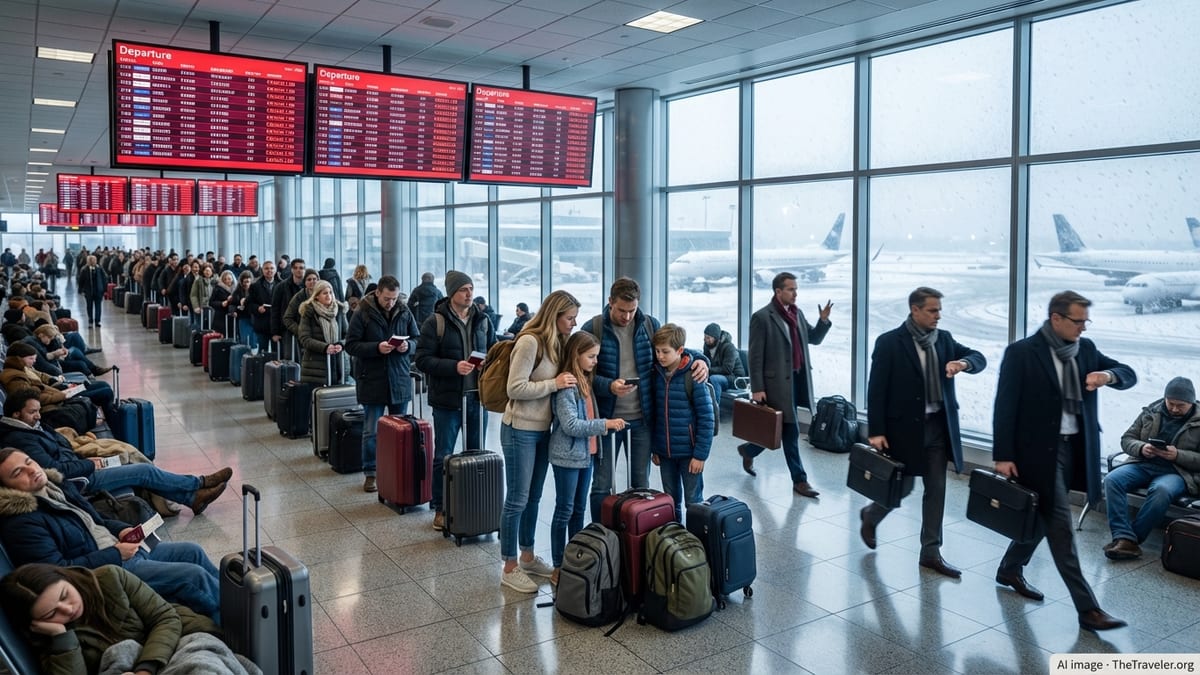
Thunderstorms Trigger Delays and Diversions Around Orlando
Radar and flight-tracking data show a line of storms moving across Central Florida, prompting delays and diversions at Orlando International Airport as airlines adjust schedules and air traffic control meters arrivals into the region. Some flights bound for Orlando have been temporarily rerouted to nearby airports such as Tampa, while others are holding or slowing en route as the weather passes through sensitive approach corridors.
Publicly available information from aviation tracking sites indicates that a number of flights into and out of Orlando are experiencing late departures and extended arrival times, even where the weather may appear calm on the ground. The knock-on effect is a buildup of aircraft waiting for departure slots, longer taxi times and periods where arriving traffic is briefly throttled back for safety.
Even a short-lived ground stop or arrival slowdown can quickly create congestion at an airport the size of Orlando International. During convective summer weather, traffic management initiatives can persist for hours as storms repeatedly flare up and weaken, leaving airlines and passengers to navigate rolling disruption well into the afternoon and evening bank of flights.
Heavy Summer Crowds Amplify Impact on Disney-Bound Travelers
The weather issues are colliding with peak summer demand, adding extra strain for families heading to Walt Disney World at the start of the school-holiday season. Travel-planning guides describe Orlando International as one of the busiest leisure airports in the United States, with passenger volumes that swell considerably in June, July and August as theme park tourism spikes and international visitors arrive for extended stays.
Security and check-in areas at Orlando are typically busiest in the early morning and late afternoon, and reports from recent days indicate that lines during these windows have stretched well beyond their usual length. When weather-related delays push more passengers into the terminal at once, seating, food outlets and restrooms can quickly become crowded, making the experience particularly challenging for families with young children fresh from or en route to Disney resorts.
For travelers who carefully timed flights to align with resort check-in windows, dining reservations or hard-to-get theme park entry slots, even moderate disruptions can cascade into missed airport transfers and rescheduling headaches. Publicly available guidance from travel advocates notes that same-day air travel to Orlando in the summer increasingly requires generous buffers between scheduled arrival and the first nonrefundable commitment inside the Disney bubble.
Operational Pressures at a High-Volume Florida Hub
Recent performance analyses of major U.S. airports show Orlando struggling with on-time reliability at the height of the summer season compared with some peer hubs. Weather plays a consistent role, but the airport’s intense concentration of leisure traffic, increasing international service and a tightly scheduled daily bank of flights add to the pressure when storms roll through the peninsula.
Federal aviation data and industry reports highlight that even modest infrastructure constraints or construction projects can reduce runway or taxiway flexibility, leaving less room for Orlando’s operation to absorb sudden changes in arrival rates. When thunderstorms, air traffic control initiatives and aircraft circulation issues converge, the result can be a series of compounding delays that ripple outward to connecting hubs and return flights throughout the evening.
Airline and airport planners attempt to predict these stress points using historical delay data and seasonal patterns, but the highly localized nature of Florida’s summer storms limits how precisely disruption can be forecast. For Disney-bound passengers, this means that a day which began with a routine weather outlook can quickly evolve into an extended wait, particularly for afternoon and early evening departures that intersect with common convective patterns.
Transportation Links to Walt Disney World Strained by Timing Shifts
Disruptions at Orlando International are also affecting the onward journey to Walt Disney World, where many guests rely on pre-booked shuttles, rideshares or rental cars. Tour and transfer operators serving the resort corridor typically schedule pickups around published arrival times, and rolling delays can leave drivers waiting curbside, reshuffling manifests or juggling requests from multiple late flights arriving in quick succession.
Rental car facilities within the terminal, which already see heavy usage on peak days, are facing surges when several delayed flights deplane simultaneously. As a result, some travelers are encountering longer waits at counters and in vehicle queues, even when their aircraft ultimately lands within a manageable delay window. The timing crunch is particularly acute for international visitors and families arriving in the late afternoon, when both weather and crowding tend to be at their worst.
Ground transportation to Disney-area hotels and vacation rentals can also be slowed by heavy rain, reduced visibility and localized flooding on major routes between the airport and the resort complex. These conditions have the potential to turn what is normally a 25- to 35-minute drive into a significantly longer journey, further compressing evening schedules for theme park plans or dinner reservations.
What Travelers Can Do as Conditions Evolve
Consumer travel organizations advise that passengers flying into Orlando during unsettled summer weather closely monitor their airline’s app and flight-tracking tools, even after checking baggage and passing through security. Delays can lengthen or shorten with little notice as storms shift and traffic initiatives are updated, and early awareness allows travelers to adjust ground transportation bookings and communicate revised arrival times to hotels and vacation rental hosts.
Airline-focused travel guidance also suggests building extra margin into departure plans from Orlando International, particularly for families returning home from Walt Disney World at the end of their trips. Arriving at the airport earlier than usual, keeping carry-on essentials such as snacks, medications and children’s activities close at hand, and being prepared for gate changes can help reduce the stress of a day affected by rolling weather delays.
For visitors with time-sensitive Disney plans, such as prepaid experiences or early-morning park entry, trip-planning resources increasingly recommend scheduling those activities for a full day after arrival when possible. With Orlando now frequently cited in national rankings for challenging summer operations, travelers are being encouraged to treat today’s conditions as a reminder that flexibility, buffers and backup plans are an essential part of any Central Florida theme park itinerary.