


More news on this day
Oman Air passengers are facing ongoing delays and schedule changes as the Gulf carrier adjusts its operations in response to temporary regional airspace restrictions and associated operational constraints, according to recent public statements and airport advisories.
Get the latest news straight to your inbox!
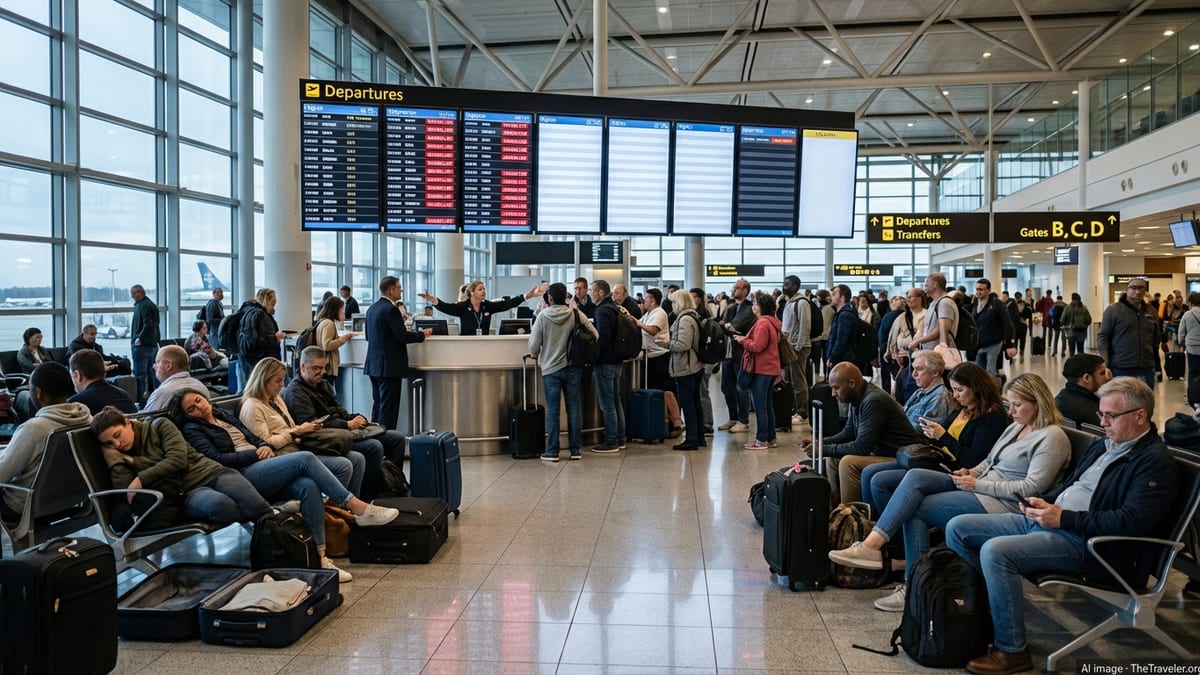
Operational disruptions linked to regional airspace closures
Published information from local media in Oman indicates that Oman Air has repeatedly adjusted its schedule in recent months, citing a combination of operational reasons and closures in parts of Middle East airspace. Coverage in Muscat-based outlets in March 2026 described multiple days of cancellations on services to cities including Amman, Dubai, Manama, Doha, Dammam, Kuwait City, Copenhagen, Baghdad and Khasab, with flights on selected dates removed from the schedule as air routes were reconfigured.
The changes have coincided with a wider regional crisis affecting traffic flows through the Gulf and the Strait of Hormuz, where temporary restrictions and rerouted corridors have added pressure on remaining open airspace. Industry updates from airport and slot-coordination bodies highlight a sharp rise in cancelled take off and landing slots across several Middle Eastern hubs, including Oman, as airlines attempt to navigate around closed or militarised areas and absorb longer flight times.
In this environment, Oman Air’s network has been exposed both at its Muscat base and on regional routes that depend on access to neighbouring flight information regions. Temporary airspace restrictions have reduced routing options, leaving less flexibility to recover from late arrivals, crew rotation challenges and aircraft positioning issues, and making knock-on delays more likely when disruption occurs.
At the same time, operational factors specific to the airline and its home hub have also contributed to irregular running. Reports of lengthened ground times, altered departure waves and tighter aircraft utilisation during the crisis period have made it harder to maintain punctuality, particularly on multi-leg itineraries that rely on precise connections through Muscat.
Muscat airports remain open but schedules trimmed
While passengers have reported delays, publicly available statements from Oman Airports, the operator of Muscat International, Salalah and Sohar airports, have stressed that all three gateways remain open and operating. In March, the company reiterated that scheduled commercial flights, private aviation and cargo operations continued, even as some airlines, including Oman Air, cut or reshaped their timetables in response to changing airspace conditions.
Industry briefings summarised by aviation data providers show that, on peak disruption days during March, a significant proportion of the carrier’s regional schedule was cancelled or consolidated. Several Muscat-based flights to Gulf capitals and select European destinations were removed for consecutive days, suggesting that Oman Air was concentrating capacity on a reduced core network to preserve reliability where possible.
Subsequent reporting in April indicated that Oman Air had largely restored what it described as normal operations across most of its global network, while still adjusting individual routes and frequencies in line with demand and airspace availability. Additional services were introduced on certain sectors to support connectivity, but the network continued to operate within the constraints set by regional traffic flows and the need to avoid sensitive areas.
For travellers, this has meant that Muscat’s terminals have remained accessible and functioning, yet particular flights may depart at different times, be combined with other services or be cancelled at short notice. Passengers on itineraries involving onward connections have been especially exposed to missed links when inbound flights are delayed by longer routings or temporary holding patterns around congestion points.
Impact on passengers: longer routings, missed connections and uncertainty
Individual travel accounts shared on public forums over recent months describe a mixed experience for Oman Air customers. Some passengers report relatively smooth connections through Muscat despite the regional situation, while others recount extended delays, last minute cancellations and rebooking challenges when operational disruptions coincide with airspace restrictions.
Travelers connecting between Europe or East Asia and destinations in South Asia and the Gulf have noted that their flight paths occasionally extend further south or add extra track miles to avoid affected regions, increasing block times and reducing the margin for tight connections. In a few cases, passengers have described overnight stays in Muscat after late-arriving long haul flights caused them to miss onward services that were operating on a trimmed or altered schedule.
There are also indications from online discussions that some Oman Air routes have shifted to less frequent patterns, with certain long haul services operating only on specific days of the week. While such changes can help the airline concentrate resources and work around airspace constraints, they also mean fewer alternatives for re-accommodation when a flight is disrupted, increasing the likelihood of multi day delays for affected customers.
Consumer complaints documented in late 2025 and early 2026, before and during the current crisis, point to frustration with inconsistent communication, limited proactive notification of schedule changes and difficulties reaching customer service during peak disruption. These experiences mirror challenges seen at other regional airlines facing sudden airspace closures and changing security assessments.
Authorities outline contingency planning for Muscat airspace
Technical papers prepared for recent regional aviation meetings show that Omani aviation authorities have been working on broader contingency planning for Muscat’s flight information region in light of evolving security conditions. Documentation submitted to international bodies in mid 2026 outlines efforts to enhance air traffic management procedures, develop contingency routes and improve coordination with neighbouring states to maintain traffic flows during periods of restricted or closed airspace nearby.
These presentations describe Muscat’s airspace as a potential bottleneck if neighbouring corridors are reduced, highlighting the importance of maintaining sufficient capacity and flexible routing to absorb diverted or rerouted flights. Scenario planning has focused on minimising delay propagation when sections of regional airspace are suddenly closed and ensuring safe separation standards as traffic is compressed into fewer available corridors.
The same material notes that, without improvements to systems and procedures, airlines using Muscat controlled airspace would likely face increased holdings, reroutes and en route delays during regional crises. By introducing additional contingency measures and refining coordination with airlines, Omani authorities aim to reduce the scale of knock on disruption for carriers such as Oman Air, even when temporary restrictions are outside the country’s direct control.
For passengers, these behind the scenes changes may not be visible, but they underpin the patterns currently seen in flight data: steady overall operations at Muscat, combined with irregular delays on specific days and routes when wider regional developments impact available airspace and trigger operational adjustments.
What travelers can expect in the coming weeks
With regional tensions and airspace dynamics still evolving into August 2026, travel specialists anticipate that Oman Air’s schedule will remain subject to short notice changes. While the airline has signaled a return to broadly normal operations across much of its network, the experience of the past several months shows that renewed restrictions or corridor closures can quickly cascade into delays and cancellations.
Public advisories and airport notices suggest that passengers connecting through Muscat should allow generous minimum connection times, especially when itineraries involve onward flights to destinations previously affected by cancellations. Travelers using land borders to reach Muscat for international departures have also been urged in earlier advisories to build in substantial buffer time, reflecting the risk that operational issues or congestion could cause them to miss check in cut offs.
In this fluid context, travel industry observers recommend that customers monitor their bookings closely in the days before departure, keep contact details updated with the airline and be prepared for potential rerouting via partner carriers if direct options are limited. Flexible tickets and travel insurance that covers schedule disruption may offer additional protection where rerouting or accommodation becomes necessary.
For now, available information portrays a carrier attempting to balance safety, regulatory requirements and commercial needs in a constrained operating environment. As long as temporary airspace restrictions and regional security concerns persist, further episodes of delay and rescheduling on Oman Air services remain possible, even if headline operations at Muscat’s airports appear stable.