


More news on this day
Domestic air travel in New Zealand faced fresh disruption as 66 flight delays and six cancellations were recorded across the networks of Air New Zealand, Sounds Air, Jetstar and other carriers, affecting services through Auckland, Christchurch, Wellington, Picton and Napier.
Get the latest news straight to your inbox!
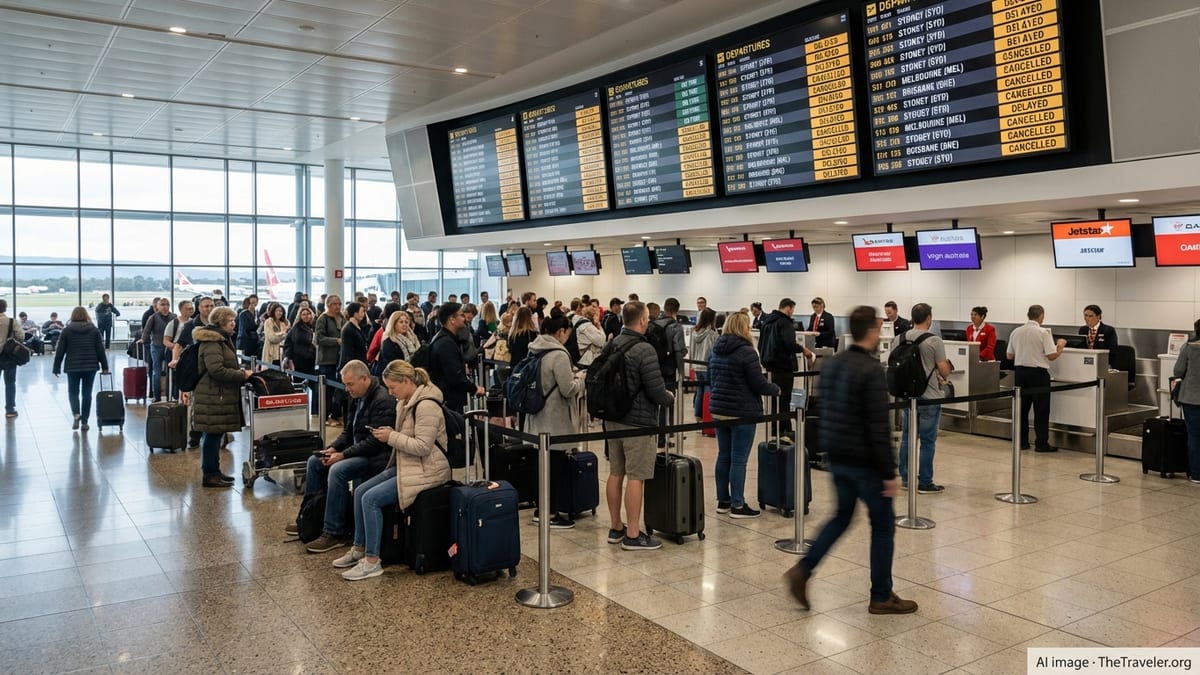
Delays Ripple Across Major Hubs and Regional Airports
Reports from airline trackers and airport boards on 6 June 2026 indicate a broad pattern of disruption across New Zealand’s domestic network, with services linking Auckland, Christchurch and Wellington particularly affected. Additional knock-on issues were observed on regional routes into Picton and Napier, where smaller aircraft and tighter schedules can be more vulnerable to timetable shocks.
The 66 delays logged across multiple carriers translated into late departures and arrivals on some of the country’s busiest city pairs, including Auckland to Christchurch and Auckland to Wellington. Publicly available schedules show that these trunk routes are served by high-frequency operations from Air New Zealand and Jetstar, so even modest timetable slippage can quickly cascade through the day’s rotations.
While the majority of services eventually operated, six cancellations across the affected airports added to the disruption. Cancellations are relatively rare on key domestic corridors in New Zealand compared with short delays, according to transport performance data, so a cluster of scrubbed flights in a single operating window stands out from the usual pattern.
At regional gateways such as Picton and Napier, where Sounds Air and larger carriers operate thinner schedules, late-running inbound aircraft and aircraft availability can have an outsized impact. A single delay or cancellation can remove an entire daily connection, forcing passengers to reroute through larger hubs or travel by road or ferry.
Air New Zealand, Jetstar and Sounds Air Among Affected Carriers
National carrier Air New Zealand, which dominates domestic capacity on the Auckland, Wellington and Christchurch triangle, accounted for a significant share of the day’s interruptions. The airline’s own flight-status tools and independent trackers showed a mix of late departures and adjusted arrival times on core routes such as Auckland to Christchurch and Auckland to Napier, alongside a small number of cancelled rotations.
Low-cost operator Jetstar, which competes with Air New Zealand on several domestic routes, also reported delays across parts of its schedule. Historical performance data from New Zealand’s Ministry of Transport has previously indicated that Jetstar’s domestic operations tend to record a higher proportion of late departures and cancellations than some rivals, so any additional operational strain can quickly be felt by travellers.
Regional carrier Sounds Air, which links centres including Wellington and Picton with smaller communities, was also caught up in the disruption. The airline relies on a compact fleet of turboprop aircraft operating multiple short sectors each day, so even a single late sector can affect subsequent departures. Public timetable information shows frequent short hops around Cook Strait, leaving little margin to recover lost time.
Other operators with smaller domestic footprints contributed to the day’s overall delay and cancellation tallies, particularly on multi-leg routings connecting regional airports through the main city hubs. The combination created a patchwork of minor timetable changes that, taken together, had a noticeable impact for passengers travelling on 6 June.
Weather, Congestion and Operational Pressures Under Scrutiny
The precise mix of factors behind the 66 delays and six cancellations has not been fully itemised in public reporting, but a familiar set of pressures is likely to be at play. New Zealand’s domestic aviation market operates in a challenging environment defined by variable weather, short runways in some locations and tightly timed schedules designed to maximise aircraft utilisation.
Wellington, in particular, is known for crosswinds and rapidly changing conditions that can constrain operations, especially for smaller regional aircraft. Even when flights ultimately operate safely, strong winds and low cloud can slow air traffic flows in and out of the capital, triggering short departure holds and minor diversions that show up as delays across the day.
At larger hubs such as Auckland and Christchurch, congestion around peak departure waves can also contribute to late pushbacks and arrival holds. New Zealand government on-time performance statistics for recent months show that, even in normal conditions, around one in five domestic flights on some major routes arrive later than scheduled, highlighting the limited slack in the system.
Industry observers point as well to broader operational pressures, including aircraft maintenance requirements, crew rostering constraints and the lingering effects of post-pandemic capacity rebuilding. When fleets and staffing are finely balanced, any unexpected technical issue, crew sickness or weather disruption can reverberate across multiple services before schedules are re-stabilised.
Knock-on Impacts for Passengers and Connections
The immediate impact of the latest disruption was felt most acutely by passengers with time-sensitive travel plans, including business travellers and those connecting to international services. On busy domestic links into Auckland, Christchurch and Wellington, even moderate delays can risk missed onward flights to Australia, Asia and North America.
For travellers heading to or from smaller centres such as Picton and Napier, the options can be more limited when flights are delayed or cancelled. With fewer daily departures and longer alternative surface journeys, same-day rebooking is not always possible, particularly once late afternoon and evening services are affected.
Consumer guidance from New Zealand’s official information channels notes that passengers on domestic flights disrupted for reasons within an airline’s control may be entitled to refunds or alternative transport, depending on fare conditions. However, compensation frameworks are more limited than those available in some overseas jurisdictions, making travel insurance an important consideration for those with fixed commitments.
The pattern of delays on 6 June therefore serves as a reminder for domestic and international passengers alike to allow generous connection times, build flexibility into itineraries and monitor flight status closely on days when services appear to be under pressure across multiple airlines.
Performance Metrics Highlight Ongoing Reliability Challenges
The disruptions across Auckland, Christchurch, Wellington, Picton and Napier also sit within a broader picture of domestic aviation reliability in New Zealand. Recent aviation on-time performance reports from the Ministry of Transport show that, on several trunk routes, on-time arrival rates typically hover around the 80 percent mark for major carriers, with cancellation rates on most city pairs in the low single digits.
Those figures indicate that, while domestic flying is generally dependable, short-notice delays remain a regular feature of travel, particularly during seasonal peaks or periods of unsettled weather. Days that see dozens of late-running flights and a cluster of cancellations, as recorded on 6 June, illustrate how quickly cumulative pressures can push the system beyond its usual tolerance.
Airlines have invested in newer aircraft, schedule adjustments and operational tools to improve punctuality, but the geography of New Zealand and the concentration of traffic through a small number of airports continue to limit the scope for absolute reliability. Regional links operated by smaller aircraft are especially exposed to crosswinds, low visibility and airspace constraints.
For travellers planning journeys in the months ahead, recent performance data and the disruptions observed across Air New Zealand, Sounds Air, Jetstar and other carriers underscore the value of contingency planning. Building in buffer time, considering earlier departures and tracking conditions at key airports can help mitigate the impact when an otherwise routine travel day suddenly generates dozens of delays and a handful of cancelled flights.