


More news on this day
Operations at New York’s John F. Kennedy International Airport were heavily disrupted today, with publicly available tracking data indicating 174 flight delays and five cancellations affecting services operated by Delta Air Lines, JetBlue Airways, Icelandair, Virgin Atlantic, HiSky Europe, Kenya Airways and other carriers across key transatlantic and long-haul routes.
Get the latest news straight to your inbox!
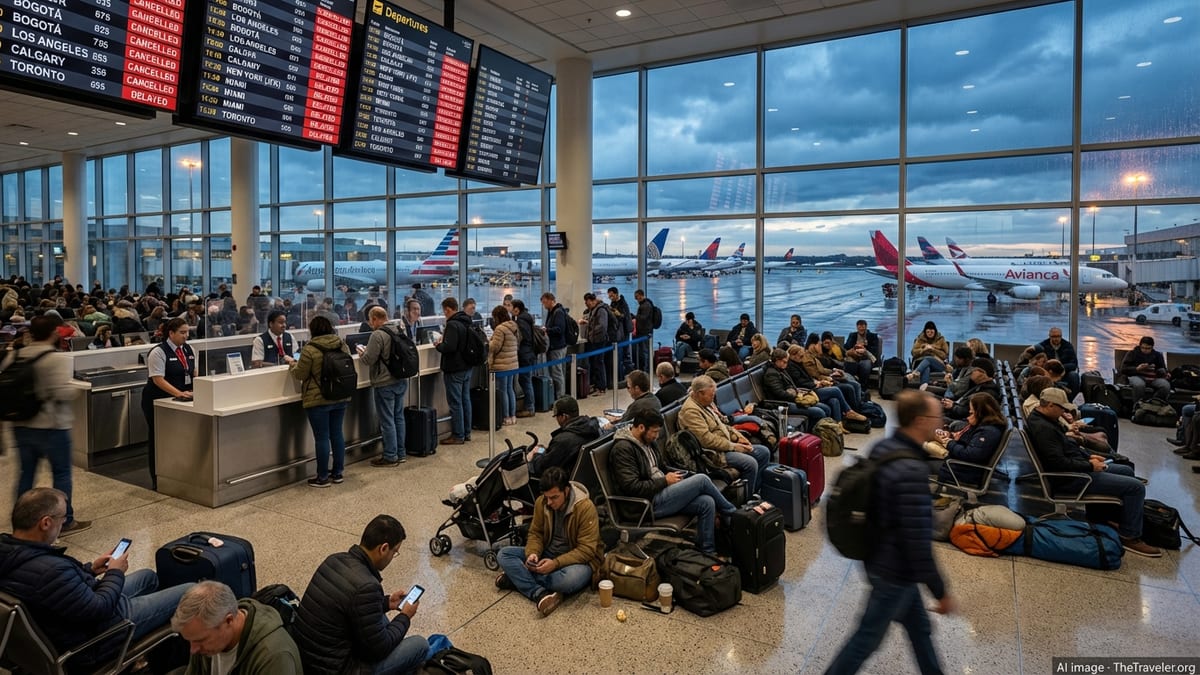
Knock-on Disruptions Across Transatlantic and Long-Haul Networks
The latest disruption at JFK is rippling far beyond New York, touching flights to and from the United States, United Kingdom, Iceland, Canada, the Middle East, Asia and the Caribbean. Many of the affected services are high-demand transatlantic and long-haul routes that feed major hubs such as London Heathrow, Paris Charles de Gaulle and Amsterdam Schiphol, along with key leisure destinations in the Caribbean.
Data from flight-tracking and airport status portals point to a concentration of delays on services operated by Delta Air Lines and JetBlue Airways, which together account for a significant share of movements at JFK. International partners and foreign carriers including Icelandair, Virgin Atlantic, HiSky Europe and Kenya Airways are also listed among airlines handling delayed departures or arrivals, contributing to a complex web of missed connections and extended layovers on both sides of the Atlantic.
Passengers scheduled to connect at JFK from domestic US cities or Canadian gateways such as Toronto and Montreal are experiencing particularly acute impacts. Even relatively short ground holds at New York can cascade into missed long-haul departures, requiring lengthy rebooking processes and, in some cases, overnight accommodation where seats on later flights are limited at the start of the peak summer season.
The disruption comes at a time when transatlantic and long-haul demand is elevated heading into summer, leaving airlines with less spare capacity to absorb irregular operations. Reduced slack in schedules makes it more difficult to swap aircraft or crews at short notice, increasing the risk that an initial set of delays triggers further downstream knock-on effects.
Operational Strains at a Congested Hub
JFK remains one of the most tightly scheduled airports in the United States, with slot controls in place to manage its busy runway and airspace environment. Federal Aviation Administration documentation for the current summer season shows that large network carriers and international airlines, including Delta, JetBlue, Icelandair, Virgin Atlantic, HiSky Europe and Kenya Airways, hold a shared pool of slots that leaves limited room for recovery when operations fall behind schedule.
Air traffic management advisories published by US authorities in recent weeks have frequently cited ground delay programs and spacing measures into the New York area, reflecting congestion in the regional airspace and intermittent staffing constraints. When such programs are in effect for JFK, departing flights from other airports can be held on the ground while arrival flows are metered, often leading to late inbound aircraft and tight turnaround windows for onward journeys.
Recent passenger accounts from previous disruption days at JFK describe aircraft waiting extended periods for gates to become available and flight crews timing out as duty limits are reached, prompting additional delays or cancellations. The current episode appears to follow a similar pattern, with aircraft and crew rotations thrown off balance and schedules bunching at peak evening departure banks to Europe and late-night services to the Middle East and Africa.
Publicly available operations data for JFK indicates that even moderate arrival or departure constraints can translate swiftly into a high number of delayed flights. On days with stronger weather or operational impacts, the proportion of flights arriving or departing behind schedule has previously spiked into double digits, underscoring how sensitive the hub is to any loss of capacity.
Airlines Juggle Passenger Care and Network Recovery
The mix of 174 delays and five cancellations is forcing airlines at JFK to balance two priorities: moving disrupted passengers as quickly as possible while also repositioning aircraft and crews to stabilize their broader networks. For carriers with large JFK operations, such as Delta and JetBlue, irregular operations at the airport can quickly affect flights across North America and transatlantic markets, including links to London, Manchester, Reykjavik and key European and Middle Eastern hubs.
Carriers serving JFK under international partnerships and codeshares are also affected, especially when long-haul aircraft arrive late from overseas and miss their scheduled departure slots back to Europe, Africa or Asia. This can lead to aircraft spending extended periods on the ground in New York and knock-on changes to rotations on the far side of the ocean, including delayed morning departures out of London, Amsterdam or other connecting hubs.
According to consumer information published by the US Department of Transportation, most major US airlines, including Delta and JetBlue, have committed to offering meal vouchers or similar assistance for passengers experiencing lengthy delays that are within the carrier’s control. However, entitlements can vary depending on the cause of the delay, the length of the disruption and whether the passenger is traveling on a single ticket or a more complex itinerary that spans multiple airlines.
Some passengers on affected itineraries connecting from or to the Caribbean and transatlantic routes are reporting extended airport stays as they wait for rebooked flights, while others have been moved to alternative routings via hubs such as Boston, Atlanta, Toronto or Montreal. With summer load factors already high, spare seats to key leisure destinations are limited, increasing the likelihood of overnight stays in New York for the most severely impacted travelers.
Weather, Staffing and Seasonal Pressures Under Scrutiny
While the current disruption is tied to the specific operational picture at JFK today, it reflects broader structural pressures on the New York air travel system. Seasonal summer thunderstorms in the wider region, occasional low-visibility conditions and strong winds can quickly constrain runway operations at the airport, even when conditions on the ground in Queens appear manageable to travelers in the terminal.
Industry analysis and recent public discussions among travelers suggest that air traffic control staffing levels and sector complexity in the Northeast corridor continue to play a role in how quickly the system can absorb irregular operations. Ground delay programs and flow restrictions, which are used to maintain safety margins in crowded airspace, tend to translate directly into late arrivals and departures at slot-constrained hubs like JFK.
At the same time, airlines have been rebuilding and expanding their international networks out of JFK, particularly toward Europe and the Middle East, adding more flights on top of an already dense schedule. New and seasonal services by carriers such as Virgin Atlantic, Icelandair and newer entrants like HiSky Europe contribute to greater connectivity for passengers but also increase the challenge of keeping operations running smoothly when weather or airspace constraints arise.
Travel demand from markets including the UK, Iceland, Canada and the Caribbean has remained robust heading into the peak summer months, driven by leisure travel and a rebound in business and visiting-friends-and-relatives traffic. That strength in demand is positive for airlines and local tourism economies but leaves limited slack in seat capacity when an airport-wide disruption of the scale seen today occurs.
What Travelers Can Do if Their JFK Flight Is Affected
With delays and cancellations concentrated at a major international hub, travelers affected by today’s disruption at JFK have limited options but can take steps to minimize inconvenience. Publicly available guidance from airlines and consumer protection agencies indicates that passengers should first use official mobile apps or websites to track real-time flight status, rebooking options and gate changes, as information at the airport may lag during peak disruption periods.
Experts in air passenger rights advise that travelers keep records of delay notifications, boarding passes and any additional expenses, such as meals or accommodation, which may be relevant if compensation or reimbursement is sought later under airline policies or applicable regulations. For those flying to or from the United Kingdom, the European Union or certain other jurisdictions, additional protections may apply on qualifying flights with European or UK carriers.
Passengers connecting from long-haul services that originate in Asia, the Middle East or the Caribbean may face particular complexity if segments are operated by different partner airlines. In such cases, publicly available consumer advice suggests focusing on the airline that sold the ticket as the primary point of contact, especially when rebooking across multiple carriers is required to complete the journey.
With the summer travel season gaining momentum, the latest episode at JFK highlights the continued vulnerability of major hubs to complex, multi-airline disruptions. Travelers with upcoming itineraries through New York may wish to build in longer connection times, monitor their flights closely in the days and hours before departure and be prepared for schedule changes when the airport is operating near capacity.