


More news on this day
Alaska Airlines is stepping into the long-haul spotlight with the introduction of its first international business class suites, anchored by new Boeing 787-9 routes connecting Seattle with New York, London, Tokyo and other major global gateways.
Get the latest news straight to your inbox!
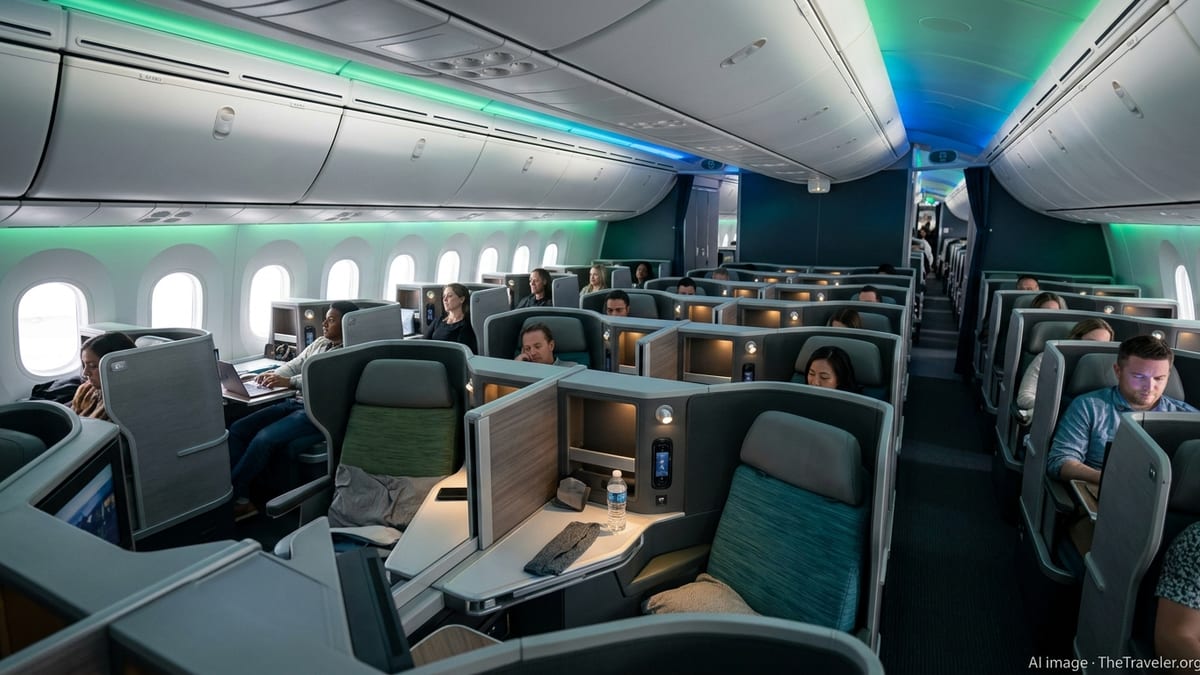
Dreamliner Business Class Marks New Era for Alaska
The Seattle-based carrier is rolling out a fully redesigned international business class on its Boeing 787-9 Dreamliners as it accelerates expansion across the North Atlantic and Pacific. Publicly available information shows that the new product features enclosed suites with lie-flat beds and direct aisle access, bringing Alaska into closer alignment with the premium cabins already offered by many global competitors.
Coverage of the launch indicates that each 787-9 will offer 34 suites at the front of the cabin, arranged in a 1-2-1 layout that emphasizes privacy for solo travelers and flexibility for pairs. The hard product is designed around sliding doors, large entertainment screens and expanded personal storage, with an emphasis on creating a quiet, self-contained space suitable for overnight sectors.
Reports also point to upgrades beyond the seat itself, including refreshed dining and beverage options and expanded connectivity. The airline intends to pair the suites with upgraded soft services such as multi-course meals, premium amenity kits and enhanced bedding, positioning the new cabin as a step change from the older recliner-style and legacy lie-flat seats that previously appeared on some of its inherited widebody aircraft.
The launch of these suites is closely tied to the airline’s broader global ambitions. Industry analysis suggests that Alaska is using the Dreamliner as a flagship for its emerging long-haul network, with the new business class positioned as a cornerstone of its value proposition to corporate travelers and high-spend leisure passengers.
Seattle Emerges as a True Global Gateway
Seattle–Tacoma International Airport is at the center of the expansion. In recent years Alaska has transformed Seattle from a predominantly domestic hub into a growing intercontinental gateway, with new nonstop routes to Rome and Seoul already announced and more services to Europe and Asia coming online.
According to published coverage, the first wave of the new business class suites will be deployed on long-haul departures from Seattle, including services to Tokyo and London. These flights are designed to connect with Alaska’s extensive domestic schedule, improving one-stop access to Europe and Asia for travelers originating in cities such as Portland, San Diego, Anchorage and smaller West Coast markets.
Reports indicate that Seattle–Rome service is scheduled to begin in late April 2026, followed by flights to London and Reykjavík in May. The Dreamliner, equipped with the new suites, will serve as the backbone of this schedule, with year-round London service complemented by seasonal links to southern Europe and Iceland. Alaska has also highlighted its growing presence in Seoul and Tokyo, where the new cabin is expected to support both point-to-point demand and onward connections through alliance partners.
Industry observers note that these moves are intended to solidify Seattle’s role as a West Coast alternative to traditional international hubs. By pairing an expanded global network with a competitive premium product, Alaska is aiming to capture more corporate contracts and high-yield traffic that previously flowed over rival hubs in Los Angeles, San Francisco and Vancouver.
New York, London and Tokyo Gain Higher-End Option
While Seattle is the operational anchor, the impact of the new suites will be felt most directly in key destination markets. New York, London and Tokyo are central to the strategy, reflecting both strong business demand and their status as major connecting gateways.
Publicly available route information shows that Alaska is weaving its long-haul Dreamliner operations into an expanded transcontinental and transoceanic schedule touching New York–area airports and London Heathrow, as well as Tokyo Narita. New York is expected to play a dual role, feeding Alaska’s international departures from the West Coast and, in some cases, appearing on through itineraries that connect the East Coast with Europe and Asia via Seattle.
On the Atlantic side, the London route stands out as a flagship deployment of the business class suites. London remains one of the most competitive premium markets in the world, and analysts suggest that Alaska’s move into this space is intended to lift its profile among corporate travel buyers who prioritize lie-flat seating, privacy and consistent onboard standards.
Across the Pacific, Tokyo serves as a critical anchor for Alaska’s Asia strategy. Reports highlight that the carrier has steadily built up long-haul flying between Seattle and Tokyo, and the introduction of enclosed suites is expected to help the airline better compete with established Asian and North American carriers that already offer high-end business cabins on Japan routes.
Product Details Focus on Privacy, Comfort and Connectivity
Detailed previews of the cabin show that Alaska’s international business class suites are built around three themes: privacy, comfort and connectivity. The suites feature sliding privacy doors, high sidewalls and staggered seating that places each passenger in a private shell, limiting direct lines of sight and creating a cocoon-like feel.
The fully flat beds are designed for overnight comfort on long sectors between North America, Europe and Asia. Industry reporting describes wider seat cushions, adjustable lumbar support and larger footwells than on Alaska’s earlier long-haul offerings. Expanded workspace, including oversize tray tables and integrated storage for laptops and small personal items, is aimed at travelers who need to work for part of the flight.
Connectivity plays a prominent role in the redesign. Publicly available information indicates that the 787-9 fleet will feature upgraded in-flight Wi-Fi capable of supporting streaming and real-time messaging, along with multiple power outlets and USB ports at each seat. A next-generation entertainment platform with larger 4K-capable screens and an expanded content library rounds out the technology offering.
Soft-product touches are also part of the upgrade. Reports describe curated dining with regionally influenced menus, more flexible meal timing and a focus on premium beverages. Enhanced bedding and amenity kits are expected to align the experience with other full-service international carriers, an important factor as Alaska seeks to compete for frequent flyers who are already accustomed to high service standards on long-haul routes.
Competitive and Loyalty Implications for Long-Haul Travelers
The debut of Alaska’s business class suites has broader implications for competition and loyalty on long-haul routes from the United States. In recent years, major U.S. and international airlines have invested heavily in enclosed business suites, and Alaska’s move is widely seen as a necessary step to remain relevant in the premium travel segment.
Analysts point out that the new cabin aligns with the evolution of the airline’s loyalty strategy. Following the integration of Hawaiian’s operations and the rebranding of its frequent flyer program, Alaska has been refocusing on higher-value travelers who generate more revenue through premium fares and international trips. The ability to offer a suite product between Seattle and global cities such as London and Tokyo gives the airline more leverage when negotiating with corporate travel buyers and aligning benefits for top-tier members.
For travelers, the rollout of the suites on routes linking Seattle, New York, London and Tokyo increases the number of one-stop options that include a modern business class product end to end. Trip reports and early commentary suggest that interest is particularly high among West Coast and Pacific Northwest travelers who previously routed through other hubs to secure a comparable level of comfort and privacy.
As additional 787-9 aircraft enter service and more long-haul routes are added, industry watchers expect Alaska to continue refining the product and its deployment across the network. The emphasis on Seattle as a global gateway, combined with elevated cabins on strategic routes, signals that the airline intends to compete more directly for international travelers rather than relying primarily on domestic and regional flying.