

More news on this day
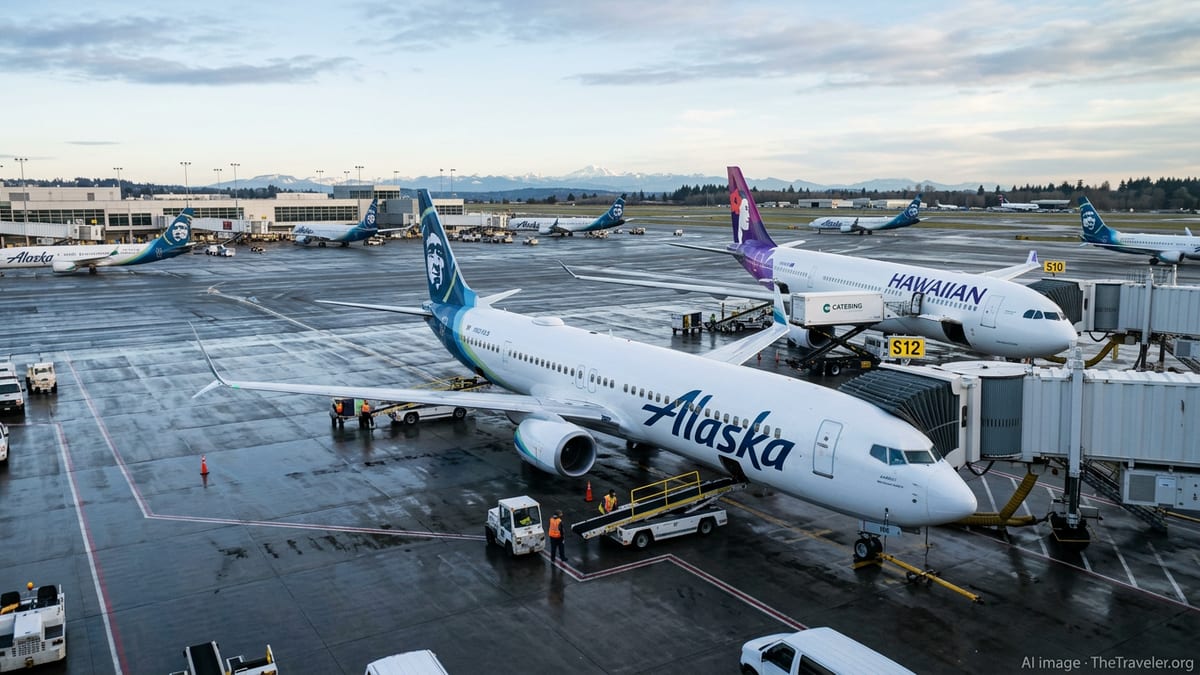
As U.S. travelers brace for another year of crowded airports, rolling delays and high cancellation rates, Alaska Airlines and Hawaiian Airlines are sharpening their focus on premium cabins, pitching them as a tranquil onboard oasis for passengers willing to pay for a calmer, more luxurious escape from the chaos on the ground.
Get the latest news straight to your inbox!
Premium Cabins Recast as a Refuge From Disruption
Operational disruptions have become a recurring feature of the U.S. travel landscape, with weather, infrastructure constraints and high demand all contributing to crowded terminals and frayed tempers. Published transportation data and recent media coverage show that delays and cancellations remain elevated compared with pre‑pandemic norms, even as airlines add capacity and refine schedules to cope with demand surges.
Against that backdrop, Alaska and Hawaiian are positioning their premium products as a way to restore a measure of control and comfort to the journey. Both carriers have leaned into upgraded seating, quieter cabins and enhanced service for the front of the plane, marketing these spaces as an oasis from the unpredictability of airport operations. Priority check in, earlier boarding and access to overhead bin space are increasingly promoted as practical tools for navigating disruption, not simply as status perks.
The emphasis reflects a broader shift in traveler behavior. Industry reporting indicates that a growing share of passengers are willingly trading up to premium economy and business class to secure more space and flexibility, even on domestic routes. For Alaska and Hawaiian, which historically relied heavily on leisure and West Coast traffic, that shift is prompting accelerated investment in onboard comfort and differentiation at the top end of the cabin.
Airline financial disclosures also highlight the strategic importance of these premium tiers. Publicly available investor materials from Alaska Air Group show premium revenue growing faster than the main cabin, reinforcing the case for pouring capital into products that appeal to travelers looking for predictability and respite on increasingly busy routes.
Alaska’s New International Suites and Domestic Upgrades
Alaska Airlines is in the midst of a multiyear transformation of its onboard experience, with 2026 marking a key turning point. The carrier has launched its first dedicated international business class on Boeing 787‑9 aircraft, introducing enclosed suites, upgraded dining and an emphasis on privacy tailored to long haul routes to Europe and Asia. Company statements describe the product as a new benchmark for the brand, aimed at business and high‑spend leisure travelers seeking a calm, high‑touch environment far removed from gate area congestion.
On domestic and medium haul services, Alaska has been refurbishing its Boeing 737 fleet with refreshed first class and expanded Premium Class sections. These cabins add more legroom, upgraded cushioning, power at every seat and design elements intended to feel less utilitarian and more lounge inspired. Frequent flyer commentary and independent coverage point to reserved overhead bins, streamlined boarding and consistently available fast Wi‑Fi as details that meaningfully reduce stress on days when operations are strained.
The airline’s latest cabin structure brings clearer segmentation between international business class suites, domestic first class and Premium Class, followed by several tiers of main cabin seating. The redesign is intended to make the value proposition for each step up more obvious, especially for travelers weighing whether to buy up from economy to secure extra comfort and flexibility during periods of disruption.
Alaska has also highlighted onboard connectivity as part of its premium promise. The carrier is rolling out high speed satellite Wi‑Fi across both its mainline and regional fleets, positioning reliable internet access as essential for passengers who want to rebook, monitor connections or stay productive when delays ripple through the system. For travelers caught in irregular operations, the ability to manage their trip from a comfortable, well equipped seat can make the difference between a stressful and a salvageable journey.
Hawaiian Bets on Lie Flat Calm and Island Inspired Comfort
Hawaiian Airlines is similarly elevating its front cabins as a serene counterweight to crowded mainland hubs and long transpacific sectors. The carrier’s Airbus A330 premium cabin features lie flat seats arranged in a configuration that emphasizes direct aisle access and personal space, with design touches that echo island motifs rather than traditional business decor. Cabin lighting, ambient soundtracks and curated bedding are all used to create a retreat like environment once the boarding rush subsides and the doors close.
The airline has also begun deploying its new Boeing 787‑9 aircraft, which introduce a next generation premium product marketed as Leihoku Suites. These seats convert into fully flat beds and are equipped with sliding privacy doors, personal storage and individual lighting, responding to rising expectations among long haul travelers who now see business class as a place to genuinely rest rather than simply endure the flight. Industry seat reviews describe the cabin as competitive with larger global network airlines, signaling Hawaiian’s intention to keep premium customers within its own ecosystem.
Beyond hard product, Hawaiian has focused on a distinctly local flavor of hospitality in the premium cabin. Menu design often draws on regional chefs and ingredients, while entertainment and cabin ambience are curated to put travelers into a Hawaii frame of mind before arrival. For passengers who may have negotiated congested security lines, delayed departures or missed connections, that sense of transition into a calmer, more immersive environment can be a powerful differentiator.
The carrier has signaled additional investment to come. Recent reporting on a multiyear, multihundred million dollar program details planned upgrades across the A330 fleet, including refreshed seats, new cabin finishes, Bluetooth enabled in flight entertainment and eventual expansion of high speed Wi‑Fi. Together, these elements form the backbone of an onboard sanctuary aimed squarely at travelers who want their vacation or business trip to start when they step onto the aircraft, not when they finally clear the last congested checkpoint on the ground.
Integrated Networks, Shared Standards and Rising Expectations
The closer alignment between Alaska and Hawaiian is reshaping how these premium cabins are marketed. Following Alaska’s acquisition of Hawaiian and the gradual integration of booking and loyalty systems, both brands are moving toward a more harmonized cabin structure, with clearly defined first class, business, premium and main cabin tiers. Industry coverage of the integration notes that lie flat products will be concentrated on Alaska’s 787s and Hawaiian’s A330s and 787s, while enhanced recliner style seating fills the gap on shorter routes.
For travelers, this greater consistency can make it easier to understand what kind of “oasis” they are buying into when they choose a higher fare. A business class suite with a door on a long haul flight, a domestic first class recliner with extra legroom, or a Premium Class seat with dedicated overhead bin space each serve slightly different needs. Yet all are framed as a buffer against the unpredictability of modern air travel, where disruptions can upend even the most carefully planned itineraries.
Market data suggests that demand for these insulated spaces is holding up despite broader cost of living pressures. Airlines across the industry report strong load factors and revenue growth in premium cabins, even as they grapple with the operational constraints that have fueled much of the current travel chaos. For Alaska and Hawaiian, that dynamic is reinforcing the decision to prioritize front cabin investments over deep discounting in the back.
As the busy summer and holiday travel periods approach, both carriers are likely to lean more heavily on this premium oasis narrative. Marketing materials, route announcements and fleet updates increasingly highlight calm, space and control as key selling points. For travelers staring down another season of crowded terminals and uncertain departure boards, the promise of a quieter, more controlled experience at 35,000 feet is emerging as one of the most compelling messages in the latest wave of airline news.