


Nice Côte d’Azur Airport sits only about 7 kilometers west of the city, but after an early flight or a long-haul arrival even a short transfer can feel overwhelming. The good news is that Nice now has one of the simplest airport-to-city connections on the French Riviera, as long as you know how tickets work, where to walk once you exit the terminal, and what to expect from taxis and ride-hailing. This guide pulls together the latest, on-the-ground information so you can step off the plane and reach central Nice calmly and confidently.
Get the latest updates straight to your inbox!
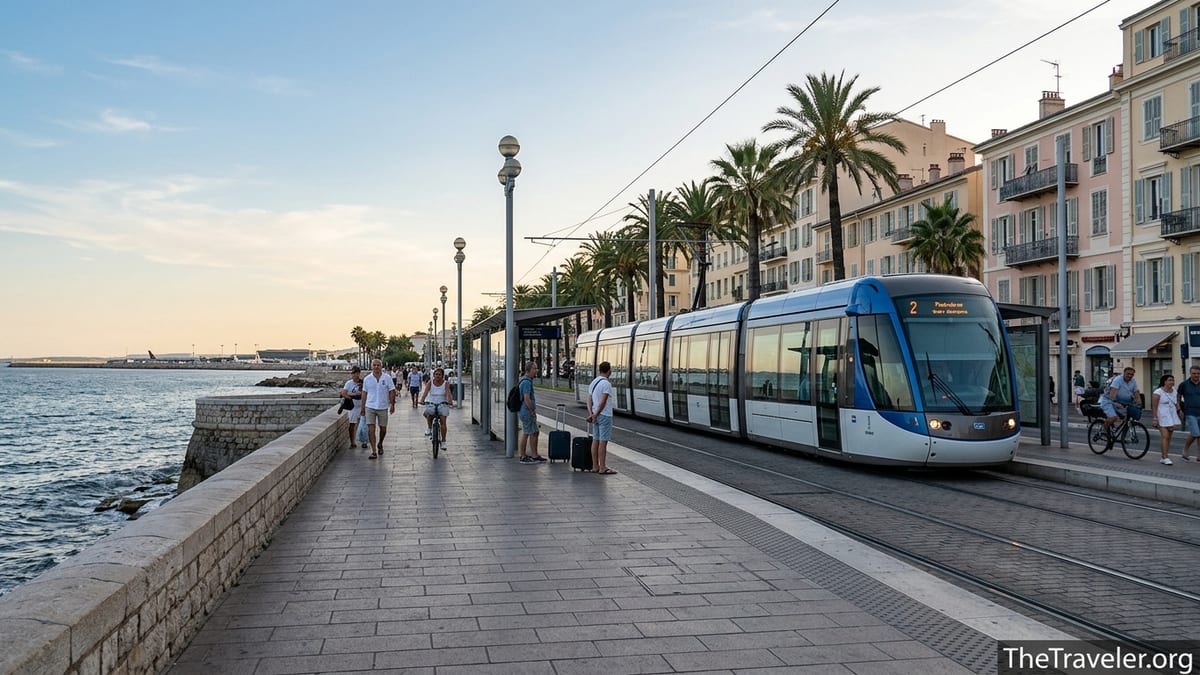
Understanding Your Options From Nice Airport
Nice Côte d’Azur Airport (NCE) is the main gateway to the French Riviera, roughly a 15 to 25 minute trip from the city center depending on traffic and your chosen transport. The key options are the Lignes d’Azur tram line 2, a couple of useful bus routes, metered taxis with regulated 2026 fares, prebooked transfer services, and for some travelers, a short tram link to the nearest railway station followed by a regional train. Which one works best depends on your budget, arrival time, luggage, and exactly where you are staying.
For most visitors staying near Avenue Jean Médecin, Place Masséna, the Old Town or the Promenade des Anglais, the tram is usually the easiest choice. It connects directly from both airport terminals to key downtown stops for the price of a regular city ticket, as long as you avoid the special “airport” fare product that targets short stay tourists. If you are arriving late at night with heavy bags or traveling as a family of four, a taxi or prebooked car can be more comfortable and surprisingly good value.
Before you land, it is worth checking where your hotel or apartment sits in relation to tram stops like Jean Médecin, Garibaldi and Port Lympia, or to bus stops on the Promenade des Anglais. Many hotels in central Nice are within a 5 to 10 minute walk of a tram stop, and knowing your closest stop in advance means you can get off the tram confidently instead of staring at the line map while your stop sails past.
It also helps to think about your personal stress triggers. If you hate crowds and are arriving in July with checked luggage, you may prefer to pay more for a quiet car. If you are on a tight budget and comfortable with basic French signage, the tram and local buses are reliable and straightforward.
Taking Tram Line 2: The Easiest Low Cost Route
Tram line 2 is the backbone of the airport connection. It links both airport terminals with the city center and the port, typically in around 30 to 35 minutes from Terminal 2 to Port Lympia. Services start shortly after 05:20 and run until just after midnight most days, with trams every 6 to 10 minutes during the day and slightly less frequently late in the evening. That means you are rarely waiting long on the platform, even if you have just missed a departure.
At Terminal 2, the tram stop is directly in front of the arrivals level; follow the “Tramway” signs as soon as you exit customs. At Terminal 1, the stop is a short walk outside near Gate A0 of the building. You do not need to cross busy roads or leave the airport estate. This simple layout means that even first time visitors with luggage can walk out of the terminal, follow the pictograms, and be standing on the platform in a couple of minutes.
The important detail at Nice is the ticketing. Standard Lignes d’Azur tickets and passes, which cost roughly 1.70 euros for a single trip at current 2026 prices, are valid on the tram between the airport and the city. However, the ticket machines on the airport platforms often promote a special airport product costing around 10 euros for a return, which is aimed at tourists who do not realize that ordinary tickets are allowed. Many recent visitors report that they have successfully used regular single tickets or day passes bought in the Lignes d’Azur mobile app, then validated with their phone when boarding, paying the normal city rate for what is essentially a local tram ride.
One practical way to reduce stress is to download the official Lignes d’Azur ticketing app ahead of your trip and create an account while you still have strong Wi-Fi. Once you land, you simply open the app, buy a single ticket or 24-hour pass for a couple of euros, and validate it on board the tram using NFC or QR code. This avoids having to decode the airport ticket machines while jet-lagged and also lets you skip queues at busy times, especially during conference weeks or major sporting events on the Riviera.
Smart Ways to Save on Tram and Bus Tickets
If you are staying in Nice for more than a quick overnight, it often makes sense to think beyond a single tram ride from the airport. Lignes d’Azur offers several passes and tickets that can reduce costs and simplify your movements for the rest of your stay. Instead of juggling coins and buying a fresh ticket every time, you can validate the same card or app-based pass as you board.
For many city breaks, a 24-hour or 48-hour pass for the local network is good value. Prices change regularly, but as of 2025 and into 2026 day passes generally cost only several euros and include unlimited travel on standard Lignes d’Azur trams and buses within Nice. Travelers sharing recent experiences mention using a 24-hour pass on the tram from the airport to Jean Médecin, then again to reach the beach in the afternoon, and later to ride to the Port district for dinner, all on one low-cost ticket instead of buying multiple singles.
There is also a regional option called the Pass Sud Azur Explore that covers buses, trams and regional TER trains across the wider Alpes-Maritimes area, including Nice, Cannes, Antibes, Monaco and Grasse. Visitors who plan side trips along the coast over several days often load this onto their Lignes d’Azur card and use it to take the tram from the airport and then hop on trains for day outings, instead of buying separate tickets each time. It requires a bit of planning, but it can remove the stress of last-minute fare decisions when you are in holiday mode.
Finally, note that the section of tram between the airport and the nearby Grand Arénas stop is heavily subsidized and has been described by many local travelers as effectively free, as inspectors do not typically check tickets on that very short segment. Some residents recommend riding to Grand Arénas and then purchasing a normal-price ticket or pass from the machines there. Whether you choose to do this or prefer the certainty of boarding with a valid ticket already purchased via the app, understanding how the fare structure works will prevent nasty surprises.
Taxi and Ride Hail: Door to Door Without the Hassle
If you value comfort and speed over saving every euro, taxis and prebooked cars provide a low-stress door to door option. Official Nice taxis queue at clearly signed ranks just outside arrivals at both terminals. In 2026, indicative fares published by local taxi services and the airport suggest that a ride from Nice Airport to the city center typically falls in the region of 25 to 50 euros, depending on the exact destination, time of day, traffic, and any supplements like night or holiday surcharges.
Independent fare trackers and travel guides currently estimate around 35 to 50 euros for a standard trip from the airport to areas like Place Masséna or the Old Town, while the airport’s own indications for 2026 place central Nice in a similar ballpark. For a couple or a family of three or four, that can be comparable to buying several special “airport” tram tickets, yet you are delivered right to your hotel door without hauling bags across cobbles or changing trams. The ride usually takes about 15 to 25 minutes depending on traffic along the Promenade des Anglais.
To avoid stress at the curb, follow the “Taxis” signs from baggage claim and join the official queue at the signed rank, rather than accepting offers from anyone approaching you inside the terminal. Official taxis should display a roof light and a meter. Some services now publicize fixed or approximate rates to central Nice and nearby resorts, which you can confirm with the driver before you set off. If a driver claims the meter is broken and offers a suspiciously high flat fare, politely decline and wait for the next cab.
Ride-hailing and prebooked transfer companies are also active in Nice. Many travelers reserve a car in advance for late-night arrivals, early-morning departures, or when traveling with young children and bulky luggage. In 2026, local private hire companies often promote their airport runs as slightly cheaper and more predictable than taking a taxi, especially for trips to destinations beyond Nice such as Cannes or Monaco. A typical private transfer to central Nice might cost somewhere in the 30 to 60 euro range depending on vehicle type and whether you are traveling in high season, but the price is usually confirmed at booking, which can be reassuring if you are unfamiliar with French taxi systems.
Using Buses and Trains for Specific Journeys
While the tram has replaced most of the old dedicated airport bus routes into Nice, a couple of bus lines remain useful, particularly if you are staying along the western end of the Promenade des Anglais or in nearby suburbs. One of the most practical options is the 12+ bus route, which runs between the airport area and eastern Nice via the seafront, Place Masséna and other central stops. As of early 2026, reported journey times between the airport and central Nice on this bus are roughly 40 to 45 minutes, depending on traffic.
The advantage of the bus is that it can drop you closer to specific stretches of the Promenade or neighborhoods not directly served by the tram, and the ticket types are generally the same as for the tram. Visitors coming to stay near the beachfront hotels west of the city center, for instance around Magnan or Lenval, often find that a direct bus from the airport avoids having to walk several blocks from the nearest tram stop with luggage.
For travelers continuing beyond Nice, a short hop on the tram to Grand Arénas also brings you close to the Nice Saint-Augustin rail station, from which regional TER trains run along the Riviera to Cannes, Antibes, Monaco and Ventimiglia. Many people landing at Nice take tram line 2 from Terminal 2 to Grand Arénas, walk a few minutes to Saint-Augustin station, and board a train to their final destination. This combination is especially useful if you have bought a regional pass like the Pass Sud Azur Explore, which covers both trams and TER trains over a given number of days.
Trains are not usually necessary if you are only going into central Nice, because the tram already takes you there directly in roughly half an hour, but they are an efficient onward option for beach towns and coastal villages further along the line. Just be aware that TER trains can be busy in summer and during major events, so traveling outside peak commuting hours can make the experience more relaxed.
Timing, Safety and Practical Tips on Arrival
The most important timing detail is whether your flight lands within the tram’s operating hours. First trams towards the city leave the airport shortly after 05:20 in the morning and the last services are just after midnight. If you are arriving on a late-night flight that lands close to or after this cut-off, you should plan on taking a taxi or a prebooked car, since regular buses are also quite limited in the very early and very late hours.
When you exit the terminal, take a moment to orient yourself before rushing outside. Airport signage points clearly to “Tramway,” “Bus,” “Taxis” and “Car rental,” and there are staffed information desks in the arrivals halls where you can confirm the best route if you are unsure. It is perfectly acceptable to show them your hotel address on your phone and ask “Tram or taxi, which is easier?” Staff are used to handling this question and can reassure you in English if your French is limited.
On board the tram or bus, keep your luggage close and your valuables in a zipped bag, as you would in any European city. Nice is generally safe, but airport lines can attract pickpockets because they know that tired travelers may be distracted. To reduce stress, avoid standing directly by the doors with a suitcase where you may be jostled when crowds board at central stops like Jean Médecin; instead, move slightly into the cabin and park your bag beside you.
Finally, consider your connectivity. If your mobile data plan is limited, you might want to download an offline map of Nice via your preferred mapping app before you fly. That way, once you step off the tram in the city, you can navigate the last 5 to 10 minutes on foot to your accommodation without hunting for Wi-Fi or paper maps. Many first-time visitors report that having pre-saved directions from “Jean Médecin tram stop” or “Garibaldi tram stop” to their hotel makes the last stage of the journey feel much easier.
The Takeaway
Getting from Nice Airport to the city center does not need to be stressful, provided you have a simple plan in mind before you land. For the vast majority of visitors staying in central districts like Jean Médecin, Masséna and the Old Town, tram line 2 is the best blend of price, reliability and ease, especially when you use the Lignes d’Azur app or a day pass instead of the more expensive dedicated airport tickets sold on the platform machines.
If you prize comfort over cost, taxis and prebooked transfers provide fast, door to door service at regulated fares that, in 2026, generally run between about 25 and 50 euros to central Nice. Groups and families in particular often find that the extra expense is reasonable compared with buying several individual airport tickets, especially late at night or with heavy luggage.
By understanding your options, downloading the right app, and knowing in advance which stop or drop-off point is closest to your accommodation, you can step out of the arrivals hall with confidence. Instead of worrying about tickets and directions, you will be free to watch the palm trees slide by, breathe in the sea air along the Promenade des Anglais, and start your time on the Riviera in exactly the right frame of mind.
FAQ
Q1. How long does the tram take from Nice Airport to the city center?
The tram on line 2 usually takes around 30 to 35 minutes from Terminal 2 to central stops like Jean Médecin, depending on the time of day.
Q2. Can I use a regular city ticket on the tram from the airport?
Yes. Standard Lignes d’Azur single tickets and day passes are valid between the airport and the city, even though airport machines also sell a more expensive special airport ticket.
Q3. Where exactly is the tram stop at Nice Airport?
At Terminal 2 the stop is directly in front of the arrivals level, and at Terminal 1 it is a short walk outside near Gate A0, both clearly signposted as “Tramway.”
Q4. How much does a taxi from Nice Airport to the city center cost?
In 2026, you can typically expect to pay somewhere in the region of 25 to 50 euros to reach central Nice, depending on traffic, exact address and time of day.
Q5. Is it worth prebooking a transfer instead of taking a taxi?
Prebooked transfers can reduce stress if you arrive late at night, travel with children or have lots of luggage, since prices are agreed in advance and the driver meets you on arrival.
Q6. What should I do if I arrive after the last tram?
If your flight lands after the last tram around midnight, plan to use a taxi or prebooked car, as regular buses are limited during the very late hours.
Q7. Which option is best if I am staying near Place Masséna?
For accommodation around Place Masséna, take tram line 2 from the airport and get off at Jean Médecin or Masséna, then walk a few minutes to your hotel.
Q8. How can I avoid ticket machine confusion at the airport?
Download the Lignes d’Azur app before you fly, buy a single ticket or day pass on your phone, and validate it when you board, so you can ignore the airport ticket machines entirely.
Q9. Is it safe to take public transport from Nice Airport with luggage?
Yes, tram and buses are generally safe, but as in any city keep your bags close, avoid displaying valuables, and be mindful of pickpockets on busy services.
Q10. What is the best option if I am continuing straight to Cannes or Monaco?
Take tram line 2 from the airport to Grand Arénas or Jean Médecin, then connect to a regional TER train, or consider a prebooked transfer if you prefer a direct door to door journey.