


More news on this day
A magnitude 5.5 earthquake recorded in central Alaska on August 8 has refocused attention on seismic risk in one of the United States’ most dramatic travel destinations, as monitoring agencies maintain an active watch along the broader Alaska seismic zone.
Get the latest news straight to your inbox!
Shallow Jolt Rattles Central Alaska Communities
Preliminary data compiled from regional and global monitoring networks indicate that the magnitude 5.5 event struck in central Alaska in the early hours of August 8, at a depth of only a few kilometers. The epicentral area lies inland, in a region already accustomed to frequent smaller tremors linked to the complex interaction of the Pacific and North American tectonic plates.
Initial shaking reports suggest the quake was felt across a broad swath of central Alaska, including remote communities and transportation corridors. The shallow depth amplified the sensation on the surface, even though the magnitude remained in the moderate range by global standards.
As of August 9, publicly available situation updates and seismic feeds show no widespread damage or casualties associated with the event. Buildings and infrastructure in much of Alaska are constructed with seismic activity in mind, and moderate quakes of this size are typically within the design expectations for newer critical structures.
The Alaska Earthquake Center and the United States Geological Survey continue to record aftershocks and regional seismicity, though specialists generally regard a 5.5 event as part of the state’s background activity rather than a rare outlier. For many residents, the shaking served as a reminder of the larger earthquakes that have shaped Alaska’s modern history.
US Travel Watch Stays in Place Along Alaska’s Seismic Zone
The latest tremor unfolds against a backdrop of heightened attention to geological hazards across Alaska’s travel routes. Federal and state platforms that consolidate hazard information continue to highlight the state’s persistent earthquake risk, even when no specific disruption is underway.
Current travel notices emphasize situational awareness rather than alarm, pointing to Alaska’s track record of frequent but usually manageable seismic events. Publicly available bulletins for the 2025 and 2026 seasons show a continuing focus on real-time monitoring of earthquakes, volcanoes and tsunami potential, with emphasis on aviation, marine operations and key highways.
For now, commercial flights, ferry services and major road links remain in normal operation, with carriers and transport operators relying on established communication channels with seismic and emergency management centers. When quakes occur offshore or near the coast, dedicated tsunami warning systems provide an additional layer of oversight for coastal towns and cruise itineraries.
Travelers planning trips in the coming weeks are being advised through open guidance documents to stay informed about local conditions, sign up for regional alert systems where available and follow any instructions posted by transportation providers in case of route inspections or short-notice schedule changes.
Impact on Summer Tourism and Key Gateways
August is peak travel season in Alaska, with visitors converging on Anchorage, Fairbanks, the Kenai Peninsula and coastal cruise ports. The moderate quake struck at a time when hotels, campgrounds and tour operators are near capacity, raising natural questions about safety among first-time visitors.
Tourism boards and publicly accessible travel advisories continue to describe Alaska as open for business, noting that the 5.5 event did not, at this stage, translate into systemwide closures. Airports, ports and rail terminals have not reported significant operational interruptions linked to the quake, according to available transportation summaries.
Some local authorities may carry out precautionary inspections of bridges, runways or port infrastructure after notable tremors, but most checks are routine in a state where seismicity is part of daily life. Visitor-facing businesses, from lodges to guided excursions, increasingly incorporate basic earthquake information into their safety briefings, placing the latest shaking into context.
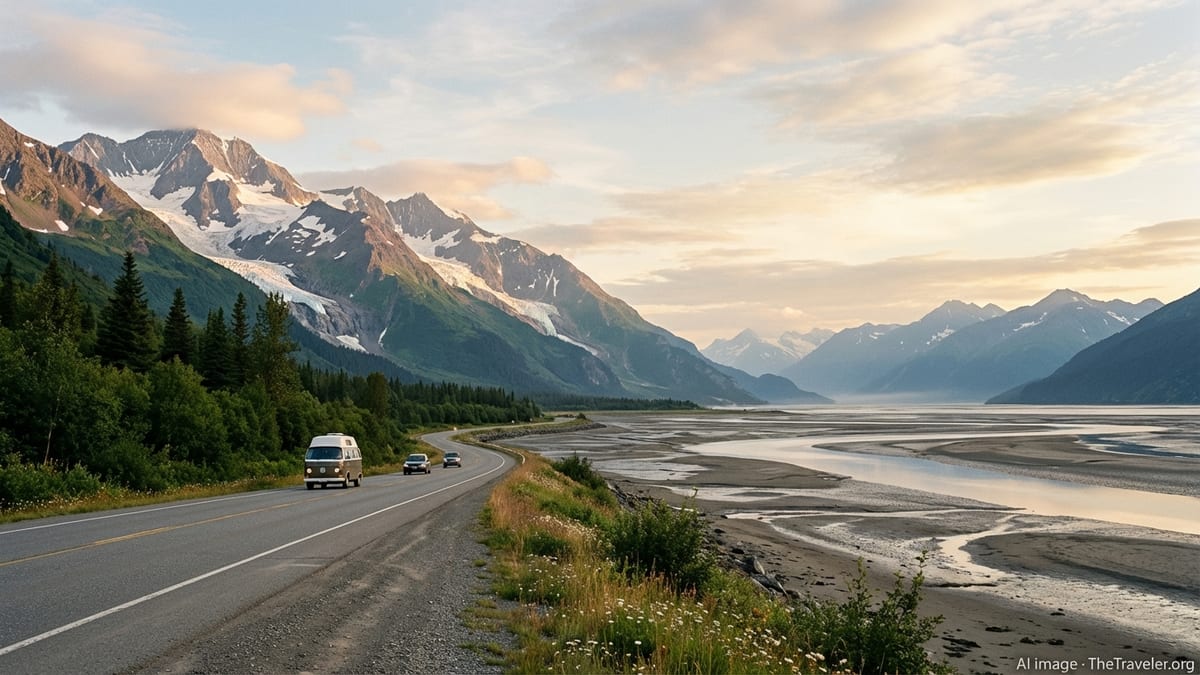
For travelers on self-drive itineraries, especially along the Parks, Glenn and Seward Highways, the main advice remains to monitor local news and road-condition updates, particularly after any larger aftershock. Rural routes, gravel roads and backcountry airstrips can be more sensitive to minor rockfalls or surface cracking where geology is already fragile.
Why Alaska Is So Seismically Active
Alaska sits atop one of the most active plate boundaries on Earth, where the Pacific Plate is being forced beneath the North American Plate along the Alaska-Aleutian subduction zone. This deep tectonic collision produces a near-continuous chain of earthquakes, from small microseisms to rare but powerful megathrust events.
Historic earthquakes in and around Alaska, including the great 1964 Prince William Sound event and more recent offshore shocks in the Gulf of Alaska, have demonstrated the region’s capacity for intense shaking and tsunami generation. The central Alaska interior, while farther from the plate interface than coastal communities, experiences its own network of active faults that occasionally produce moderate to strong quakes.
Evidence compiled in long-term seismic catalogs shows that earthquakes in the magnitude 5 range are common across the state each year. These events release a fraction of the energy stored along major faults but still test local preparedness and infrastructure. The August 8 quake near central Alaska fits this broader pattern of regular, moderate seismic activity.
Scientists using updated catalog analyses and experimental forecasting tools continue to study how clusters of smaller events might relate to larger earthquakes over longer time frames. For travelers, the key message coming from this research is not one of prediction, but of understanding that seismic risk in Alaska is persistent, rather than tied to a single headline-making shock.
Guidance for Travelers Assessing Earthquake Risk
For visitors weighing an Alaska trip in the wake of the 5.5 quake, publicly available safety guidance suggests a practical approach. Understanding basic earthquake response procedures, checking that accommodation providers follow local building codes and keeping key items quickly accessible can all reduce anxiety.
Many hotels, cruise ships and tour operators in Alaska already maintain emergency plans and participate in regular drills. Travelers can look for posted instructions in rooms, on cabin doors or in welcome materials that explain what to do in the event of shaking, including the familiar advice to drop, cover and hold on indoors, or to move away from structures and steep slopes if outside.
It is also prudent to consider travel insurance policies that address trip interruption due to natural hazards, especially for complex itineraries that combine flights, cruises and remote lodge stays. Policies vary widely, so travelers may wish to verify how earthquakes are treated before departure.
Ultimately, the latest Alaska quake highlights the balance between a world-class adventure destination and the geologic forces that shape it. With robust monitoring, clear public information and realistic expectations, most visitors are likely to experience Alaska’s seismic character as a point of awareness rather than a reason to stay away.