


More news on this day
Spain is consolidating its position at the top of Europe’s tourism league, with accelerating arrivals and record visitor spending placing the country on a trajectory that analysts say could bring close to 100 million international tourists in 2026.
Get the latest news straight to your inbox!
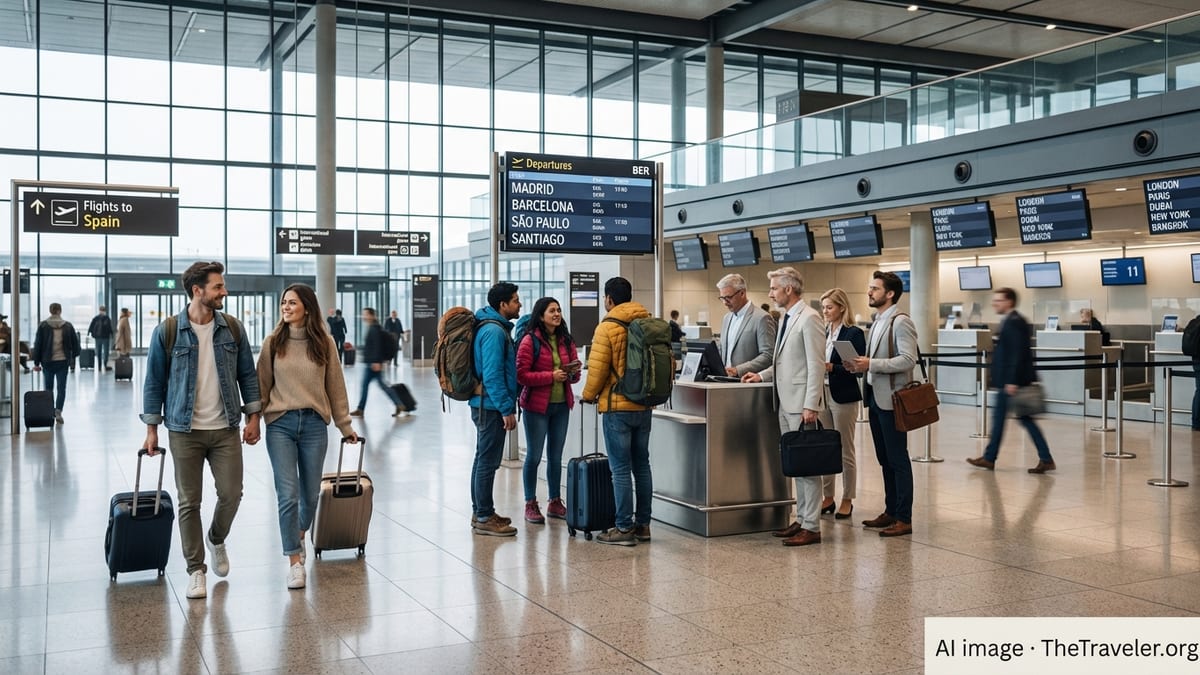
Visitor Numbers Close In On Pre‑Pandemic Highs
Recent border survey data from Spain’s national statistics office shows international tourist arrivals continuing to climb through 2024 and into 2025, outpacing many rival European destinations. Provisional figures for June 2025 indicate that Spain welcomed about 9.5 million international visitors in a single month, almost 2 percent more than a year earlier and part of a steady run of growth that began in 2023.
Cumulatively, publicly available information points to more than 44 million arrivals in the first half of 2025 alone, compared with roughly 84 million for the whole of 2023. That trajectory, combined with still‑robust booking pipelines reported by airlines, tour operators, and accommodation platforms, underpins forecasts that Spain could edge toward the symbolic 100 million mark in 2026 if current trends hold.
Global rankings compiled by the United Nations World Tourism Organization continue to place Spain among the world’s most visited countries, typically just behind France and ahead of Italy. Analysts note that even in years when Spain does not occupy the absolute top global position, it consistently dominates within Europe on a per‑capita basis and in terms of tourism’s relative weight in the national economy.
Industry observers say the recovery is no longer just a rebound from the pandemic shock but a new phase of structural growth, with Spain capturing an increasing share of long‑haul demand as travelers combine classic European itineraries with extended stays in Mediterranean destinations.
Air Connectivity and Hotel Demand Power the Surge
Spain’s transport and tourism authorities report that international air passenger numbers are rising in tandem with border arrival data. In the first half of 2025, more than 52 million international air passengers arrived in Spanish airports, an increase of over 6 percent compared with the same period of 2024. While not all of these passengers are tourists, the figures align closely with measured growth in foreign visitor arrivals.
Major hubs such as Madrid‑Barajas and Barcelona‑El Prat continue to cement their roles as gateways for both European and intercontinental traffic, while coastal airports in Málaga, Alicante, Palma de Mallorca, and the Canary Islands are seeing strong seasonal peaks linked to beach tourism. Low‑cost carriers are adding capacity on intra‑European routes, and long‑haul airlines are restoring or expanding transatlantic and Middle Eastern connections, broadening access from high‑spending source markets.
Hotel survey data from Spain’s statistics office suggests that overnight stays are tracking the rise in arrivals, with room demand in early 2026 surpassing comparable pre‑pandemic periods in many regions. Urban centers are reporting a rebound in business and events tourism, while resort areas benefit from longer average stays and a gradual extension of the summer season into the shoulder months.
Market analysts highlight that Spain’s diversified accommodation offer, from large resort complexes and city hotels to agritourism properties and regulated short‑term rentals, has allowed the sector to absorb higher visitor volumes without the sharp price spikes seen in some competing destinations. Even so, average daily rates and occupancy levels have both trended upward, supporting robust sector revenues.
Record Spending Strengthens Spain’s Tourism Economy
Alongside volume, spending indicators show that each visitor is, on average, bringing more money into the Spanish economy. According to published data for January 2025, international tourists spent more than 7.1 billion euros in that month alone, nearly 9 percent more than in January 2024, while arrivals grew just over 6 percent. This gap suggests that daily expenditure and length of stay are rising, especially among long‑haul travelers.
Economists point to several drivers behind the spending surge. Inflation has pushed up prices for accommodation, dining, and experiences, but Spain remains relatively competitive compared with northern European capitals. At the same time, there is a discernible shift in consumer behavior toward “experience‑rich” trips, with visitors allocating more of their budgets to cultural attractions, gastronomy, sports, and premium leisure activities.
Tourism’s direct and indirect contribution to Spain’s gross domestic product has been edging higher since 2022, helping offset weakness in some other sectors. Fiscal analysts note that stronger tourism receipts support public finances via value‑added tax, income tax on tourism‑related employment, and local levies on hotels and short‑term rentals in destinations such as Barcelona and the Balearic Islands.
The revenue momentum is also encouraging new investment in hotels, infrastructure, and technology. International investors and Spanish hospitality groups are announcing refurbishment programs and new developments in both established resorts and up‑and‑coming secondary cities, reflecting confidence that demand will remain strong through the middle of the decade.
Spain’s Edge Over Other European Destinations
Comparative data compiled by international tourism bodies show that Spain, France, and Italy remain locked in a close race for the title of Europe’s most visited country. While France often leads global rankings in absolute visitor numbers, Spain has carved out a distinct advantage in repeat visitation rates and in the breadth of its tourism offer across seasons and regions.
The country’s appeal stretches from classic sun‑and‑sea trips on the Mediterranean and Atlantic coasts to cultural circuits through cities such as Madrid, Barcelona, Seville, Granada, Valencia, and Bilbao. Mountain regions in the Pyrenees and along the Cantabrian coast are seeing rising interest from outdoor enthusiasts and travelers seeking cooler temperatures during peak summer heat.
Transport links also play a key role in Spain’s competitive position. A dense network of high‑speed rail lines connects major cities, reducing internal flight demand and enabling multi‑city itineraries. Improvements in port infrastructure have strengthened Spain’s role as a cruise gateway in the Western Mediterranean, particularly in Barcelona, Valencia, and the Balearic Islands.
Analysts observing booking and search trends suggest that Spain benefits from a perception of relative safety, value, and accessibility, especially for travelers from the United Kingdom, Germany, France, and the Nordic countries. Sustained interest from the United States and Latin America is adding a further layer of demand, bolstering Spain’s share of long‑haul traffic into Europe.
Opportunities and Pressures on Popular Destinations
The prospect of Spain nearing 100 million international visitors in 2026 presents both opportunities and challenges. For national and regional economies, higher visitor volumes translate into jobs, tax revenues, and support for small businesses in hospitality, culture, and transport. However, the rapid growth is intensifying pressure on infrastructure, housing markets, and natural environments in some of the country’s most popular destinations.
City councils in Barcelona, Madrid, Seville, and other urban hotspots have in recent years introduced measures such as caps on new tourist accommodation licenses, higher tourist taxes, and stricter regulation of short‑term rentals. Regional governments in the Balearic and Canary Islands are similarly pursuing policies aimed at limiting overcrowding in peak season and promoting a shift toward higher‑value, lower‑impact tourism.
Publicly available planning documents emphasize goals such as spreading visitor flows more evenly across the calendar year and encouraging travel to lesser‑known inland and rural areas. This strategy is intended to reduce pressure on already saturated neighborhoods while sharing tourism’s economic benefits more broadly across the country.
Environmental groups and resident associations continue to call for more ambitious limits on cruise traffic, airport expansion, and coastal development, arguing that climate risks and local quality‑of‑life concerns should temper the pursuit of record visitor numbers. The policy debate is likely to intensify as Spain approaches the 100 million threshold, forcing authorities, businesses, and communities to balance growth with long‑term sustainability.