


More news on this day
A magnitude 5.5 earthquake in central Alaska has jolted parts of the state, prompting fresh scrutiny of travel plans across the broader North Pacific seismic zone as a U.S. travel watch remains in focus for visitors moving through one of the world’s most active earthquake corridors.
Get the latest news straight to your inbox!
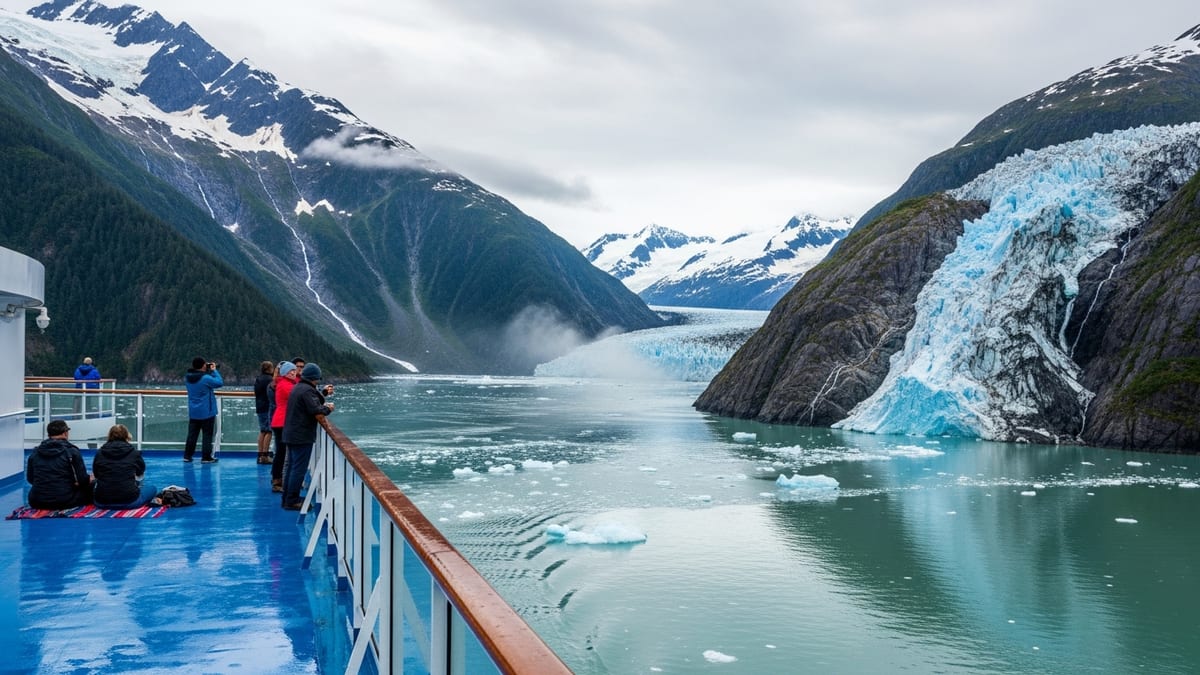
Strong Shaking Reported After Central Alaska Jolt
Preliminary regional seismic readings and early-community reports indicate that the 5.5 magnitude event struck in central Alaska in the early hours of August 8, with shaking felt across a wide area that includes communities on and near the Kenai Peninsula. Online intensity maps and crowd-sourced reports describe moderate shaking close to the epicenter and weaker, rolling movement extending tens of miles away.
The quake’s size places it among the stronger events to affect populated parts of the state so far this year, though well below the great subduction earthquakes that define Alaskan seismic history. Early technical summaries published by monitoring networks describe a shallow focus, a factor that can increase how strongly residents experience shaking even when overall magnitude is in the mid-5 range.
Initial regional reports do not indicate significant structural damage or major disruptions to critical infrastructure. However, residents have described items falling from shelves and short power flickers near the epicentral area, underscoring the way even moderate quakes can affect local life in a region where seismic activity is a constant backdrop.
The event has also generated heightened interest from travelers already in Alaska for the peak summer season, many of whom are moving through coastal towns, cruise terminals, and inland hubs that lie within the broader influence of the active plate boundary off the state’s southern coast.
Travel Watch Keeps Attention on Alaska’s Seismic Corridor
The latest quake arrives as U.S. government information services maintain a wider watch on travel conditions across the North Pacific seismic belt, a zone that includes southern Alaska, the Aleutian Islands, and other sections of the Pacific “Ring of Fire.” Publicly available advisories emphasize that this corridor routinely experiences moderate to strong earthquakes and, at times, related tsunami alerts, even when day-to-day travel remains largely undisrupted.
Rather than signaling a new emergency status, the current travel watch reflects an ongoing cautionary stance rooted in Alaska’s long record of powerful earthquakes and tsunamis. Historical catalogs show that the state has hosted some of the largest earthquakes ever recorded in the United States, with events in the Gulf of Alaska and along the Aleutian subduction zone continuing to shape risk assessments for coastal communities and transportation routes.
For travelers, the watch translates into guidance to stay informed about seismic developments, review hotel or tour operator contingency plans, and pay close attention to official bulletins regarding any changes to regional aviation, marine operations, or road access. Travel analysts note that such messaging has become more structured in recent years, with clearer distinctions drawn between watches, advisories, and active emergency warnings.
Airlines, cruise operators, and rail and highway services are closely tied to these signals. While the latest central Alaska quake has not been linked with widespread cancellations, the ongoing watch encourages companies to periodically rehearse response protocols and to ensure that visitors can quickly receive instructions if more serious seismic or tsunami threats arise.
Infrastructure Checks and Local Preparedness Efforts
Following the 5.5 event, early situation summaries from state-level emergency management and transportation channels point to routine inspections of key infrastructure, including major highways, bridges, ports, and energy facilities. These checks are standard after noticeable earthquakes in Alaska, a state where long supply lines and harsh environments make resilience planning especially critical.
Published data from the Alaska Earthquake Center and the United States Geological Survey show that the region routinely experiences swarms of small to moderate earthquakes. This background activity informs the design standards for many structures and transportation corridors, some of which have been upgraded or reinforced over time in response to lessons from previous strong earthquakes.
Local preparedness campaigns in recent years have placed added emphasis on tourism-facing communities, encouraging hotels, lodges, tour operators, and visitor centers to maintain clear evacuation maps, emergency supply kits, and communication plans. The latest quake provides an unwelcome but pointed reminder of why those measures are necessary, especially in coastal areas where tsunami warnings can follow large offshore events.
Communities across the Kenai Peninsula, Anchorage region, and central interior have also expanded participation in earthquake and tsunami drills, often coordinated with regional and national exercises. Travelers arriving in Alaska during peak season may encounter posted guidance in airports and ferry terminals that outlines how to react to shaking and where to head if a tsunami alert is issued for low-lying zones.
What Visitors Should Know Before and During an Alaska Trip
Travel specialists advise that visitors considering or already undertaking trips to Alaska treat earthquakes as an environmental reality to be understood rather than a reason to avoid the destination altogether. Standard guidance for staying safe during moderate shaking emphasizes moving away from windows, dropping to the ground, taking cover under sturdy furniture if available, and holding on until the movement stops. In outdoor settings, the priority is to stay clear of steep slopes, rockfall zones, and overhead hazards.
Before departure, travelers are encouraged to review the latest information from national geological agencies, tsunami warning centers, and state emergency management offices. Many itineraries, particularly cruises and adventure tours, move quickly between remote areas, so checking how operators communicate urgent updates can be just as important as scanning weather forecasts.
Once in Alaska, visitors can benefit from paying attention to local signage in hotels, campgrounds, and harbors that explains evacuation routes and assembly points. In coastal communities, maps often highlight elevated areas that serve as safe zones in the event of a tsunami alert. Familiarity with these locations ahead of time can shorten response times if alarms sound following a significant offshore quake.
Travelers using rental vehicles or self-driving itineraries along the Alaska Highway system may also wish to keep additional water, food, and warm clothing in their vehicles. While today’s 5.5 event has not produced major road closures, previous quakes and landslides in the broader region have occasionally disrupted single-route corridors, underscoring the value of basic preparedness in sparsely populated stretches.
Ongoing Monitoring Across a Restless North Pacific
The central Alaska shock adds to a recent pattern of moderate seismic activity recorded across and just south of the state, including several mid-magnitude events in July along the Alaska Peninsula and offshore zones. Public earthquake catalogs and scientific bulletins show that such activity is broadly consistent with long-term trends along the North Pacific plate boundary, rather than an anomaly in itself.
Seismologists caution that individual moderate quakes are usually not reliable indicators of an impending large event, but they form part of a complex puzzle that researchers track through dense networks of seismometers, GPS stations, and, increasingly, crowd-sourced data from smartphone sensors and online reporting platforms. These inputs help refine shaking forecasts and inform future updates to building codes and infrastructure planning.
For the travel sector, the key question is whether seismic episodes translate into tangible disruptions. At present, available operational information suggests that Alaska’s airports, ports, and major road connections remain open and functioning, with contingency plans in place should stronger earthquakes occur. The broader U.S. travel watch across the seismic zone serves primarily as a prompt for heightened awareness rather than a directive to cancel journeys.
As the summer season continues, Alaska’s tourism industry is balancing reassurance with realism, emphasizing both the rarity of trip-ending seismic emergencies and the importance of knowing how to respond when the ground does unexpectedly move. The latest 5.5 quake reinforces a central message that has long defined travel in the region: Alaska’s powerful landscapes and natural forces demand both respect and preparation from everyone who passes through.