


More news on this day
An Alberta couple vacationing in Saint Lucia says a WestJet strike-related rebooking left them unexpectedly stranded for days, after a new itinerary routed them through a country that would not accept one partner’s passport without a difficult-to-obtain visa.
Get the latest news straight to your inbox!
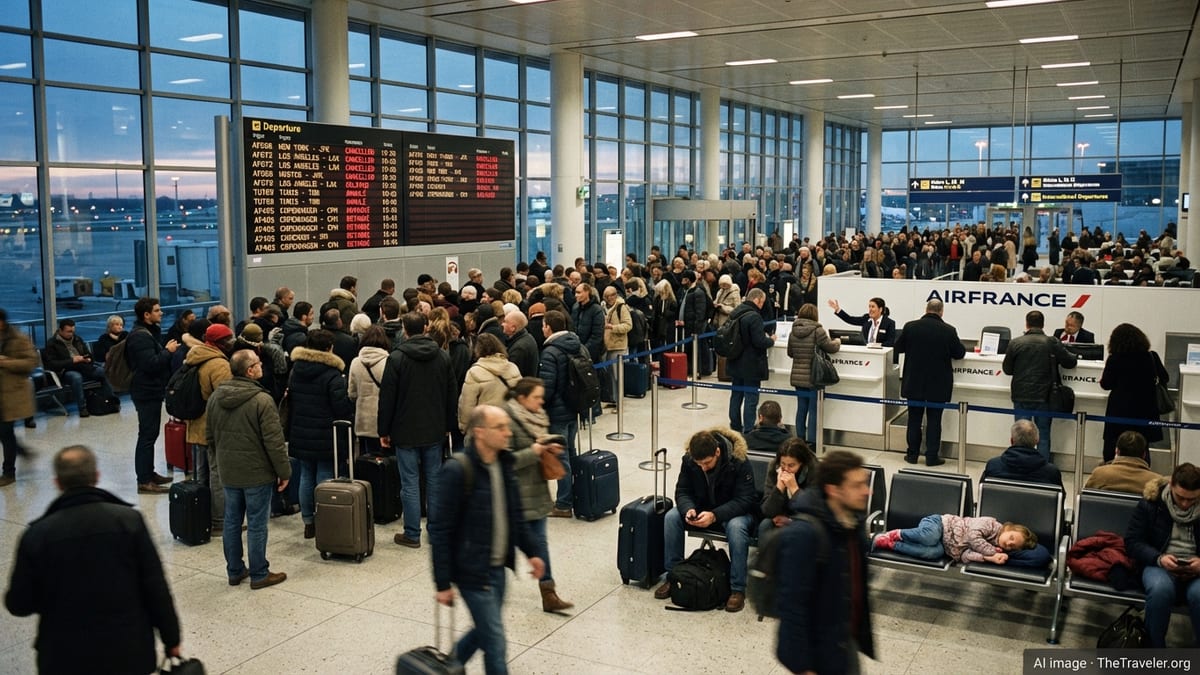
Strike turmoil leaves travelers in limbo
The couple’s ordeal began as WestJet adjusted schedules in late July amid escalating labour tensions and a looming flight attendants’ strike. As the airline reshuffled international routes to avoid having crews and aircraft stranded abroad, numerous passengers reported abrupt cancellations and last-minute rebookings.
According to published coverage, the Alberta travelers were initially booked to fly home from Saint Lucia to Calgary on a WestJet-operated itinerary. When their original flight was disrupted in the broader schedule changes, they received an automatic rebooking that sent them through an intermediate country. Only after reviewing the details did they realize that one passenger, a non-Canadian citizen, would likely be denied boarding on the connecting leg because of visa restrictions tied to their passport.
The pair say they alerted WestJet and local airport staff that the new routing would not work, but options were limited as strike planning and high-season demand left many seats sold out. What they hoped would be a routine end to a Caribbean holiday turned into a prolonged and uncertain stay, with mounting hotel costs and questions about when they could legally and safely return to Canada.
Publicly available information about the case has drawn attention across Canada, tapping into wider frustration from travelers caught up in repeated episodes of airline disruption in recent years.
Citizenship rules clash with automated rebooking
At the heart of the dispute is how airlines handle passengers who are citizens of one country but permanent residents of another, especially when flights are changed at short notice. In this case, reports indicate that the Alberta couple’s original vacation package worked within the non-Canadian partner’s travel permissions. The revised WestJet routing, however, appeared to assume that both travelers could transit freely through a third country that maintains stricter entry rules for certain passports.
Airlines rely heavily on automated systems to propose alternate flights when schedules change. Those systems are typically designed around seat availability, aircraft positioning, and overall timing, but they may not always factor in the complex patchwork of visa rules and citizenship-based restrictions that govern international transit. According to travel industry commentary, front-line staff often depend on separate tools such as Timatic databases at check-in to verify whether a passenger is actually eligible to fly a proposed route.
In the Saint Lucia case, by the time the travelers realized the citizenship conflict, the rebooking had already been issued, and the surrounding strike turbulence meant there were few immediate alternatives. The couple have described the experience as “a bit torturous,” pointing to repeated attempts to navigate call centres, local airport support and online systems while trying not to overstay in a foreign country.
The situation highlights a recurring weakness in airline disruption management: automated rebookings that appear efficient on paper can collapse in practice when they fail to account for the full legal profile of passengers, including nationality, residency status, and visa history.
WestJet strike and broader passenger frustration
The Saint Lucia incident unfolded against the backdrop of tense negotiations between WestJet and its flight attendants, which led to widespread anxiety about cancellations and delays for early August departures. As talks intensified, the carrier warned that international flights in particular could be affected, and travelers rushed to modify their plans.
Publicly available accounts describe a patchwork of outcomes for WestJet customers during this period. Some passengers reported smooth rebookings onto partner airlines or alternate dates. Others described hours-long waits on hold, difficulties changing tickets booked through third-party agencies, or confusion over whether additional costs would be covered when they made their own arrangements.
The Alberta couple’s challenge in Saint Lucia has resonated because it combines this strike-related uncertainty with the added complication of international mobility rules. While Canadian citizens typically have broader visa-free access in parts of the Americas and Europe, spouses or companions with other nationalities may face tighter restrictions, especially when routing changes introduce new transit points on short notice.
Advocates for air passengers in Canada have repeatedly argued that airlines should be required to provide clearer communication and more individualized assistance when disruptions occur, particularly when there is a foreseeable risk that a new itinerary will not be legally usable by all members of a booking.
Canadian passenger rights and international rules
The episode has renewed questions about how Canada’s air passenger protection regulations intersect with real-world complications such as citizenship and visa constraints. Under the federal framework, travelers on Canadian carriers are generally entitled to rebooking, refunds or other assistance when flights are cancelled or significantly delayed for reasons within the airline’s control, including certain kinds of labour disruptions.
However, those protections assume that the replacement itinerary is workable for the passengers involved. When a rebooked route depends on a third country’s rules, carriers must align not only with Canadian regulations but also with international aviation security requirements and the immigration policies of each state on the journey.
Publicly available guidance for airlines emphasizes that carriers can be fined or penalized if they transport travelers who do not meet entry or transit conditions, which in turn can make companies more cautious in how they handle borderline cases. In practice, this can leave passengers feeling squeezed between an airline’s liability concerns and their own urgent need to get home.
Observers note that the Saint Lucia case illustrates an information gap. While visa and entry requirements are ultimately the traveler’s responsibility, disruptions initiated by an airline can suddenly shift those requirements mid-trip. When that occurs, affected customers argue that carriers should take extra care to ensure that any new routing proposed is compatible with every passport on the reservation.
Calls for better safeguards in rebooking systems
Travel experts and consumer advocates have pointed to the Alberta couple’s experience as evidence that rebooking algorithms and frontline procedures need to evolve. Suggestions include integrating more detailed citizenship and residency data into reservation profiles, so automated tools can flag when a proposed route would likely trigger visa issues for a specific passenger.
Others recommend stronger escalation protocols: when an itinerary involves mixed-nationality groups on complex international routes, rebookings could be routed to human agents trained to cross-check immigration rules before finalizing changes. This approach could reduce the risk of passengers being ticketed on flights they are statistically unlikely to board.
For travelers, the Saint Lucia incident serves as a reminder to review every segment of a replacement itinerary, especially during periods of operational disruption or labour unrest. Experts advise confirming transit and entry conditions for all countries on a route and, where possible, carrying backup documentation that may ease border formalities.
As operations gradually normalize following the latest round of strike-related turbulence, the Alberta couple’s story has become part of a broader conversation about how Canadian airlines manage disruption, treat passengers with diverse citizenship backgrounds, and balance automation with the need for tailored, human-centred problem solving.