


More news on this day
Emirates and Etihad Airways are extending the suspension of flights to Bahrain and Kuwait as regional tensions continue to disrupt Gulf airspace, prolonging uncertainty for travelers across one of the world’s busiest aviation corridors.
Get the latest news straight to your inbox!
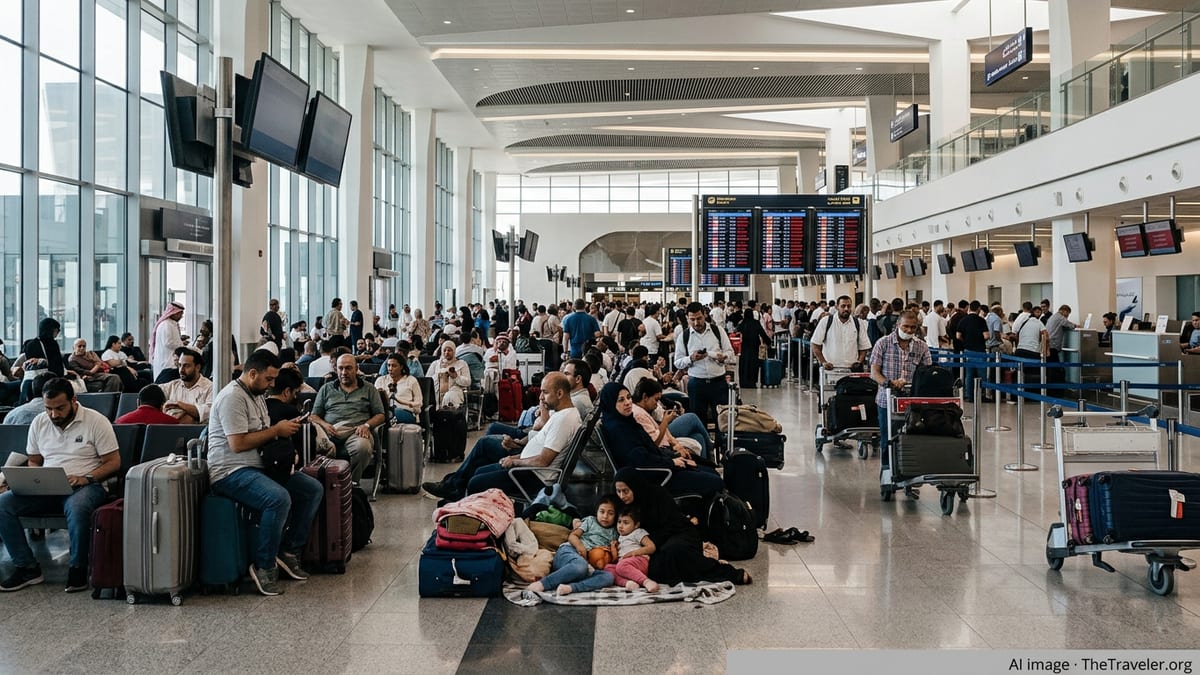
Regional tensions keep Gulf airspace under pressure
Publicly available information indicates that the latest round of cancellations by Emirates and Etihad is closely tied to a fragile security environment over parts of the Gulf, where airspace has faced repeated restrictions in recent months. Heightened military activity and intermittent alerts around key energy and transport hubs have translated into tighter risk thresholds for commercial airlines operating near Bahrain and Kuwait.
Data compiled by aviation tracking platforms shows that carriers across the region have been rerouting long haul services away from sensitive corridors, increasing flight times between Europe, the Middle East and Asia. For Dubai based Emirates and Abu Dhabi based Etihad, both heavily reliant on smooth north south connections, the operating calculus around shorter regional hops to Bahrain and Kuwait has become particularly complex.
Industry analyses of the current Middle East crisis describe an environment where even short notice missile alerts can prompt sudden airspace closures. In such a setting, maintaining scheduled operations to airports that have recently experienced interruptions, or sit close to potential flashpoints, has become significantly more challenging for network planners.
Experts following the conflict caution that aviation disruptions are likely to ebb and flow with developments on the ground. For now, however, the decision by the two largest UAE carriers to keep Bahrain and Kuwait flights on hold underscores the degree to which regional security dynamics continue to shape commercial aviation choices.
Emirates and Etihad extend targeted cancellations
Recent operational updates referenced in travel advisories and passenger communications point to a pattern of targeted cancellations by Emirates and Etihad, with Bahrain and Kuwait among the destinations most consistently affected. While both airlines have moved in recent months to rebuild reduced global schedules, services to these two Gulf neighbours remain suspended or severely curtailed.
Anecdotal reports from passengers shared on public forums describe cancellations of Emirates and Etihad flights linking Dubai and Abu Dhabi with Kuwait City, as well as disrupted connections involving Bahrain. In several cases, travelers note that flights were removed from schedules days or weeks in advance, suggesting that the airlines are planning conservatively rather than relying on last minute changes.
Travel industry bulletins monitoring regional operations similarly highlight Bahrain and Kuwait as markets where postal, cargo and passenger links have been slower to normalize compared with other destinations served from the UAE. Advisories classify services to both countries as suspended or restricted, reflecting the continued caution among carriers about restoring full scale operations.
For affected passengers, the extended halt has meant being rebooked via alternative hubs or on other airlines still flying into Bahrain and Kuwait. Customer accounts indicate that, where possible, itineraries are being rerouted through Gulf or regional airports judged to be less exposed to immediate security risks, although this often adds complexity and travel time.
Knock on effects for travelers and regional connectivity
The continued suspension of direct Emirates and Etihad services to Bahrain and Kuwait is having a visible impact on mobility across the northern Gulf. With two of the region’s largest network carriers effectively stepping back from these short haul routes for the time being, seat capacity has tightened just as many residents and expatriates are seeking to travel for work, education and family visits.
Published coverage of the broader aviation situation notes that thousands of flights across the Gulf have been cancelled or rerouted since the onset of the latest conflict, disrupting well established transit patterns. For passengers based in Bahrain and Kuwait who previously relied on fast one stop connections via Dubai or Abu Dhabi to reach Europe, Africa and Asia, journeys now frequently involve longer detours or multiple stops.
Other regional airlines have attempted to fill some of the gap, but airspace restrictions and infrastructure constraints limit how quickly capacity can be added. Logistics assessments of the crisis describe Bahrain and Kuwait as operating under restricted conditions, with carriers required to navigate complex routing and scheduling requirements as well as heightened security protocols at airports.
Travel agents across the Gulf report that many customers are now building extra time into itineraries, and in some cases switching to routings that avoid conflict affected corridors altogether. The uncertainty around when Emirates and Etihad might fully reinstate Bahrain and Kuwait flights is contributing to a cautious, short booking trend, with many travelers waiting until closer to departure to commit.
Operational, safety and commercial considerations
Aviation risk assessments underline that decisions to cancel or extend suspensions are driven primarily by safety and regulatory considerations, even when the commercial stakes are high. Open source reporting on the conflict highlights episodes of missile and drone activity that have, at times, approached or affected civilian infrastructure, including airports and fuel facilities in parts of the Gulf.
In this environment, major carriers have shown a willingness to accept short term commercial losses in exchange for reduced exposure to low probability but high impact events. Publicly available commentary from airline industry analysts notes that the reputational and legal consequences of operating into a conflict impacted zone can be severe if an incident occurs, making conservative scheduling a rational response.
At the same time, the extended suspension of routes such as Bahrain and Kuwait exposes Emirates and Etihad to competitive risk. Rival hubs in other Gulf and near Gulf states may gain market share as travelers reorient their preferred transit points. Capacity constraints at those airports, along with their own exposure to regional dynamics, mean that any shift is likely to remain fluid as conditions evolve.
For both airlines, the current strategy appears to prioritize maintaining as much of their long haul network as possible while trimming or suspending short regional sectors seen as operationally vulnerable. This balancing act allows them to preserve critical intercontinental flows through Dubai and Abu Dhabi, while retaining the flexibility to restore Bahrain and Kuwait flights once the risk environment improves.
Outlook: cautious monitoring and phased restoration
Looking ahead, most open source assessments suggest that a swift, wholesale return to normal operations across the northern Gulf is unlikely while the broader security situation remains unsettled. Instead, industry observers expect airlines to continue with a cautious, phased approach, periodically reviewing route level suspensions such as those affecting Bahrain and Kuwait.
Gradual reopenings will depend not only on political developments, but also on the status of local airport infrastructure, air traffic control capacity and regional airspace corridors. Even after formal restrictions ease, carriers may wait for several weeks of stable conditions before reinstating multiple daily frequencies or wide body operations on sensitive routes.
For travelers, the key message from publicly available travel advisories and airline communications is to remain flexible. Passengers booked on future Emirates or Etihad services involving Bahrain or Kuwait are being urged in many advisories and agency updates to monitor their bookings closely, verify flight status in the days leading up to departure, and be prepared for potential rerouting.
While the timing of a full resumption of flights remains uncertain, the experience of previous Gulf infrastructure and airspace crises suggests that once a durable de escalation takes hold, major carriers tend to move quickly to rebuild their regional networks. Until then, the extension of cancellations by Emirates and Etihad on routes to Bahrain and Kuwait stands as a visible reminder of how closely commercial aviation in the Gulf is tied to regional security dynamics.