


More news on this day
A fresh delay to the long-planned rehabilitation of Alderney Airport’s ageing runway is drawing renewed scrutiny, after published coverage indicated the construction start is now expected in 2028 at the earliest, rather than next year.
Get the latest news straight to your inbox!
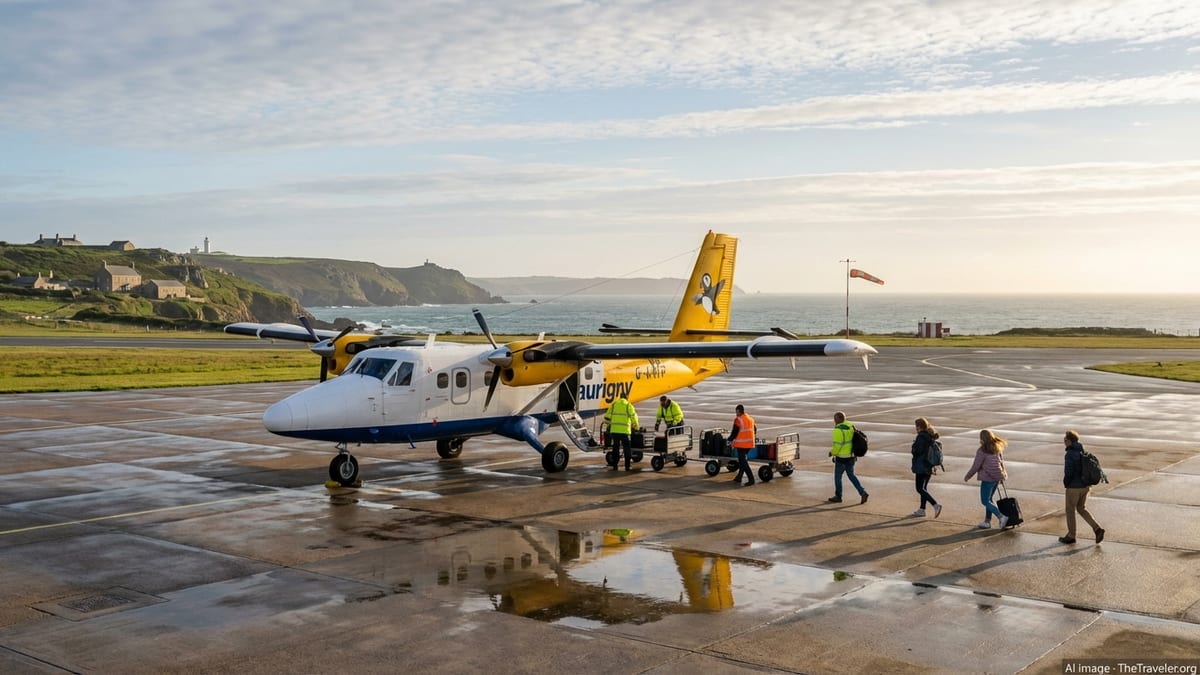
Timeline slips again for Alderney’s runway rehabilitation
Recent reporting from Channel Islands outlets described the runway project as effectively pushed back by at least another year, with the earliest construction window now framed around summer 2028. The delay has been characterized as “very concerning” by Alderney politician Alex Snowdon in published coverage, reflecting anxiety about how long the existing surface can remain dependable with continued patching.
Publicly available information indicates the change is tied to a redesign process and revised milestones compared with earlier planning documents. Coverage has described technical advisers working on a new scheme, with a design period that could take several months and, in turn, pushes procurement and mobilization later than previously anticipated.
The runway works have been widely discussed as a lifeline project for Alderney, a small island whose scheduled air services play an outsized role in medical travel, business trips, and onward connections via Guernsey. With the principal fix now no longer expected until 2028, the next two years are likely to hinge on incremental maintenance and risk management.
Why delays matter more for small islands
Alderney’s airport operations are more exposed to infrastructure uncertainty than larger hubs because there is little redundancy: a single runway surface condition issue can translate quickly into cancellations, aircraft restrictions, or temporary suspension of certain operations. Published coverage has noted the prospect that continued patching may have to continue while officials try to keep the airfield operational until full rehabilitation can begin.
For travelers, the concern is not only the prospect of a future construction period, but also the possibility of short-notice service disruption before work even starts. When a runway is near the end of its service life, weather and wear can make unplanned closures more likely, which is particularly disruptive for passengers who need to connect onward to the UK or beyond.
Even when flights can operate, infrastructure limitations can narrow the operational envelope, influencing aircraft choice, payload planning, or scheduling flexibility. For an island market with fewer daily frequencies, that can amplify the passenger impact of a single delayed rotation.
A broader pattern: runway projects are colliding with peak travel demands
The Alderney delay is arriving as runway and airfield projects remain a major theme across aviation, including at large U.S. airports where closures are scheduled months in advance but still require close coordination to avoid cascading delays. In Maryland, BWI Thurgood Marshall Airport’s Runway 10-28 rehabilitation project involves a full closure from July 22 through October 8, 2026, with additional overnight intersection closures during the work window.
In Minnesota, Minneapolis-St. Paul International Airport closed Runway 17-35 starting September 8, 2026, for about six weeks for electrical-system replacement and new energy-efficient lighting. Even projects presented as low-impact can shift flight patterns, change taxi routings, and tighten scheduling buffers, particularly when weather or air traffic constraints limit the flexibility of the remaining runway system.
Hawai‘i also has an extended runway-related program underway: a state transportation bulletin described intermittent nightly runway closures at Daniel K. Inouye International Airport in Honolulu beginning September 8, 2026, continuing through April 2027, alongside runway restrictions such as temporary shortening of Runway 8L-26R.
What travelers should watch for in the months ahead
For passengers traveling to or from Alderney, the key near-term variable is the reliability of the existing runway surface while full rehabilitation remains on the horizon. With published coverage pointing to continued patching, travelers may want to monitor airline schedule adjustments and allow extra time for same-day connections through Guernsey during periods of weather sensitivity.
For travelers elsewhere, the Alderney situation is a reminder that runway construction does not only happen at mega-hubs, and even small airports can experience outsized disruption when major pavement work is deferred. Across markets, publicly available airport construction pages and transportation bulletins remain among the most consistent ways to track closure windows and operational changes, especially when projects include overnight intersection closures or runway-length restrictions that can alter usable capacity.
In practical terms, when runway projects coincide with seasonal demand or constrained air-traffic flows, delays can compound quickly. Travelers planning trips in late summer and early fall should expect more frequent schedule padding, potential last-minute gate changes, and greater vulnerability to missed connections on itineraries that depend on tight turn times at airports operating with reduced runway availability.