


More news on this day
UAE residents are waking up today, September 15, to a fast-moving mix of aviation disruption, heightened maritime risk near key chokepoints, and shifting international travel guidance tied to the US-Iran conflict. While most flights and daily services continue, published coverage indicates that schedules, routes, and insurance terms can change with little notice, particularly for Gulf destinations and connections that rely on regional air corridors.
Get the latest news straight to your inbox!
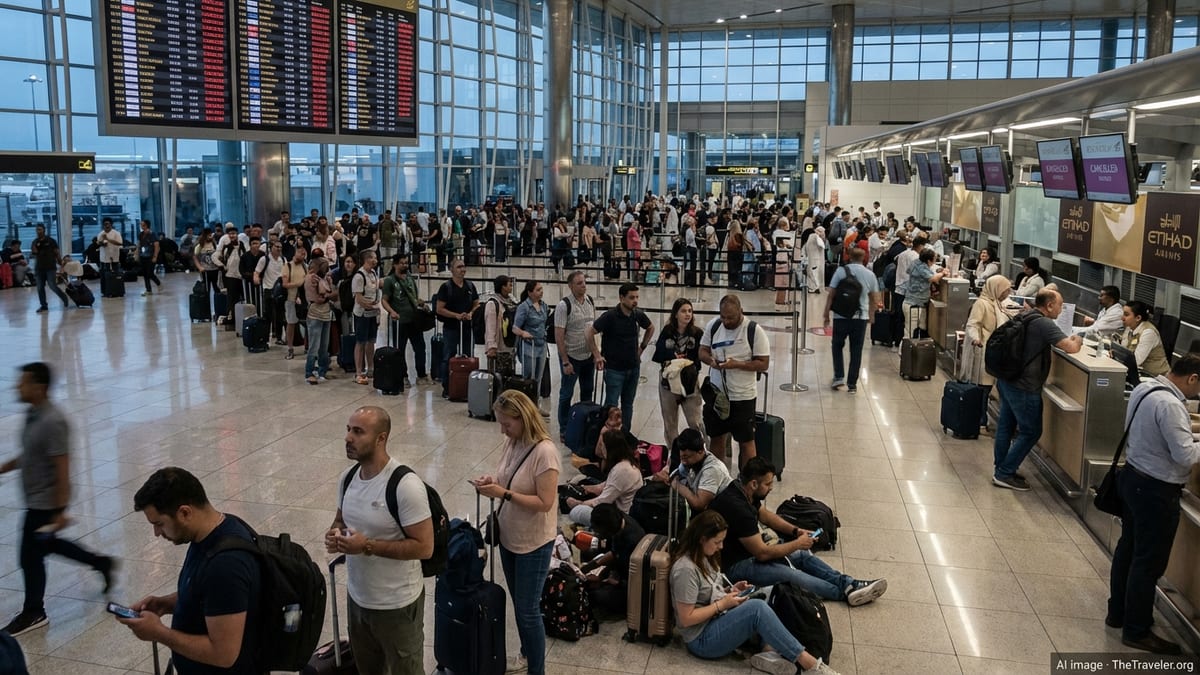
Flight disruption: what to check before leaving for the airport
Recent days have brought rolling delays and periodic cancellations at Dubai International Airport and Abu Dhabi’s Zayed International Airport, according to published coverage that has tracked day-by-day operations. Flight-tracking data cited in recent reporting showed more than 170 delays across the two airports on September 13, alongside specific short-haul cancellations on Gulf routes.
Airline networks are operating, but with irregularities. Published coverage indicates that some services have faced longer routings due to restricted airspace and conflict-zone risk management, which can add time even when flights depart as scheduled. Travelers with tight onward connections, especially on short-haul Gulf hops, may want to build extra buffer time for missed connections and rebooking.
For residents traveling today, the practical sequence is to confirm your exact flight number status directly with your airline and the relevant airport’s live departures, then re-check again a few hours later. Recent coverage has highlighted that disruption can be uneven, with some corridors operating normally while others see sudden changes.
Airspace and conflict-zone guidance: why routes can change without “closures”
Even when UAE airspace remains open, carriers may adjust paths to reduce exposure to higher-risk areas, creating knock-on effects that look like routine delays but are driven by safety planning. Published coverage has pointed to conflict-zone advisories shaping airline behavior across the Arabian Gulf and Gulf of Oman, influencing reroutes rather than triggering blanket suspensions.
That matters for residents because reroutes can affect fuel stops, baggage handling, and crew duty limits, which in turn can produce late aircraft arrivals and last-minute swaps. It also helps explain why two flights to the same destination on the same day can have different outcomes depending on the operating carrier and the route selected.
If you are traveling with checked baggage and a tight connection, monitor for aircraft changes and re-timings rather than relying only on the original itinerary. Where possible, keep essential items in cabin baggage for disruption resilience, since irregular operations can increase the odds of delayed bags.
Maritime and logistics pressure: what it means for residents and travelers
Beyond airports, shipping lanes remain a central pressure point. Recent regional reporting has described exceptional strain on commercial transit near the Strait of Hormuz, with heightened compliance checks and operational uncertainty affecting maritime movement in the wider Gulf and Arabian Sea.
In parallel, international coverage has flagged new security developments around other critical routes. Recent reporting described a strike on an Iranian commercial ship near the Strait of Hormuz and separate conflict-related developments affecting the Bab el-Mandeb area, a key Red Sea gateway that can serve as an alternative for some traffic when Gulf risks rise.
For UAE residents, the immediate travel relevance is indirect but real: when maritime risk rises, it can feed into airline fuel-market sentiment, delivery timelines for imported goods, and the operating costs of travel services. Travelers planning cruises, ferry connections, or leisure trips with tight schedules should be prepared for itinerary adjustments and should re-check operator notices frequently.
Official travel guidance: what foreign advisories are saying about the UAE and Iran
Several governments have updated or maintained elevated travel guidance tied to the conflict. The United States currently lists Iran as Level 4 “Do Not Travel,” reflecting a high-risk environment for detention and broader security concerns. Separately, the United States’ travel guidance for the UAE has been framed around a heightened risk environment linked to the ongoing hostilities, including potential missile and drone threats and the possibility of commercial flight disruption.
For UAE residents holding foreign passports, this matters because your home country’s advisory can affect travel insurance validity, corporate travel approvals, and airline rebooking policies. Before travel, check whether your insurance policy contains exclusions for conflict-related disruption or changes in risk advisories, and save copies of policy wording and emergency numbers offline.
Residents with upcoming trips that transit higher-risk air corridors should also review airline waiver policies and flexible-change options. Published coverage indicates that disruption patterns can shift quickly, so flexibility can be more valuable than small fare differences right now.
Practical steps for families, commuters, and business travelers in the UAE today
If you have travel today or within the next 72 hours, prioritize operational information over commentary. Use airline apps for flight status and boarding changes, and consider arriving earlier than usual if your route has been prone to irregular operations in recent days, particularly for Gulf-region connections.
If you are not traveling but have family members inbound, plan for late-night arrivals and gate changes. Recent disruption patterns reported at Dubai and Abu Dhabi suggest that “on time” can change close to departure, so keep airport pick-up plans flexible.
For businesses, review duty-of-care protocols for staff traveling through regional hubs, including contingency lodging budgets and guidance on rerouting. Publicly available information indicates that disruption has not been uniform across the network, so pre-approved alternatives can reduce last-minute decision pressure when flights are delayed or cancelled.