

More news on this day
An Allegiant Air Airbus A320 operating as Flight AAY1053 diverted from Lexington’s Blue Grass Airport to Cincinnati/Northern Kentucky International Airport in July 2026, drawing attention to how ultra-low-cost carriers manage irregular operations and passenger disruption on busy summer routes.
Get the latest news straight to your inbox!
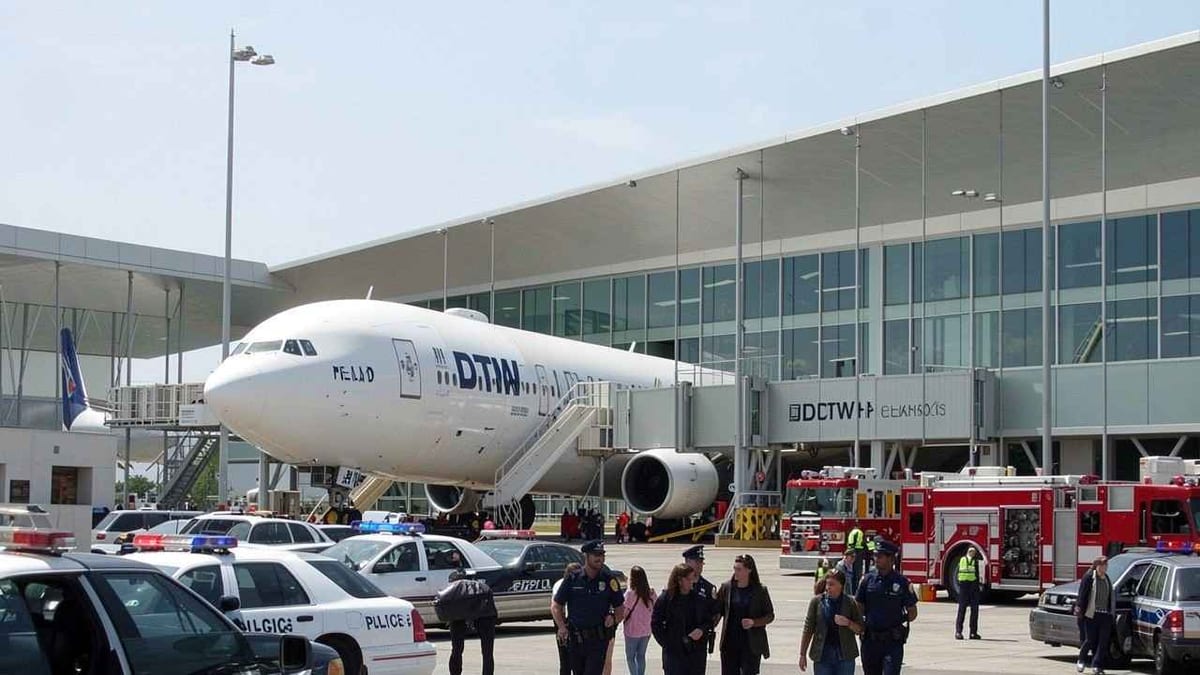
Unscheduled Detour on a Domestic Allegiant Route
Publicly available flight-tracking data show that Allegiant Air service AAY1053, also listed as G41053, was scheduled to operate into Lexington’s Blue Grass Airport in late July 2026 before diverting to Cincinnati/Northern Kentucky International Airport instead. The aircraft involved was part of Allegiant’s Airbus A320 family fleet, which the carrier uses extensively across its point-to-point network.
The diversion occurred close to the height of the summer travel period, when Allegiant runs a range of seasonal and leisure-oriented services into both Lexington and Cincinnati. While detailed operational logs are not publicly released, typical triggers for such diversions on domestic U.S. routes include weather conditions at the destination, runway or airfield constraints, or broader air-traffic flow management issues affecting a region.
Tracking information indicates that the flight completed its scheduled en‑route segment before proceeding to Cincinnati, suggesting that the aircraft and crew remained serviceable and that the change in destination was most likely related to external operational factors rather than a major onboard technical incident.
Cincinnati’s Growing Role in Allegiant’s Network
The choice of Cincinnati/Northern Kentucky International Airport as the alternate destination highlights the airport’s expanding role within Allegiant’s route map. Carrier announcements and airport schedules for 2026 outline multiple Allegiant routes serving Cincinnati, including flights to Florida leisure destinations and other midwestern and southeastern cities.
Industry route data classify Cincinnati as an operating base for the airline, with established ground handling, maintenance support, and crew resources already in place. That level of infrastructure can make Cincinnati a logical diversion point, particularly when weather or capacity constraints limit arrivals into nearby airports such as Lexington.
For passengers on Flight AAY1053, arrival at Cincinnati instead of Lexington would typically be followed by on-the-ground arrangements to complete the final leg of the journey, whether by ground transportation or rebooking on later flights. The specific options available on any given day can vary based on load factors, onward connections, and the broader operational picture across the network.
Lexington’s Place in Allegiant’s Point-to-Point Strategy
Lexington’s Blue Grass Airport features in Allegiant’s seasonal and year-round schedules, with services linking central Kentucky to several sun and leisure markets. Published timetables for 2026 show Allegiant continuing to operate non-stop routes from Lexington, reflecting ongoing demand from regional travelers seeking low-fare, vacation-oriented options.
Allegiant’s overall business model centers on connecting smaller and medium-sized cities to high-demand leisure destinations using direct, often less-than-daily flights. This approach can mean that individual city pairs have limited frequency, which can complicate recovery when a diversion or irregular operation occurs on a particular day.
In the case of AAY1053, the diversion underscores the operational tightrope that point-to-point carriers walk when balancing aircraft utilization, seasonal demand, and schedule resilience in markets that may see only a few weekly frequencies.
Managing Diversions and Passenger Experience
Allegiant’s contract of carriage and customer guidance for irregular operations outline how the airline responds when flights are diverted or delayed, including the distinctions between events within the carrier’s control and those categorized as weather or air-traffic related. In practice, the experience for travelers can range from relatively minor inconvenience to significant disruption, depending on the timing of the diversion and the availability of onward transport.
Diversions such as that of Flight AAY1053 generally trigger a cascade of logistical decisions: where to position aircraft and crew, how to manage subsequent flights, and how to move passengers to their originally ticketed destinations. On days with constrained capacity or high load factors, options to rebook onto later flights may be limited, making ground transport from a diversion airport a more practical solution.
For airlines, each diversion carries a cost in terms of fuel, crew time, and schedule knock-on effects. For passengers, the impact is measured in missed plans, added travel time, and uncertainty. Events like the AAY1053 diversion from Lexington to Cincinnati illustrate how operational decisions aimed at safety and efficiency can ripple through individual travel itineraries, particularly in peak season.
Broader Patterns in Summer 2026 Operations
Reports and schedule data from summer 2026 point to a busy travel season for Allegiant and other U.S. carriers, with strong demand on leisure routes and a tight operating environment across multiple regions. Weather-related disruptions, airspace congestion, and airport capacity constraints have contributed to reroutings and delays across the domestic network.
Within this context, the diversion of Allegiant Flight AAY1053 fits into a wider pattern of flights adjusting routings or destinations on short notice in response to evolving conditions. As airlines continue to refine their use of data and planning tools to anticipate disruption, diversions remain an accepted, if unwelcome, aspect of ensuring that flights complete their journeys as safely as possible.
For travelers in and out of cities like Lexington and Cincinnati, the event serves as a reminder to build flexibility into their plans during peak travel periods, monitor flight status closely, and be prepared for itinerary changes that can arise even on relatively short-haul domestic routes.