


More news on this day
Flights to and from the United Arab Emirates are operating largely as normal this week, even as Etihad Airways, Air Arabia and other regional carriers cancel or trim a handful of Gulf routes in response to shifting security assessments and operational constraints.
Get the latest news straight to your inbox!
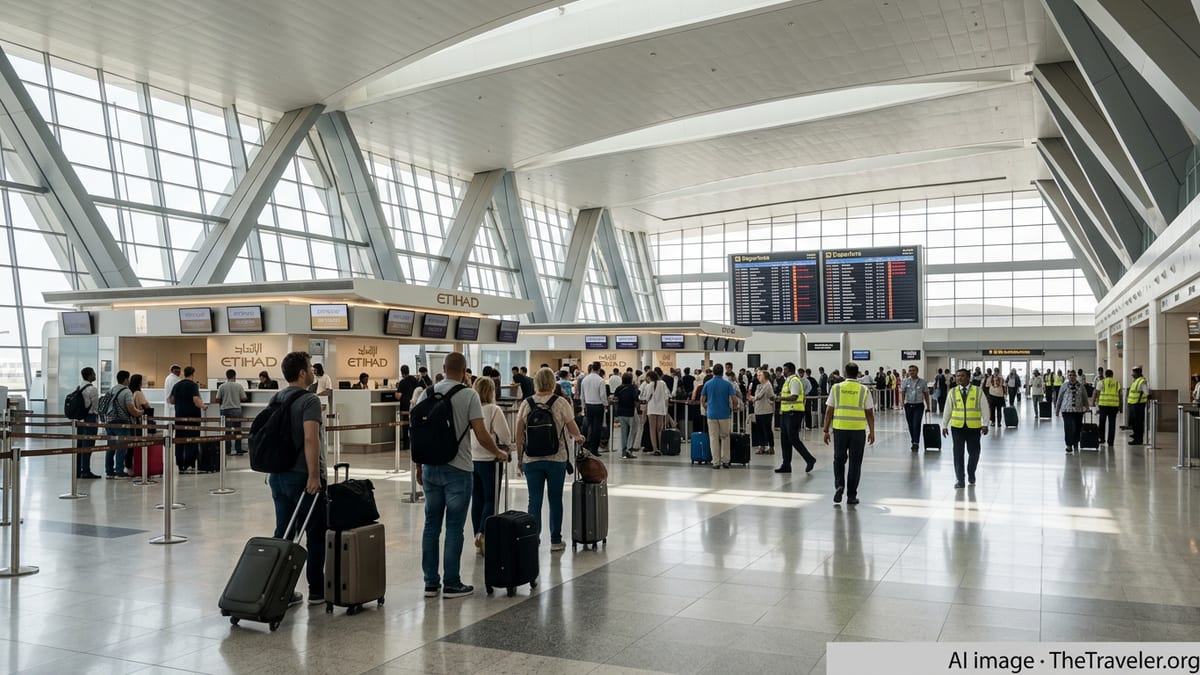
Core UAE hubs remain busy despite regional tensions
Publicly available airport and airline data indicate that Dubai International, Abu Dhabi’s Zayed International and Sharjah International continue to handle the bulk of scheduled passenger traffic, with most long haul and regional routes operating close to normal. Industry coverage notes that UAE carriers are relying on approved air corridors and some longer routings, but have largely maintained connectivity to Europe, Asia and North America.
Reports from major Gulf hubs describe full departure boards, particularly at Dubai International, where Emirates and flydubai continue to run dense schedules to cities across the Middle East, South Asia and beyond. While some flights are subject to minor delays linked to congestion on alternative flight paths, overall capacity into and out of the UAE remains strong.
Travel advisories from several Western governments continue to flag a volatile regional security backdrop, but commercial links through UAE airports are still being positioned as a key exit option for travelers. Advisory language generally urges passengers to stay closely informed and to take advantage of available commercial services while they remain widely accessible.
Operational snapshots compiled by humanitarian logistics and aviation tracking groups similarly portray the UAE as one of the more stable nodes in the wider Gulf network, even as carriers in neighboring markets juggle reduced schedules and adjusted routings.
Etihad extends Kuwait cancellations while broader network operates
Etihad Airways has emerged as one of the UAE carriers most visibly affected on specific Gulf city pairs, particularly between Abu Dhabi and Kuwait City. According to recent schedule updates, flights EY653 and EY654 on the Abu Dhabi Kuwait route have been cancelled on select days, with the suspension extended through late July due to what the airline describes as operational reasons linked to the regional situation.
Coverage from UAE based outlets indicates that outside these targeted cancellations, Etihad’s global network continues to function, including services to major European, Asian and North American gateways. Passengers booked on affected Kuwait flights are being offered rebooking options or, in some cases, refunds in line with standard commercial policies. Travelers are advised in public statements to keep contact details updated in their bookings so they can receive automated notifications of any further changes.
Analysts following Gulf aviation note that focusing cancellations on a small number of routes allows the airline to conserve aircraft and crew resources while keeping long haul traffic flowing through Abu Dhabi. The strategy also reflects the particular sensitivity of some short haul sectors closer to areas of higher perceived risk, where regulators and airlines are moving cautiously.
Travelers transiting Abu Dhabi are being encouraged through airline channels and airport advisories to check flight status on the day of departure and to allow additional time for connections, particularly when itineraries involve multiple carriers or tight minimum connection windows.
Air Arabia and other carriers trim Kuwait and Bahrain services
Sharjah based low cost carrier Air Arabia has also adjusted its short haul Gulf operations, particularly flights serving Kuwait and Bahrain. Recent aviation reports show selected frequencies cancelled or temporarily suspended, while other departures on the same routes continue to operate. The pattern points to a fine tuning of capacity rather than a blanket halt to flying.
Khaleej based media coverage indicates that other airlines in the region, including Emirates and additional Gulf carriers, have likewise cut or reshaped some services to Kuwait and Bahrain. In several cases, reduced frequencies are being paired with the continued operation of at least one daily flight, giving passengers an option to travel while acknowledging airspace and operational constraints.
Despite these changes, multiple carriers continue to serve Kuwait City and Bahrain from UAE airports, either directly or via third country hubs. This has preserved a degree of redundancy in the network, allowing passengers whose original flights are cancelled to be moved onto alternative departures on the same day or to be rebooked via nearby hubs such as Doha, Riyadh or Dammam where schedules permit.
Travel specialists observing the market say such tactical cuts are typical when airlines face fast evolving operational environments. By pruning the most challenging flights while retaining core frequencies, carriers can maintain commercial presence on a route and be ready to scale back up when conditions improve.
International airlines reassess Gulf schedules and routings
The selective changes by UAE based carriers are unfolding alongside a wider recalibration of Gulf flying by international airlines. Recent updates from European and Asian carriers show temporary suspensions or reduced frequencies to cities such as Dubai, Doha and Riyadh, coupled with more conservative approaches to certain airspace segments.
Some non Gulf airlines have opted to suspend operations to specific Gulf airports entirely for defined periods, citing security assessments and operational risk management. Others have chosen to continue serving the region with fewer weekly flights, substitution of smaller aircraft or shifts in departure times that align with revised overflight permissions and preferred routings.
At the same time, a number of foreign carriers have publicly confirmed that their flights to the UAE continue, in some cases with minor schedule adjustments and slightly longer flight times due to detours around restricted airspace. Aviation analysts note that the UAE’s role as a major connecting point for Africa, South Asia and the wider Asia Pacific region provides a strong commercial incentive to sustain services whenever risk thresholds and regulatory guidance allow.
Industry observers point out that the current pattern of targeted cancellations, rather than sweeping shutdowns, reflects both improved regional coordination on airspace management and the availability of alternative corridors that were not always accessible in earlier crises.
What passengers flying to and from the UAE should do now
For travelers, the main consequence of the latest adjustments is a higher likelihood of last minute schedule changes on a minority of routes, especially short haul services within the Gulf. Travel advisories and airline notifications consistently highlight the importance of monitoring bookings closely and checking flight status before heading to the airport.
Passenger advocates recommend building extra flexibility into itineraries, such as longer connection times and refundable or changeable hotel bookings, particularly when travel involves Kuwait, Bahrain or other nearby airports affected by temporary suspensions. Where possible, travelers are encouraged to register for airline mobile alerts, email notifications and app based push messages so that rebooking options can be actioned quickly if a flight is cancelled.
Insurance industry guidance suggests that travelers review policy wording for coverage related to schedule disruption, missed connections and security related incidents. Depending on the product, travelers may be able to claim some costs if flights are cancelled or significantly delayed due to events outside the airline’s control.
Consumer groups also underline the continuing importance of basic travel preparation in the current environment. This includes ensuring passports and visas are in order, carrying necessary medications and essentials in hand luggage in case of unexpected layovers, and staying informed through trusted news outlets about any changes in regional conditions that could affect air travel. While most flights into and out of the UAE are operating as scheduled, a degree of caution and preparedness can reduce stress and help passengers respond quickly if plans change at short notice.