


More news on this day
Allegiant Travel Company’s completed acquisition of Sun Country Airlines is beginning to redefine the low cost leisure market, promising wider international access from smaller U.S. cities to vacation destinations across Mexico, Central America, Canada and the Caribbean.
Get the latest news straight to your inbox!
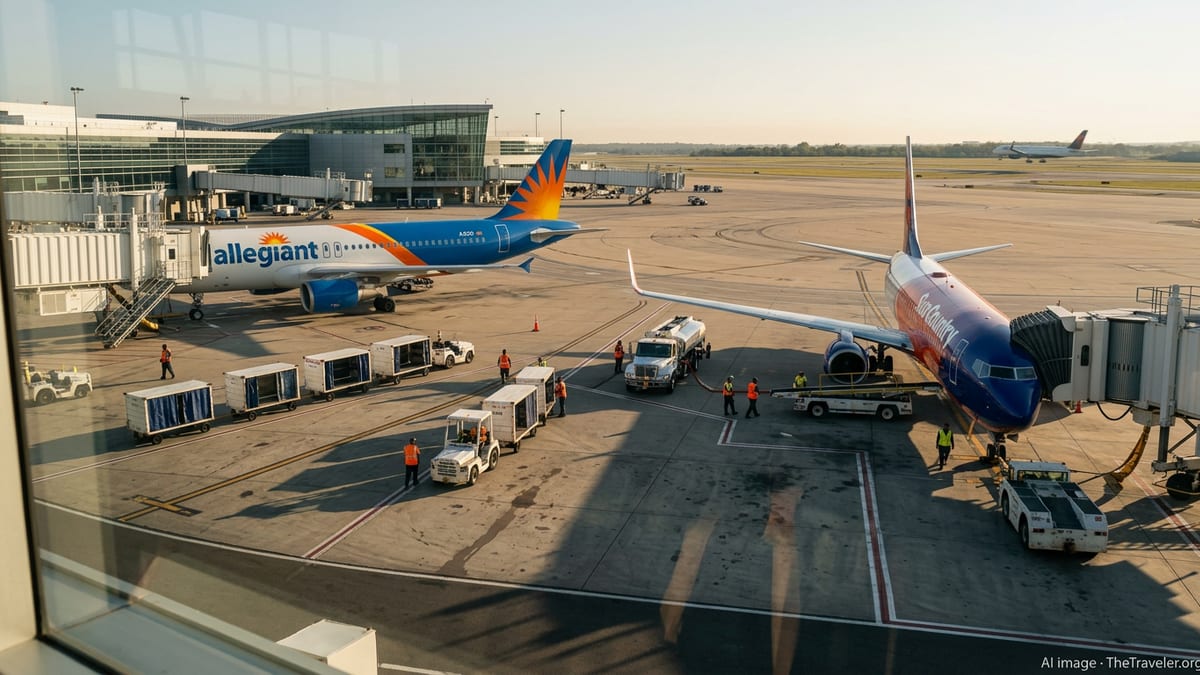
A Leisure-Focused Merger Comes Into Force
Allegiant announced in May 2026 that it had closed its cash and stock acquisition of Sun Country Airlines, following an agreement first unveiled in January. The deal folds Sun Country into Allegiant’s Las Vegas based holding company while keeping the Sun Country brand and operations in place for an interim period as integration work progresses.
Publicly available information describes the combined carrier as a leisure focused U.S. airline built around nonstop point to point flying, ancillary revenue and ties with vacation package providers. Allegiant, which has traditionally concentrated on linking small and mid sized U.S. cities with domestic sun destinations, gains new reach beyond U.S. borders through Sun Country’s existing network.
Regulatory filings and company statements indicate that integration will take place over multiple years. For now, customers continue to book Allegiant and Sun Country flights separately, with existing tickets, schedules and policies remaining valid while back end systems, fleets and networks are evaluated for consolidation.
Sun Country’s Network Brings International Scale
Before the transaction, Sun Country built a business model around Minneapolis St. Paul as a core hub, operating scheduled and charter flights that combined domestic service with a sizeable international leisure portfolio. Its scheduled network includes routes to popular Mexican beach destinations, Central American gateways, Canadian cities and Caribbean islands, supplemented by charter work for tour operators and other partners.
Merger disclosures highlight that Allegiant customers are expected to gain access to 18 international destinations served by Sun Country once the networks are more closely aligned. These destinations span major resort markets in Mexico, select points in Central America, a mix of Caribbean vacation spots and several Canadian cities that feed winter sun demand.
Reports indicate that U.S. regulators have approved the transfer of Sun Country’s international route authorities to Allegiant’s control, allowing the combined company to coordinate future schedules under a single corporate umbrella. At the same time, authorities concluded that the move would not materially reduce international access for competing U.S. airlines, given the modest size of the carriers relative to larger network rivals.
What Changes for International Travelers
In the near term, travelers will see limited visible change when booking international trips with either Allegiant or Sun Country. Company information stresses that existing reservations remain intact, loyalty accounts are separate and each airline maintains its own website and mobile app. There is no immediate ability to buy a single ticket combining flights from both airlines, and branded experiences, inflight offerings and fee structures continue to differ.
Over time, Allegiant has signaled that customers from smaller U.S. cities on its domestic map could gain new one stop or seasonal options into Sun Country’s international network, potentially via Minneapolis St. Paul or other focus cities. That could mean packaged travel from secondary markets in the Midwest, South and West to Mexican resort areas, Caribbean beach destinations or Central American gateways that were previously reachable only through larger legacy hubs or multiple connections.
Analysts following the deal note that the combined route map may also enable more efficient aircraft deployment. Allegiant’s Airbus fleet and Sun Country’s Boeing 737 operation could be scheduled to follow seasonal demand patterns, pairing winter-heavy international leisure flying with domestic peak periods. This could support more stable year round international capacity than either carrier might have sustained alone.
Regulatory Green Light for Cross-Border Growth
The U.S. Department of Transportation has approved key elements of the merger, including the transfer of route authorities that underpin Sun Country’s scheduled and charter flying to foreign points. Published coverage of the decision suggests regulators viewed the tie up as strengthening, rather than weakening, competition in the price sensitive leisure segment, particularly against larger network airlines and ultra low cost rivals.
Documents associated with the approval emphasize that the merged airline’s international flying remains a relatively small share of overall U.S. to Mexico, Caribbean, Central America and Canada capacity. However, the ability to link Allegiant’s extensive domestic footprint with Sun Country’s permits may enable new city pairs and charter contracts that expand options for tour operators and vacation package sellers.
Regulators also evaluated potential effects on smaller communities that rely on Allegiant’s point to point domestic routes. Public filings indicate that Allegiant and Sun Country intend to preserve and, where viable, add to service from these markets by using international flights as an additional outlet for aircraft and crew time during shoulder seasons.
Network Planning and Timeline for Integration
Despite the completed acquisition, both airlines continue to stress that network planning changes will be phased in carefully. Integration of fleets, crews, reservation systems and brand identity is typically a multi year project in the airline industry, often requiring separate approvals from safety regulators, labor groups and airport authorities before aircraft and staff can be interchanged across legacy operating certificates.
Allegiant has outlined a vision in which the combined company ultimately operates under the Allegiant brand while maintaining a strong presence in Minneapolis St. Paul, Sun Country’s historic base. That would give Allegiant a larger Midwestern platform to support north south leisure flows into Mexico and the Caribbean, complementing its existing focus on Florida, Las Vegas, Phoenix and other domestic sun destinations.
Industry observers expect the first tangible signs of network rationalization to appear in seasonal schedule announcements, with some overlapping routes thinned and new pairings launched that connect Allegiant’s smaller origin cities to Sun Country’s international stations. Travelers planning international vacations for late 2026 and 2027 may begin to see the merged strategy take shape in the form of new nonstops, additional charter offerings and bundled air hotel packages tailored to price sensitive leisure demand.