


More news on this day
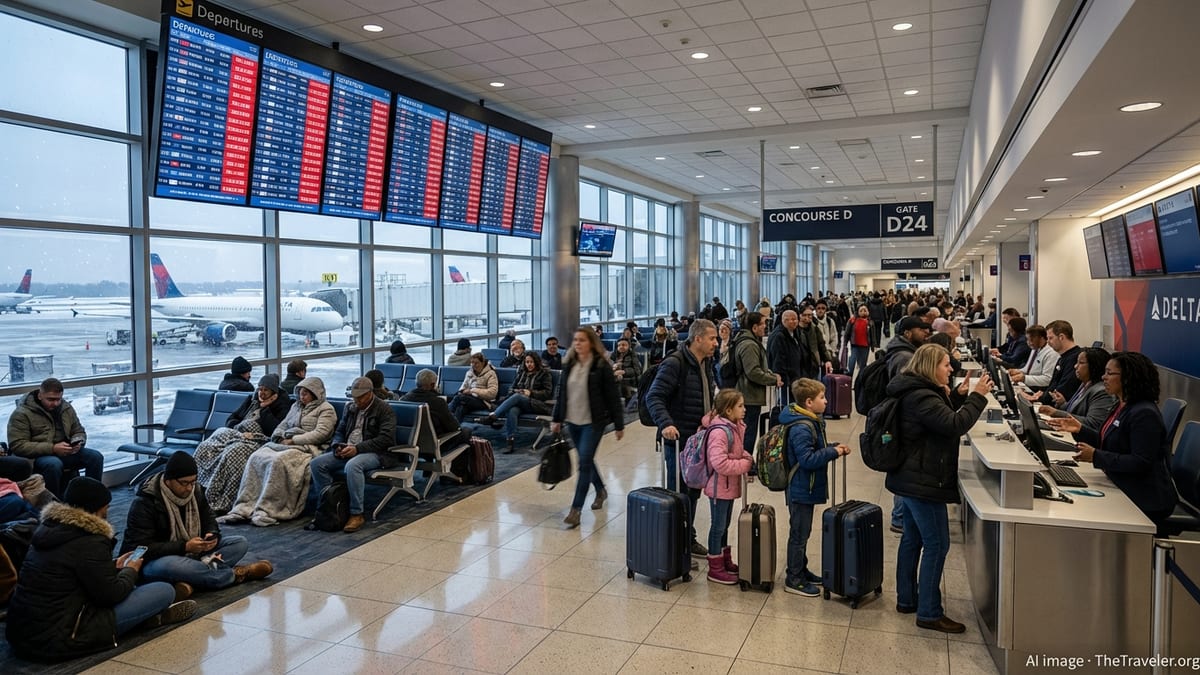
Severe thunderstorms over Atlanta Hartsfield-Jackson International Airport triggered a temporary ground stop and hours of flight disruptions, creating a new wave of delays and cancellations across the United States at the start of the busy summer travel week.
Get the latest news straight to your inbox!
Ground stop at the nation’s busiest hub
Publicly available Federal Aviation Administration advisories and local media coverage indicate that a ground stop was issued Sunday afternoon, July 12, for flights bound to and from Hartsfield-Jackson Atlanta International Airport as thunderstorms moved across north and central Georgia. The restriction temporarily halted many departures and limited arrivals while storm cells passed through the airport’s approach and departure corridors.
Coverage from Atlanta television outlets described rapidly developing storms, with heavy rain, lightning and low clouds prompting air-traffic managers to slow traffic into the world’s busiest passenger airport. The ground stop was lifted after conditions improved, but the interruption occurred during a high-volume period, leaving airlines little room to recover before evening travel peaks.
FAA planning documents for the same period show weather-related traffic management programs in effect at multiple large hubs, underscoring how convective storms across the eastern half of the country can strain capacity even when conditions at individual airports improve.
By Monday morning, July 13, flight-tracking boards were still showing residual congestion on key short-haul routes into and out of Atlanta, reflecting the lingering effect of the previous day’s stoppage on aircraft and crew positioning.
Delays and cancellations ripple across US routes
The Atlanta ground stop immediately translated into mounting departure delays, with publicly posted FAA status updates on Sunday showing average waits of around half an hour or longer for some departures. Local weather reports noted that the worst of the storms passed during the afternoon and early evening, a period when many connecting flights typically bank through the hub.
Data from commercial flight-tracking services on Monday indicated that a number of Atlanta departures were operating off schedule, particularly on regional routes to nearby Southeast hubs. Some listed average departure delays approaching an hour, suggesting that aircraft and crews remained out of position following the previous day’s weather event.
Passenger experiences shared on social platforms described long lines at rebooking counters and crowded gate areas as airlines attempted to re-accommodate travelers whose connections were missed when their inbound flights diverted or remained on the ground during the storms. While cancellations appeared to be concentrated in late-evening and early-morning banks, the knock-on disruptions extended into daytime departures.
Because Atlanta functions as a major connecting node, the impact was not limited to Georgia-bound travelers. Flights connecting through the hub from the Northeast, Midwest, Sun Belt and West Coast all experienced schedule changes, creating a patchwork of delays across the national network.
Storm season exposes vulnerabilities in hub operations
Summer thunderstorm activity routinely challenges large hub airports, but the situation in Atlanta highlights how quickly conditions can deteriorate and how long recovery can take. Convective storms frequently arrive in clusters, and line after line of showers and lightning can force controllers to reduce arrival rates or invoke ground stops to maintain safety margins.
Operational planning documents released by the FAA for the current season emphasize that when storms restrict usable arrival and departure routes into a hub like Atlanta, throughput can drop sharply. Even relatively short ground stops can displace dozens of flights, forcing airlines to make rapid decisions about diversions, fuel loads and crew duty limits.
Industry analysts note that the highly banked nature of connecting schedules at large hubs intensifies the effect. When one or two peak connection banks are disrupted by storms, missed connections cascade throughout the system, often leading to aircraft leaving with empty seats while other passengers remain stranded awaiting the next available routing.
In recent years, severe weather has repeatedly intersected with other stress points in US aviation, such as tight pilot and flight attendant staffing and high aircraft utilization. This combination has made it more difficult for airlines to absorb weather shocks without broader knock-on disruptions.
Travelers face another challenging summer weekend
The Atlanta storms and associated ground stop arrived as airlines were already navigating one of the busiest summer travel periods in recent memory, with domestic passenger volumes tracking near or above pre-pandemic levels. Demand has remained strong into July, meaning that many flights were already expected to depart full before the storms hit.
Travel advisories issued by major carriers for the broader Southeast and East Coast in recent days have allowed some passengers to adjust their itineraries without change fees, but same-day rebooking options have been limited on popular routes. Reports from hub airports across the region indicate that travelers affected by the Atlanta disruptions often had to accept departures later in the day or even on subsequent dates.
Airlines have encouraged passengers connecting through weather-prone hubs to closely monitor flight status and to allow extra time between connections during peak storm periods. Airport authorities and carriers also continue to recommend that travelers keep contact information updated in reservation profiles so that automated alerts for gate changes, delays and cancellations reach them quickly when conditions deteriorate.
As the heart of the summer thunderstorm season continues, transportation planners expect more days where convective weather, particularly over key hubs like Atlanta, will test the resilience of US air travel and the patience of passengers trying to reach their destinations on time.