


More news on this day
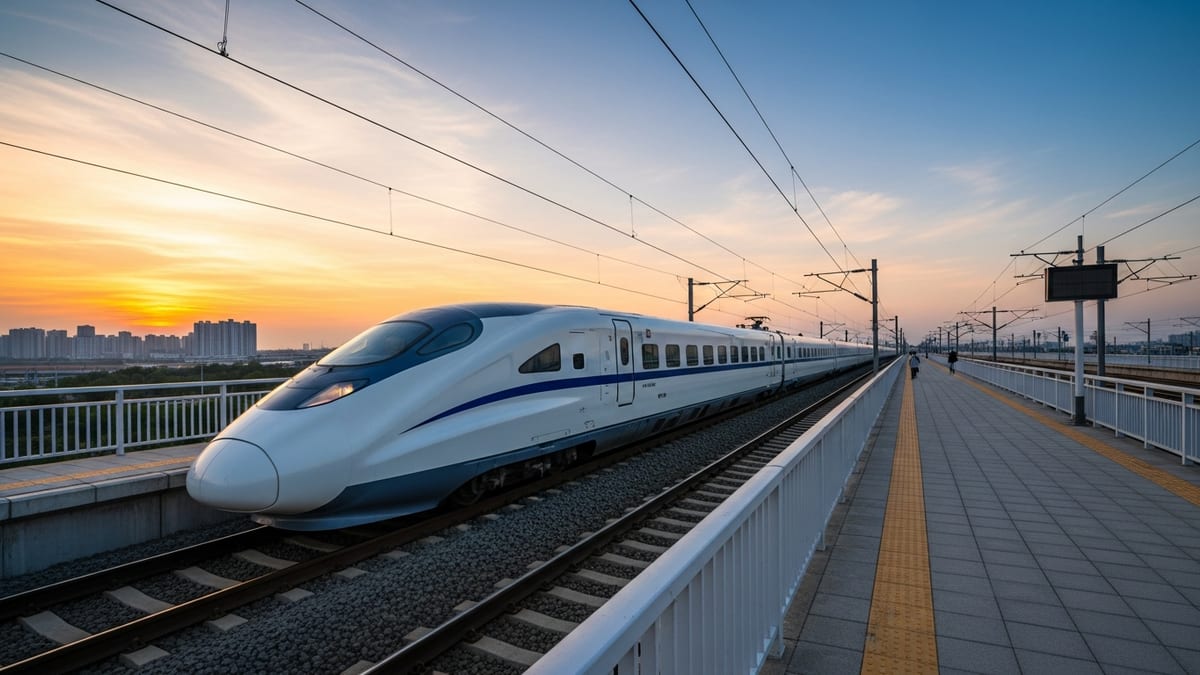
Indonesia’s Jakarta–Bandung high-speed railway, branded Whoosh, is rapidly evolving from a headline-grabbing debut into a regional reference point for how Asia-Pacific countries approach fast intercity rail, passenger experience, and large-scale transport finance.
Get the latest news straight to your inbox!
From first Southeast Asian high-speed line to regional touchstone
Whoosh entered full commercial service in October 2023 as Southeast Asia’s first operational high-speed rail line, linking Jakarta’s Halim station with Tegalluar on the outskirts of Bandung along a corridor of roughly 143 kilometers. Publicly available information describes an operational speed of around 350 kilometers per hour, cutting a journey that often stretched beyond three hours by road to under one hour on rail.
The project, operated by joint venture Kereta Cepat Indonesia China (KCIC), combines Indonesian state-owned enterprises with Chinese railway companies and uses rolling stock derived from China’s CR400AF trains. The line is frequently cited in regional coverage as the most prominent overseas showcase of Chinese high-speed rail technology, but it is also framed within Indonesia’s own long-term national connectivity plans across Java and beyond.
Regional commentary increasingly portrays Whoosh as more than a prestige project. Analyses of Asian rail developments suggest that Indonesia’s decision to bring high-speed technology to a heavily congested, medium-distance domestic corridor aligns with broader Asia-Pacific trends prioritizing intercity links that can relieve roads and short-haul flights, while supporting new urban development around stations.
Passenger uptake, tourism appeal, and network integration
Ticketing and ridership data shared through Indonesian media indicate that demand has grown steadily, with large blocks of seats made available around peak travel periods such as Eid and school holidays. Reports describe high sell-out rates on popular departures and a gradual optimization of train frequencies as operators respond to real-world demand.
The service is also finding a role in Indonesia’s tourism strategy. Recent domestic coverage highlights foreign visitors who now plan their itineraries to include a ride on Southeast Asia’s first high-speed train, treating the journey itself as part of the travel experience between Jakarta and West Java’s highlands. Transport observers in Indonesia argue that this visibility helps position the country alongside longer-established high-speed markets in Northeast Asia.
At the same time, integration with local transport remains a work in progress and a test case for the wider region. Access to Halim and Tegalluar relies on a mix of feeder buses, conventional rail and road-based services, and planners are using passenger feedback to refine first- and last-mile options. The way Indonesia addresses these “last kilometer” issues is closely watched by other Asia-Pacific cities that plan to introduce high-speed or regional express links into already complex urban networks.
Financing lessons and state-owned enterprise reform
Alongside its technical profile, Whoosh is drawing attention for its financing model and the restructuring that followed construction overruns. Publicly accessible economic commentary in Indonesia outlines project costs in the multi-billion dollar range and notes that the line was initially promoted as being built without direct use of the national budget or explicit sovereign guarantees.
As costs rose and debt questions became more pressing, the government created a new sovereign investment body, Danantara, to take a central role in managing liabilities and ownership stakes in the project. Recent business reporting describes moves to adjust the composition of state-owned construction firms involved, and to ring-fence the high-speed venture so that its financial performance does not unduly burden the wider state railway group.
For Asia-Pacific policymakers, this evolving approach is increasingly cited as a case study in how to handle the financial complexity of megaprojects while trying to maintain public support. Analysts of regional rail projects point to Indonesia’s willingness to revisit shareholding structures and debt arrangements as a practical, if politically challenging, example of post-construction course correction that other countries may reference when negotiations over cost sharing and risk allocation prove difficult.
People-first planning and regional policy interest
Interest in Whoosh extends beyond technical and financial aspects into policy discussions about inclusive transport. A recent Asia-Pacific handbook on transport and social inclusion highlights examples where major rail investments are designed to improve access for a broad spectrum of users, including women, older persons, people with disabilities, and low-income households. Commentators increasingly place Indonesia’s high-speed initiative within this conversation, especially when assessing station-area development and fare structures.
Debate within Indonesia over ticket prices, accessibility, and the balance between business and tourism travelers illustrates the trade-offs facing high-speed systems in emerging economies. Public discourse reflects both enthusiasm for faster, more comfortable trips and concern that premium services could divert resources from conventional rail upgrades that would reach a wider population.
Elsewhere in the region, policy discussions referencing Indonesia’s experience emphasize what some describe as a “people-first” approach, where new rail lines are tailored to local travel patterns rather than replicated directly from foreign templates. The Jakarta–Bandung corridor, with its dense population and chronic congestion, is often highlighted as an example of choosing a route where time savings and reliability gains are immediately tangible for both daily commuters and occasional travelers.
Template for future corridors and Asia-Pacific cooperation
The Jakarta–Bandung line is widely discussed as a precursor to longer high-speed corridors across Java, including potential extensions toward Surabaya. Planning studies and exploratory talks reported in Indonesian and regional outlets suggest that any future phases would build on both the technical blueprint and the institutional lessons of the initial project.
For other Asia-Pacific countries, Whoosh is already serving as a practical reference point when evaluating new or proposed rail lines. Comparisons are drawn with Chinese and Japanese networks, but Indonesia’s project offers a closer analogue for governments working with constrained budgets, mixed financing sources, and rapidly growing urban regions.
As ridership data accumulate and the financial restructuring process matures, transport analysts expect the line’s performance to feed into wider debates on decarbonizing regional aviation, upgrading legacy rail, and managing urban sprawl. In that sense, Indonesia’s first high-speed line is emerging as a live laboratory for Asia-Pacific rail, illustrating both the possibilities and the pitfalls that come with building transformative infrastructure in one of the world’s most dynamic regions.