


More news on this day
Travellers at Brisbane Airport faced cancellations and cascading delays on Wednesday after Alliance Airlines scrubbed three services, with knock-on disruptions reported on major routes connecting Australia to New Zealand, Japan, Singapore and the United States.
Get the latest news straight to your inbox!
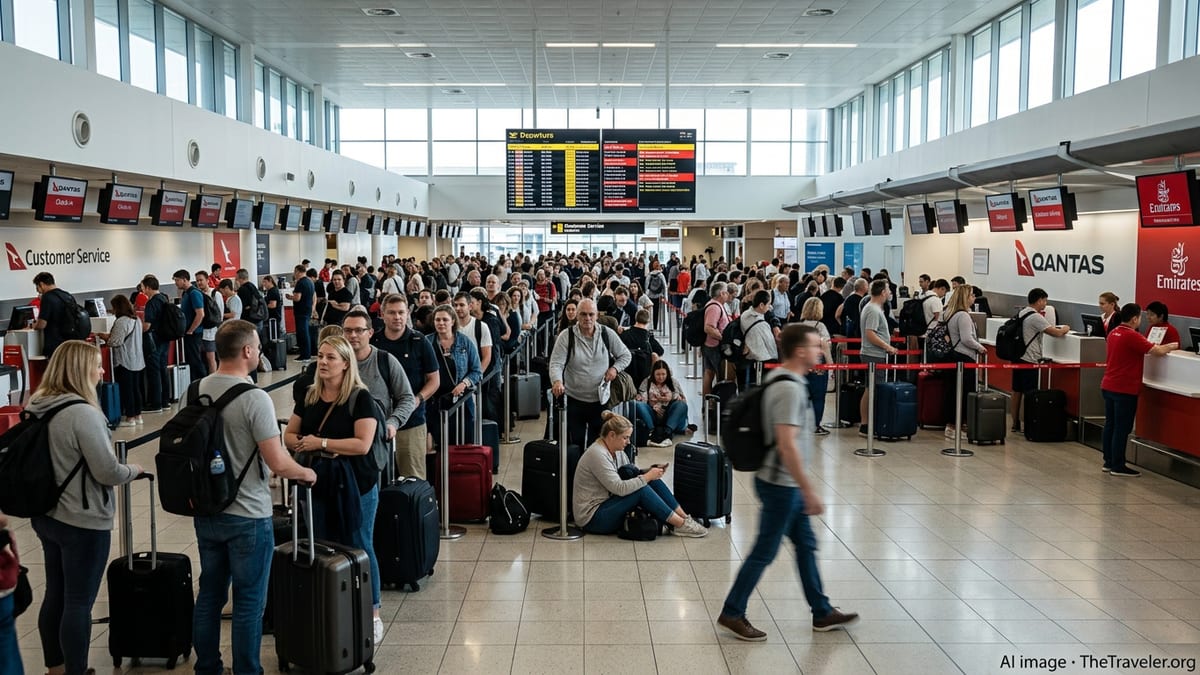
Alliance Disruptions Hit Brisbane-Based Operations
Alliance Airlines, a Brisbane-based carrier that operates a mix of scheduled and charter flights, cancelled three services from its main hub on 10 June, leaving passengers facing extended waits and rebookings. Publicly available flight information shows several Alliance-operated departures that were listed as not operating or withdrawn from the day’s schedule, contributing to gaps in morning and midday services.
The airline plays a significant role in fly in, fly out traffic for the resources sector as well as regional links into Brisbane. When a cluster of its services disappears from the timetable on a single day, travellers who rely on same-day connections into larger domestic or international networks can be left scrambling to adjust plans, often with limited alternative options from smaller origin airports.
At Brisbane Airport, which handles hundreds of departures daily, cancellations from any carrier can have an outsized impact during peak periods. The combination of aircraft and crew being out of position tends to feed into later rotations, with delays building as the operating day progresses.
While the precise causes of the Alliance cancellations were not immediately clear from public data, aviation tracking platforms indicated operational changes on several of the carrier’s regional routes into Brisbane. Industry observers note that factors such as maintenance requirements, crew availability and broader capacity adjustments across the domestic market all remain under pressure in 2026.
Knock-on Delays Across Domestic and Trans-Tasman Links
The Alliance cancellations came against a backdrop of wider scheduling strain on flights linking Brisbane with other Australian cities and New Zealand, markets that remain some of the airport’s busiest corridors. Real-time departure boards showed a mix of on-time departures, moderate delays and scattered cancellations as airlines worked through peak midweek traffic.
Trans Tasman services have been particularly sensitive to operational hiccups. Flights between Brisbane and New Zealand cities such as Auckland and Christchurch support both business and leisure traffic, and any delay can disrupt onward itineraries to North America, Asia or domestic New Zealand destinations. Recent scheduling updates indicate that carriers are frequently tweaking frequencies and timings in response to demand patterns and fuel costs, leaving less slack in the system when irregular operations occur.
Domestic connections also remain vulnerable. Passengers travelling from regional Queensland communities into Brisbane on Alliance-operated services often rely on tight turnarounds to link onto larger jets run by major airlines. When those feeder flights are cancelled altogether, travellers can miss long-haul departures and may have to be rebooked on next day services, particularly during busy school holiday or events periods.
Data from airport schedule aggregators shows that while the majority of Brisbane departures on Wednesday proceeded as planned, clusters of delays of between 30 and 90 minutes appeared on select routes. That pattern is consistent with the type of rolling disruption that can follow the removal of several early flights from the day’s operation.
Asia Connections: Pressure on Japan and Singapore Routes
The impact was also felt on key Asian connections, where Brisbane’s links with Japan and Singapore remain strategically important for tourism and trade. Published airport statistics identify routes to Singapore and major Japanese gateways among Brisbane’s most heavily trafficked international corridors, with multiple airlines sharing the load across full service and low cost operations.
On Wednesday, at least one Singapore to Brisbane service recorded a departure delay, according to online tracking tools, adding to the congestion facing arriving passengers who had onward connections to domestic Australia or the Pacific. Even modest departure delays out of Asia can lead to late arrivals into Brisbane’s evening bank of flights, compressing turnaround times and increasing the likelihood of missed connections when immigration or baggage handling is under strain.
Japan routes remain particularly sensitive, with several carriers in the wider region having already trimmed or reshaped their schedules in recent months in response to political tensions and higher operating costs. When disruptions arise at a hub like Brisbane, travellers heading to or from Japan via connecting flights through other Australian cities, Singapore or New Zealand can encounter complex re-routing scenarios.
Travel forums and recent airline announcements highlight a trend of carriers across the Asia Pacific region adjusting capacity on Japan-linked routes, leaving fewer spare seats on alternative services on short notice. For Brisbane passengers affected by cancellations or delays, that can translate to longer layovers or overnight stays when same-day reaccommodation is not possible.
US-Bound Travellers Face Longer Journeys
Connections between Brisbane and the United States also came under pressure as delays spread across the network. Long haul services to US hubs, often routed through Sydney, Melbourne, Auckland or Asian gateways, depend heavily on punctual feeder traffic from Queensland and New Zealand. When those feeders are delayed or cancelled, the ripple effect can extend across the Pacific.
Elsewhere in the region, similar patterns have been seen in recent weeks. One widely reported example from the United States on 10 June involved a single cancellation by a major carrier in Las Vegas that triggered multiple downstream delays across dozens of cities in North America, underlining how vulnerable tightly timed long haul operations can be to localised disruption.
For Brisbane-based travellers with US-bound itineraries that include stops in New Zealand, Japan or Singapore, Wednesday’s cancellations and delays meant increased risk of misconnecting. Reaccommodation options typically involve rebooking onto later departures or rerouting through alternative hubs, often extending total journey times by many hours.
In some cases, passengers may be moved onto partner airlines under existing alliance or codeshare agreements, but such arrangements are constrained by seat availability and complex fare rules. As flight loads remain strong on trans Pacific routes in 2026, last minute alternatives are not always straightforward.
Travellers Urged to Monitor Schedules and Build in Buffer Time
Public guidance from airlines and airports across the region continues to emphasise the importance of close schedule monitoring as carriers navigate a challenging operating environment marked by volatile fuel prices, tight labour markets and ongoing aircraft availability issues. The events at Brisbane on Wednesday fit into a wider pattern of unpredictable disruptions that can emerge even on otherwise routine travel days.
Consumer advocacy groups and travel industry commentators frequently advise passengers on multi leg journeys, particularly those linking Australia with New Zealand, Japan, Singapore and the United States, to build additional buffer time into their itineraries where possible. That may include opting for longer connection windows, avoiding the last flight of the day on critical sectors, and allowing for the possibility of overnight stays if rebooking becomes necessary.
Airlines typically outline their rights and obligations to affected passengers within published conditions of carriage, including options for rebooking, refunds or travel credits when flights are cancelled for reasons within the carrier’s control. Travellers affected by the Alliance cancellations at Brisbane are expected to be accommodated under these established policies, though the specific remedies vary by fare type and route.
With the northern summer travel period approaching, operational performance at major hubs such as Brisbane is likely to face sustained scrutiny from both regulators and passengers. Wednesday’s disruptions underscore how quickly a handful of cancellations on regional services can cascade through a complex web of connections linking Australia to key markets across the Asia Pacific and North America.