


Two of the most talked-about day hikes in Great Smoky Mountains National Park sit just a few bends apart on Newfound Gap Road: Alum Cave and Chimney Tops. Both promise big mountain scenery in a relatively short distance, and both attract visitors from Gatlinburg, Pigeon Forge, and beyond who may only have one prime hiking day to spare. If you are trying to decide where to spend those precious hours, the details matter. From elevation gain and trail character to parking realities and who each hike suits best, here is a grounded comparison to help you choose between Alum Cave and Chimney Tops in 2026.
Get the latest updates straight to your inbox!
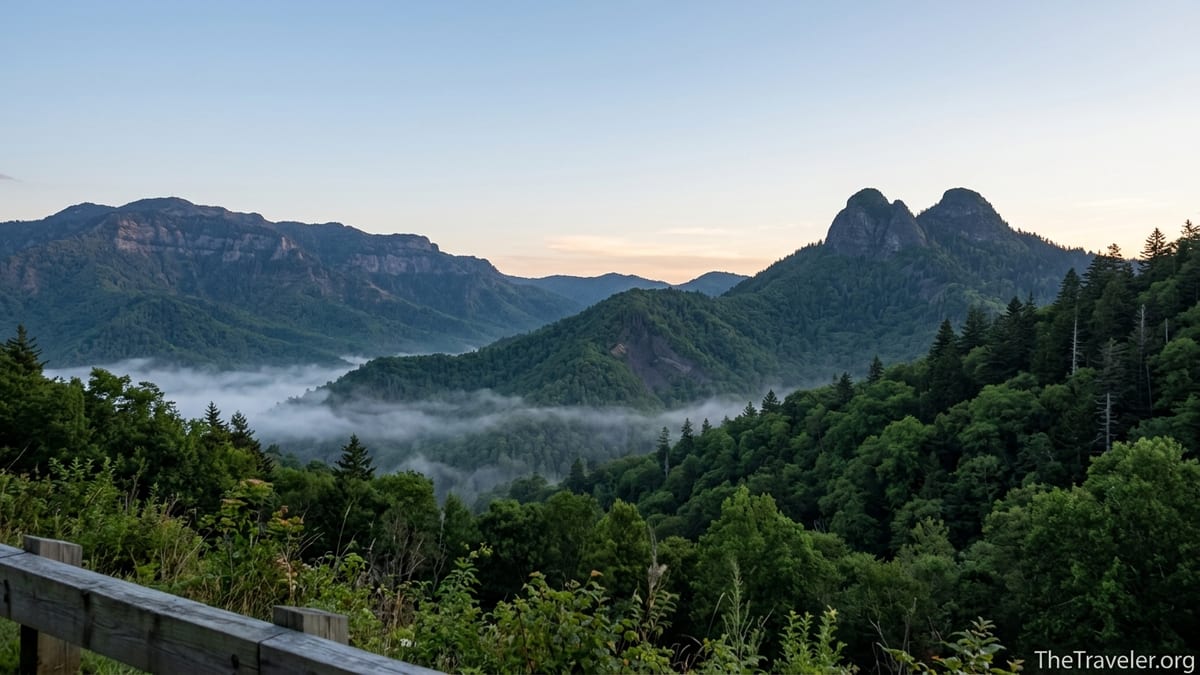
Big Picture: Two Classic Smokies Hikes With Very Different Personalities
Alum Cave and Chimney Tops share the same mountain corridor. Their trailheads sit along Newfound Gap Road between Gatlinburg and Newfound Gap, with Alum Cave roughly 8.6 miles from Sugarlands Visitor Center and Chimney Tops about 6.9 miles from the same starting point. In practice that means both hikes are easy to incorporate into a typical Smokies base in Gatlinburg or Pigeon Forge without long driving times.
Beyond that broad similarity, the experiences diverge. The National Park Service currently describes Alum Cave to the bluffs as about 4.6 miles round trip with roughly 1,100 to 1,200 feet of elevation gain, rated moderately strenuous for most visitors. It is a progressive, story-rich hike: creekside bridges, Arch Rock, old-growth forest, and finally the airy overhang of Alum Cave Bluffs. Chimney Tops, by contrast, is shorter but sharper. Most trail guides list about 3.6 to 4 miles round trip with roughly 1,300 to 1,400 feet of gain, and many classify it as strenuous despite the modest mileage.
A key difference since the 2016 wildfires is access to the very top of Chimney Tops. Before the fire, hikers scrambled onto the twin rocky “chimneys.” After significant fire damage and erosion, the park rebuilt the route to end at a secure observation area below the former summit scramble. You still get the layered, blue ridges that made the trail famous, but not the exposed rock scramble that once drew thrill seekers.
When visitors ask rangers at Sugarlands which hike is “better,” the usual response is a question: better for whom and for what kind of day. If you want an immersive trail that can extend to Mount Le Conte, Alum Cave often earns the recommendation. If your schedule is tight but you are comfortable with steep, sustained climbing, Chimney Tops still delivers an intense, memorable outing in a compact package.
Trail Experience and Scenery: What You Actually See and Feel Underfoot
On Alum Cave, the experience unfolds in distinct chapters. From the trailhead you follow Alum Cave Creek and then Styx Branch on a well-defined path that weaves across log bridges. In summer, the soft roar of water and the shade of hemlock, yellow birch, and rhododendron keep temperatures noticeably cooler than along Newfound Gap Road. About 1.3 miles in you pass through Arch Rock, a natural stone arch where the park has installed a narrow rock stairway and handrail. Many families with older children report this section as a highlight, a “mini adventure” that feels dramatic without being technical.
Past Arch Rock the trail steepens through a series of switchbacks, eventually opening to Inspiration Point, a rocky outcrop with views toward Little Duck Hawk Ridge and the jagged spine of the Le Conte massif. On clear mornings you can see morning mist clinging to folds of dark forest below. Another half mile of climbing brings you to Alum Cave Bluffs, a massive concave overhang that feels like a natural cathedral. The ground is sandy, with streaks of mineral-rich rock above where 19th-century mining operations once extracted alum and Epsom salts. This mixture of human history and geology gives the hike a sense of place that goes beyond pure scenery.
Chimney Tops is more single-minded. After crossing a sturdy bridge over Walker Camp Prong, the trail wastes little time in heading uphill. Wooden and stone steps appear frequently, and in sections it can feel like stair-climbing more than hiking. The forest you walk through has visible signs of the 2016 Chimney Tops 2 Fire: charred stumps, young saplings, and pockets of regenerating laurel and birch. Some hikers find this recovery landscape sobering but powerful, a reminder that the park is a living, changing place.
Near the top, the trail swings onto a ridge with classic Smokies views. From the rebuilt observation platform, layers of blue and gray ridges fade into the distance, especially striking in the late afternoon when low-angle light enhances the contrast. Although you no longer scramble onto the final rock pinnacles, the outlook still feels dramatic, especially for first-time visitors used to Appalachian foothills rather than true mountain ridgelines.
Difficulty, Safety, and Who Each Hike Suits Best
Many visitors underestimate both hikes because of their relatively short distances. Rangers frequently see guests arriving in casual sneakers and cotton hoodies after a pancake breakfast in Gatlinburg, assuming they are in for a gentle stroll. In reality, both trails involve sustained climbing, wet sections after rain, and footing that can be treacherous in winter or shoulder seasons when ice lingers in shaded spots.
Alum Cave spreads its elevation gain more gradually. The steepest grades appear between Arch Rock and the bluffs, but there are flat or gentler stretches where your legs can recover. That pacing makes the hike achievable for reasonably fit adults, older children, and active seniors used to walking several miles at home. Families staying at a mid-range hotel on the Parkway often report that their ten- to twelve-year-olds handled Alum Cave well, especially with frequent snack breaks. Trekking poles are helpful but not essential for most.
Chimney Tops demands more concentrated effort. The steps can feel relentless, particularly in humid summer weather. Many local outfitters in Gatlinburg and Pigeon Forge note that clients who run 5Ks or work out regularly still describe Chimney Tops as a “leg burner.” The trail is relatively wide and well engineered, but the combination of steep grade and exposure near the observation area means it is not a good match for toddlers, those with significant knee issues, or hikers uncomfortable with heights.
From a safety standpoint, Alum Cave has one narrow, cliff-side section beyond the bluffs if you continue toward Mount Le Conte, but hikers turning around at the bluffs avoid the most exposed terrain. Chimney Tops, on the other hand, concentrates its risk near the top, where a stumble could have serious consequences even with the new barriers and defined viewing area. During busy periods, the crowding on steep, stepped sections can also increase the chance of slips, especially if people attempt to pass each other quickly.
Logistics: Parking, Timing, Weather, and Real-World Planning
In the real world, most visitors are not comparing trails in a vacuum. They are juggling check-out times, dinner reservations in Gatlinburg, and a car full of kids or extended family. Here logistics tip the scales in subtle ways. Both Alum Cave and Chimney Tops share parking realities shaped by Great Smoky Mountains National Park’s enormous visitation. With more than 12 million annual visitors in recent years and a paid parking tag now required for stops longer than 15 minutes, planning your arrival time matters just as much as choosing a route.
During peak seasons from late spring through October, Alum Cave’s two-tier parking area along Newfound Gap Road often fills by mid-morning. In summer, drivers arriving after about 9:30 a.m. on a Saturday commonly find cars lining the shoulder for several hundred yards in both directions. Some Gatlinburg cabin companies now advise guests to plan Alum Cave as an “early day,” suggesting departure around 7:00 a.m. to secure a spot and hike in cooler temperatures. The trail’s popularity has also led some local shuttle services to offer drop-offs at Alum Cave and pickups later in the day at Newfound Gap or even Cherokee for hikers continuing to Mount Le Conte.
Chimney Tops has a somewhat smaller parking area, and the shorter hike draws people looking for a quick outing, including tour-bus passengers during shoulder seasons. On a clear Saturday in October, it is common to see the lot reach capacity by late morning as leaf-peepers pile in. Because the trail is shorter, however, turnover is relatively high. Visitors who are patient and willing to circle the lot once or twice often find a space opening up within 20 to 30 minutes.
Weather is another deciding factor. Both trails can be icy in winter and early spring, but Alum Cave’s creek crossings and shaded rock outcrops tend to hold ice longer. On sunny January days when the Parkway itself is dry, locals heading to Alum Cave frequently strap microspikes over their boots as a precaution. In summer, exposed stretches near the bluffs can feel hot by midday. Chimney Tops, with its continuous climbing, can feel punishing on humid afternoons, but the trail tends to dry relatively quickly after rain. Either way, plan on real hiking footwear, at least one to two liters of water per person, and layers appropriate to the day’s forecast rather than what it feels like in downtown Gatlinburg.
Seasonality, Crowds, and Atmosphere on the Trail
Alum Cave and Chimney Tops change character with the seasons, a reality that can dramatically impact which hike feels “better” to a given visitor. In early spring, Alum Cave’s lower sections come alive with trillium, hepatica, and other woodland wildflowers, while higher sections remain cool and sometimes slick with residual late-winter moisture. Chimney Tops can be particularly lush during this period, with wildflowers lining the lower trail and the recovering forest showing fresh green growth after winter.
Summer brings crowds and heat in equal measure. On a Saturday in July, both trails can feel busy, with a steady stream of visitors and the sound of conversation carrying between groups. Alum Cave, with its varied scenery and wider spaces at Inspiration Point and the bluffs, tends to absorb crowds a bit more gracefully. Many hikers find quiet pockets by stepping off to rock outcrops or edges of the bluffs to enjoy a snack. Chimney Tops is narrower and more confined, so the presence of other hikers can feel more constant, especially on the steep stair-like sections.
Autumn is arguably prime time for both hikes. Mid to late October often brings color to the mid-elevations, with hickories, maples, and oaks turning gold and crimson. From Alum Cave Bluffs you look down on a patchwork of color, while on Chimney Tops you stand above layers of ridges that fade from warm tones nearby to blue and purple in the distance. Accommodation rates in Gatlinburg and Pigeon Forge typically run higher during this period, but many visitors consider a sunrise or early morning start in crisp air worth the planning.
Winter thins the crowds dramatically, but travel logistics become more complex. Newfound Gap Road occasionally closes temporarily after snow or ice, and trail conditions can change within hours. On a clear February weekday, it is possible to have long, quiet stretches of Alum Cave nearly to yourself, with icicles hanging from the bluffs and frost heave making the soil underfoot crunchy. Chimney Tops can offer a similarly intimate experience, but rangers caution against attempting either hike if the forecast calls for freezing rain or if a fresh snow has not yet been compacted by other hikers.
Extending the Adventure: Where Each Trail Can Take You
One of the strongest arguments in favor of Alum Cave is flexibility. The bluffs make a natural turnaround point at about 2.3 miles in, ideal for visitors who want a half-day outing. But the same trail is also the most popular route to Mount Le Conte, one of the park’s signature high peaks. From the bluffs, the trail continues upward another 2.7 miles or so to the Le Conte summit area and the 1920s-era LeConte Lodge. Ambitious hikers staying in Gatlinburg often plan a full-day Le Conte climb via Alum Cave, starting at or shortly after sunrise and returning to town in time for a late dinner.
This built-in extension option means that a family or group with mixed energy levels can share much of the hike. Less experienced members can turn around at the bluffs, while stronger hikers push on toward Le Conte’s summit vistas. Outfitter shops in town commonly rent daypacks and trekking poles to visitors just for this purpose, and some even sell commemorative “I hiked Le Conte” patches that you are likely to spot on backpacks back at the Alum Cave trailhead.
Chimney Tops is more of a self-contained experience. The trail does connect to other routes in the park’s network, but for typical visitors the modern observation area marks the obvious end of the hike. There is no lodge at the top, and the steep descent generally discourages people from tacking on additional mileage the same day. That concentrated nature can be an advantage if you are trying to pair a hike with another outing, such as a scenic drive to Clingmans Dome or an afternoon exploring the shops and restaurants in downtown Gatlinburg.
Because of this difference, travelers planning a longer Smokies stay often use Alum Cave as a marquee hike in a multi-day itinerary, while treating Chimney Tops as either an introductory challenge or a targeted outing for a clear-weather window. If your time in the park is limited to a single full day, Alum Cave’s half-day to full-day flexibility tends to make it the more versatile choice.
The Takeaway: So Which Hike Is “Better” for You?
When all the comparisons are sorted, Alum Cave generally wins as the more well-rounded and broadly satisfying hike for most visitors. It delivers varied scenery, a sense of history, manageable grades for reasonably fit hikers, and the option to extend your adventure to one of the Smokies’ signature summits. Its popularity and occasional crowding are real considerations, but they are a reflection of just how much the trail offers in a half-day outing.
Chimney Tops, by contrast, is a concentrated shot of Smokies intensity. It offers a steep workout, a close look at a recovering fire landscape, and big views in a relatively short mileage. For strong hikers short on time, or for those who have already visited Alum Cave and want something punchier, it remains an outstanding choice. The loss of the final rock scramble has changed its character from semi-technical adventure to more conventional overlook hike, but the sense of accomplishment at the top is still palpable.
If you are traveling with family, have mixed fitness levels, or are new to mountain hiking, Alum Cave is likely the better primary objective. Aim for an early start, carry proper footwear and layers, and plan snacks or lunch at the bluffs. If your group is small, fit, and eager for a challenge, Chimney Tops can be a memorable half-day test, best attempted when the trail is dry and the forecast clear.
In an ideal Smokies trip, you would experience both. But if you must choose, let your answer rest on a simple question: do you want a narrative hike that unfolds in chapters and can grow into a full mountain ascent, or an intense climb that delivers a big payoff in a short window? In that light, Alum Cave is the story-rich classic, while Chimney Tops is the sharp, unforgettable sprint.
FAQ
Q1. Which hike is better for first-time visitors to the Smokies, Alum Cave or Chimney Tops?
Alum Cave is usually better for first-timers. It offers varied scenery, moderate difficulty, and a strong sense of the park’s character without the relentless steepness of Chimney Tops.
Q2. How long does the Alum Cave hike take compared to Chimney Tops?
Most visitors spend about 3 to 4 hours completing Alum Cave to the bluffs and back, including breaks. Chimney Tops typically takes 2 to 3 hours round trip, though slower hikers may need longer for the steep sections.
Q3. Is Chimney Tops still worth hiking after the wildfire and summit closure?
Yes, many hikers still consider Chimney Tops worthwhile. The rebuilt observation area offers impressive views, and the recovering forest provides a powerful look at how the landscape is healing, even without the former summit scramble.
Q4. Which trail is safer for families with children?
Alum Cave is generally safer for families with school-aged children. It has steep sections but fewer high-exposure spots. Chimney Tops’ sustained climbing and exposure near the top make it better suited to older, sure-footed kids and teens.
Q5. Do I need special gear for either hike?
Sturdy hiking shoes or boots, layered clothing, water, and snacks are essential for both. In winter or early spring, lightweight traction devices are helpful on Alum Cave, while trekking poles can ease the steep descent on Chimney Tops.
Q6. Which hike has better views, Alum Cave or Chimney Tops?
Chimney Tops offers a more classic wide-open ridge panorama from its observation area. Alum Cave’s views are partially framed by cliffs and forest but feel more varied, especially if you continue above the bluffs toward Mount Le Conte.
Q7. How early should I arrive to find parking?
In peak seasons, aim to arrive at Alum Cave by around 8:00 a.m. on weekends and busy holidays. For Chimney Tops, late morning spots can still be possible due to faster turnover, but earlier is always better for both.
Q8. Can I combine Alum Cave and Chimney Tops in one day?
It is possible for very fit hikers to do both in a single long day, but most visitors find that each hike is substantial on its own. For a more relaxed trip, choose one per day and pair it with scenic drives or shorter walks.
Q9. Which hike is better in hot summer weather?
Alum Cave usually feels more manageable in summer heat because of its creekside sections, deeper shade, and more varied pacing. Chimney Tops’ steep, step-heavy ascent can feel particularly taxing on hot, humid afternoons.
Q10. If I only have half a day before driving home, which should I choose?
If you have limited time but are reasonably fit, Chimney Tops can deliver a big payoff in a focused half-day. If you prefer a slightly longer but less punishing hike, choose Alum Cave to the bluffs and manage your pace.