


More news on this day
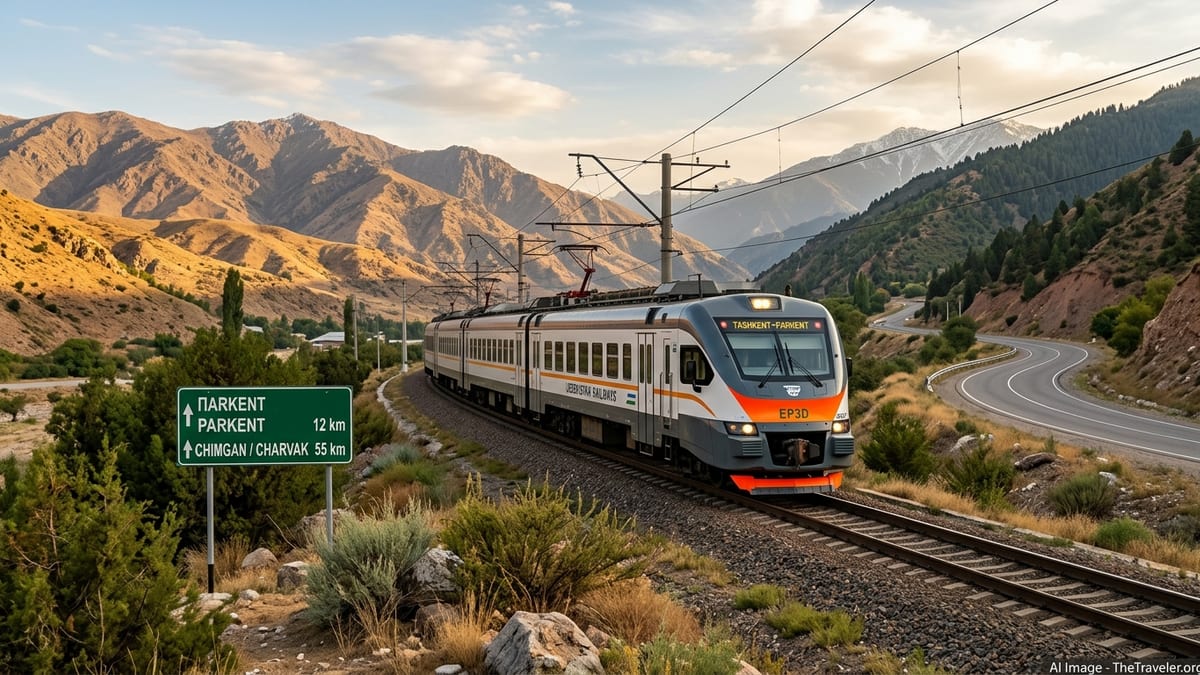
Uzbekistan has completed a new electrified railway link between Tashkent and Parkent, with regular electric trains running since early September 2026 and a presidential trip on November 19 highlighting its role in opening up the Parkent district’s mountain and recreational areas to easier rail access.
Get the latest news straight to your inbox!
From decree to completed electrified link
The Tashkent–Parkent project traces back to a presidential resolution on transport and logistics development dated 27 January 2025, which specifically called for construction of a new electrified line to Parkent. That policy decision has now materialised as a single‑track, fully electrified route connecting the capital with the foothills east of the city.
At the core of the project is the 24 kilometre Baytkurgan–Parkent segment, built with an investment reported at 535.4 billion soums. According to official summaries of the works, the section includes a new station, three bridges, a road overpass, 16 level crossings, 77 drainage structures and 24 kilometres of overhead contact line and power supply, underscoring that this is a permanent piece of mainline infrastructure rather than a short tourist spur.
The total quoted distance for the full Tashkent–Parkent route is around 57.6 kilometres. Some official communications describe a 52 kilometre run between Parkent and Tashkent Central, and pre‑opening coverage mentioned a possible 40 minute journey time. In practice, current schedules indicate end‑to‑end journeys generally fall between just over 50 minutes and around 1 hour 10 minutes, depending on stopping pattern and routing, so travellers should treat earlier estimates as indicative rather than fixed.
Regular EP3D electric services since September 2026
Passenger operations on the Parkent–Tashkent–Parkent route began on 7 September 2026, when a modern six‑car EP3D electric multiple unit entered service. On the first day, the inaugural train left Parkent at 06:52 and arrived at Tashkent Central at 07:50, with officials describing the run as “slightly over 50 minutes” for the roughly 52 kilometre trip by rail between those two points.
The EP3D set offers 586 seated places and a maximum capacity of up to 1,154 passengers, positioning it as a hybrid intercity and high‑capacity commuter train rather than a luxury tourist product. Initial announcements set the adult one‑way fare at 10,000 soums, with a reduced 6,500 soum ticket for children under 10, but current prices should be checked at the time of purchase as tariffs can be revised.
Public information confirms at least one early‑morning departure from Parkent and an evening return from the Tashkent‑Yuzhny (Tashkent‑South) station at 18:24, but full daily frequencies, intermediate stops and any additional weekend or seasonal services are not consistently published in English. Prospective riders should therefore confirm the latest timetable and stopping pattern through Uzbekistan Railways’ official channels, station ticket offices or national rail booking apps before planning tight connections.
Why this matters for access to Parkent’s mountains
Before the railway’s completion, Parkent district was primarily accessed by road from Tashkent, with journey times heavily dependent on traffic and weather. The new electrified rail option creates a predictable, fixed‑timetable alternative for both residents and visitors, reducing reliance on shared taxis and private cars on busy regional highways.
For travellers, the key benefit is smoother access from central Tashkent to the lower‑mountain areas around Parkent, which act as gateways toward better‑known recreation zones such as Chimgan and the Charvak Reservoir via onward road links. While the railway does not run directly into those highland resorts, it shortens and standardises the first leg of the journey, potentially making same‑day hiking outings and short mountain breaks more feasible for people starting in the capital.
Official Uzbek‑language coverage explicitly frames the line as a tool to increase Parkent’s tourism appeal, stimulate local entrepreneurship and widen mobility for residents. However, there are not yet published statistics isolating Parkent‑specific visitor numbers before and after the September launch, so the impact on actual tourist flows should be treated as expected rather than already demonstrated.
Presidential spotlight and future developments
On 19 November 2026, President Shavkat Mirziyoyev travelled from Tashkent to Parkent district by electric train, using the new line to reach a meeting with investors and entrepreneurs focused on construction materials and tourism. Official reports from the visit emphasised that the railway was “put into operation to bring the district closer to Tashkent” and to support the area’s tourism and service sectors, effectively serving as the route’s high‑profile political inauguration.
During the same visit, the president ordered a review of domestic train and flight schedules, instructing officials to analyse and adjust timings to better fit residents’ and tourists’ needs and to publish clearer information. This broader directive suggests that the Tashkent–Parkent line could see timetable refinements, additional services or better integration with other regional routes as part of a wider push to align Uzbekistan’s transport offer with its tourism ambitions.
Looking ahead, travellers interested in using the Tashkent–Parkent electric trains should verify several points close to departure: the latest departure and arrival times on their intended date of travel, the current one‑way fare and class structure, and the most reliable booking channel, whether that is the national railway website, a mobile app or a staffed ticket office. As the service beds in and demand patterns become clearer, both the frequency and operating details may evolve, so planning based on up‑to‑date local information remains essential.