


More news on this day
An American Airlines flight from Dallas Fort Worth to Denver diverted to Colorado Springs Airport, prompting concern among travelers but ultimately landing safely with no reported injuries, according to flight-tracking data and publicly available information.
Get the latest news straight to your inbox!
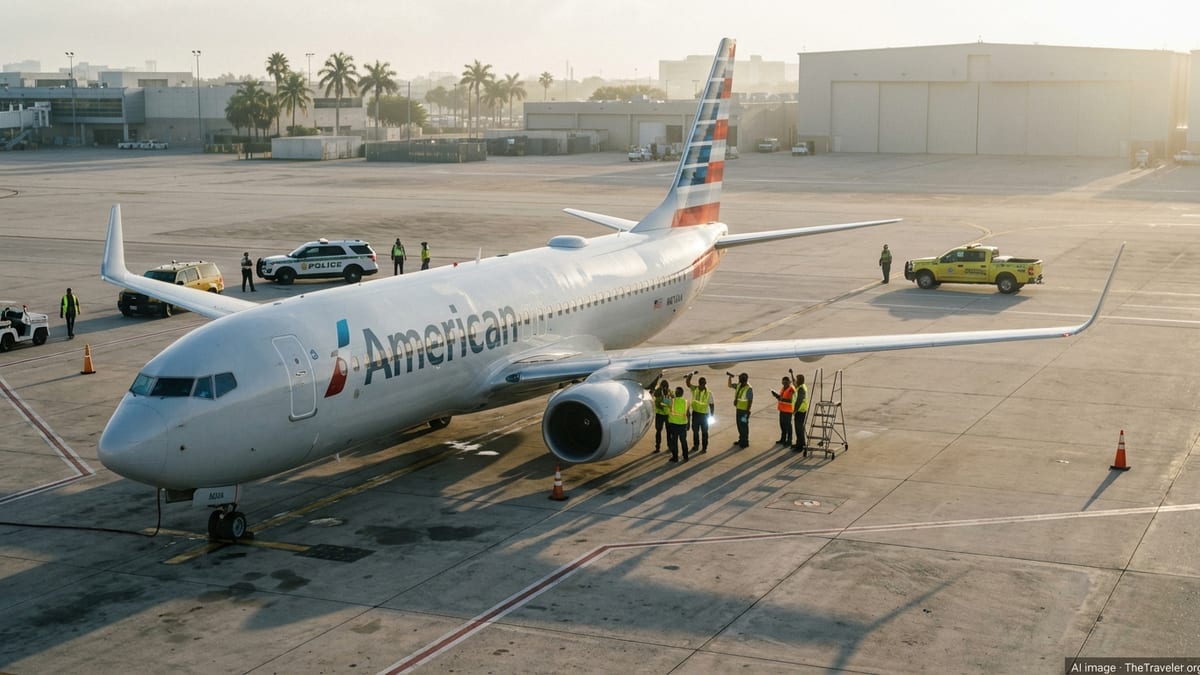
What Happened on Flight AAL1832
American Airlines Flight AAL1832, operated by an Airbus A321-231, was scheduled to fly from Dallas Fort Worth International Airport to Denver International Airport when it diverted to Colorado Springs. Flight-tracking services show the aircraft departing Dallas and initially routing toward Denver before changing course and descending into Colorado Springs, a common diversion airport along the Front Range corridor.
Publicly available data indicates that the aircraft landed safely at Colorado Springs Airport, with no indications of injuries to passengers or crew. The diversion was brief in duration compared with the originally planned flight time between Dallas and Denver, suggesting that the crew opted for a precautionary landing rather than continuing on to Denver.
As of the latest tracking history, the airframe involved is part of American Airlines’ A321 fleet regularly used on domestic trunk routes such as Dallas to Denver. The aircraft type is widely deployed across the United States, and operators frequently use it on high-demand city pairs in the Mountain West.
Initial routing, subsequent course changes, and landing times are broadly consistent across several flight-tracking platforms, which list the service under flight number AA or AAL1832 and record Colorado Springs as an unscheduled intermediate stop between Dallas and Denver.
Why Pilots Choose Colorado Springs as a Diversion Airport
Colorado Springs Airport serves as a frequent diversion point for flights bound for Denver, particularly during periods of severe weather, congestion, or other operational constraints at Denver International Airport. The airport sits roughly 70 miles south of Denver and offers a long primary runway, full air traffic control services, and ground handling capabilities for narrowbody jets such as the Airbus A321.
Published route information shows that American Airlines operates regular services between Dallas and Colorado Springs, which means airline staff, facilities, and local support are already in place. This existing presence can make Colorado Springs an efficient choice when a Dallas to Denver flight requires an unscheduled landing.
General airline guidance indicates that diversions are often driven by a combination of safety, weather, airspace flow restrictions, and operational considerations. When Denver experiences storms, high winds, ground stops, or heavy traffic volumes, arriving flights may be held, rerouted, or diverted to nearby airports where conditions are more manageable.
In this context, the decision to divert Flight AAL1832 to Colorado Springs fits a broader pattern seen on other carriers and routes into Denver, where Colorado Springs, Pueblo, and occasionally airports along the Front Range have been used as alternates in recent years.
How Diversions Work for Passengers
When a flight such as AAL1832 diverts, the aircraft is formally listed as having landed at an airport other than its scheduled destination. Internal airline procedures then determine whether the same aircraft will continue on to the original destination or whether passengers will be rebooked onto other services, depending on factors such as crew duty limits, maintenance checks, weather developments, and gate availability.
Consumer-facing documents and explainers on American Airlines operations note that safety and regulatory requirements are prioritized before schedule considerations. Once the aircraft is on the ground, the airline’s operations teams typically coordinate with airport partners to arrange refueling, crew evaluations, and, if necessary, onward transport.
Publicly available guidance on diversions indicates that, in many cases, passengers remain on board during a short technical or weather-related stop. If the delay is extended, travelers may be asked to disembark and wait in the terminal while the airline evaluates next steps, which can include dispatching a new crew, swapping aircraft, or rebooking travelers on later flights.
For passengers on Flight AAL1832, the practical impact would likely have been a longer travel day and missed connections in Denver for some travelers. Those holding onward tickets from Denver are typically re-accommodated on later departures, although the exact arrangements vary by fare rules, seat availability, and the cause of the disruption.
Context: Denver’s Weather and Operational Challenges
Denver International Airport is particularly susceptible to rapidly changing conditions, including thunderstorms, hail, strong crosswinds, and winter snow and ice. Aviation forums, historical flight records, and regional coverage frequently document periods when Denver operations slow significantly, leading to arrival holds, ground stops, and diversions to airports such as Colorado Springs.
In past incidents unrelated to Flight AAL1832, flights into Denver have diverted for reasons ranging from engine performance issues to sensor alerts and weather disruptions. Records maintained by federal safety agencies and airline industry publications show that, when in doubt, flight crews opt for the nearest suitable airport to address any potential technical concern or to avoid extended holding patterns in challenging weather.
Colorado Springs’ position south of Denver, along with generally less congested airspace and available runway capacity, makes it a logical choice when Denver’s arrival flow is constrained. While diversions are disruptive, they are viewed within the industry as straightforward safety tools that help manage operational risk in complex environments.
The timing of Flight AAL1832’s diversion places it within a broader pattern of seasonal weather volatility along the Front Range, when afternoon storms and fast-moving systems can interfere with tightly scheduled hub-and-spoke operations at Denver.
What Travelers Can Learn from the AAL1832 Scare
For travelers, the experience on Flight AAL1832 is a reminder that diversions, while unsettling, are part of standard airline safety practices. Industry-facing guidance on flight operations defines a diversion as a precautionary step to ensure that any potential risk, whether related to weather, airspace constraints, or technical concerns, is managed in a controlled environment on the ground rather than in the air.
Passenger advocacy materials emphasize the value of tracking flights in real time, maintaining updated contact information in airline reservations, and reviewing airline policies on schedule changes and disruptions. When a diversion occurs, this preparation can help travelers respond more quickly to rebooking options and understand the status notifications they receive.
Travelers booked on future Dallas to Denver services with American Airlines can also take some reassurance from the outcome of this event. Available information indicates that Flight AAL1832 landed safely, that standard diversion procedures were followed, and that the aircraft type used on the route has a long and well-documented safety record in domestic service.
While any mid-journey change can feel like a scare, the handling of this diversion underscores how modern flight operations are designed to prioritize safety and flexibility, even when that means an unexpected stop in a place like Colorado Springs.