


More news on this day
Operations at New York’s LaGuardia Airport were snarled on Wednesday after a sinkhole discovered near one of the hub’s two runways forced an immediate shutdown and triggered widespread flight delays and cancellations.
Get the latest news straight to your inbox!
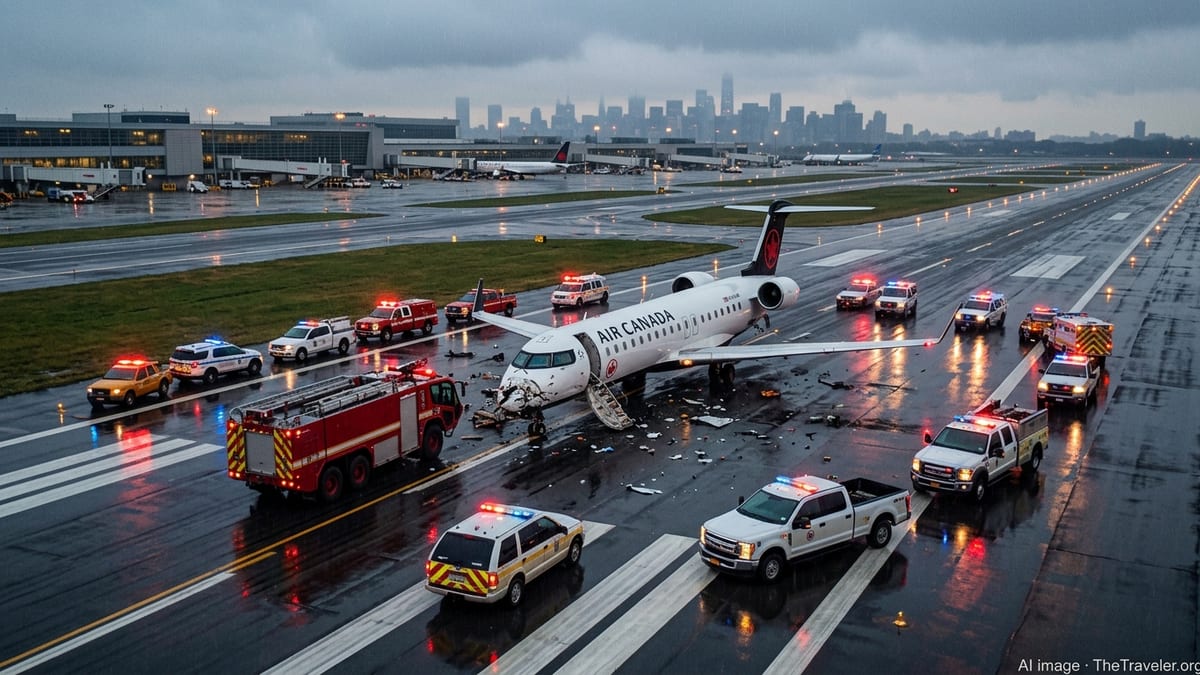
Runway 4/22 Closed After Routine Inspection Finds Damage
Publicly available information indicates that the problem was identified late Wednesday morning during a daily airfield inspection at LaGuardia. Crews reported finding a sinkhole near Runway 4/22, one of just two runways serving the busy New York City airport.
Airport operators moved quickly to take Runway 4/22 out of service while engineering and construction teams were dispatched to assess the damage. Reports indicate that the affected area is located near the runway surface rather than on a taxiway, raising concerns about the integrity of the pavement and the underlying structure.
According to published coverage, the runway closure was described as immediate and indefinite pending repairs, with officials emphasizing that work would proceed as quickly as safety allows. The second runway at LaGuardia has remained open, but with sharply reduced capacity compared to normal operations.
The incident comes at a time when LaGuardia is already operating close to capacity on many days, which magnifies the impact of any loss of runway availability. Even short disruptions at the airport typically ripple across the broader U.S. air network.
Delays, Cancellations Mount as Airlines Adjust Schedules
Flight tracking data cited in multiple media reports showed several hundred disrupted flights by late afternoon, including about 200 cancellations and nearly as many delays into and out of LaGuardia. That represents a significant portion of the airport’s daily schedule.
The Federal Aviation Administration placed inbound traffic to LaGuardia under flow restrictions, slowing arrivals because of both the sinkhole and passing weather systems in the region. As a result, many airlines have been holding flights on the ground at origin airports or assigning extended departure slots to manage congestion.
Carriers with a large presence at LaGuardia, including Delta Air Lines and several domestic competitors, have begun trimming schedules and consolidating flights where possible. Publicly available information from flight status tools shows that some airlines are proactively canceling later departures to create space for stranded passengers from earlier flights.
Travelers already inside the terminal have reported longer lines at customer service counters and crowded gate areas as aircraft and crews struggle to stay in position. With only one runway available and thunderstorms in the forecast, observers expect rolling delays to persist into the evening hours.
Repair Effort Focuses on Stability and Cause of the Sinkhole
Engineering teams are concentrating on two questions: how to stabilize the ground and pavement around the sinkhole and what triggered the sudden subsidence near an active runway. According to coverage from national and local outlets, the Port Authority has deployed emergency construction crews to excavate, reinforce, and resurface the affected section.
In similar past incidents at other U.S. airports, repairs have involved digging out weakened subgrade, installing new fill and drainage, and then rebuilding the pavement structure in layers. The depth and diameter of the LaGuardia sinkhole, which have not yet been fully detailed in public reports, will determine how long the runway must remain closed.
Experts cited in aviation analyses note that airfield sinkholes can be linked to aging infrastructure, heavy rainfall, or issues with underground utilities and drainage. LaGuardia’s runways extend over a mix of reclaimed land and elevated structures, which require ongoing monitoring and maintenance to detect early signs of settlement or erosion.
While no structural timeline has been officially published, the nature of runway work typically means repairs must be fully completed and tested before aircraft operations resume on the affected surface. Until then, scheduling will depend on how efficiently traffic can be handled with a single runway.
Passenger Impact Across the New York Travel Network
The disruption is being felt well beyond LaGuardia’s terminals. With a significant share of short-haul business and leisure traffic funneled through the airport, delays there quickly influence operations at other East Coast hubs.
Airlines have begun rebooking travelers onto flights later in the week or rerouting them through nearby airports such as John F. Kennedy International and Newark Liberty International. Travel industry reports show rising seat demand on some afternoon and evening departures from those airports as LaGuardia passengers seek alternatives.
For travelers already en route to New York, some flights have been placed in holding patterns or diverted, depending on fuel and congestion conditions. Publicly available data suggests that average departure delays from LaGuardia briefly neared the 90-minute mark, with some flights waiting even longer for access to the single operating runway.
Given the combination of infrastructure disruption and unstable weather, travel experts quoted in recent coverage are advising passengers with flexible plans to consider adjusting itineraries or avoiding same-day connections through LaGuardia until runway capacity is restored.
Another Test for a Key New York Gateway
The sinkhole incident is the latest in a series of operational challenges for LaGuardia in 2026, including a fatal runway collision earlier in the year that temporarily halted all flights. While the causes of the two events are unrelated, together they highlight the vulnerability of a high-traffic airport with limited runway and taxiway redundancy.
Aviation analysts note that LaGuardia’s compact layout, short runways, and heavy schedule leave little margin when infrastructure issues arise. Any event that takes a runway out of service immediately constrains capacity and can leave airlines with few options to maintain normal operations.
In the wake of the sinkhole, attention is likely to focus on ongoing modernization efforts at LaGuardia and on how airfield inspections and maintenance programs might adapt to identify subsurface risks earlier. Published reports indicate that the sinkhole was detected during a routine check, underscoring the importance of those regular surveys even as they reveal new vulnerabilities.
For travelers, the episode serves as a reminder of how quickly conditions at a major airport can change. With one of New York’s key gateways again operating under constraint, passengers passing through LaGuardia in the coming days may face longer journeys as the region’s tightly wound air traffic system absorbs another shock.