


More news on this day
An American Airlines flight from Dallas Fort Worth to Monterey, California, was delayed for more than two hours after the pilots were temporarily locked out of the cockpit due to a jammed door mechanism, according to multiple media reports and passenger accounts.
Get the latest news straight to your inbox!
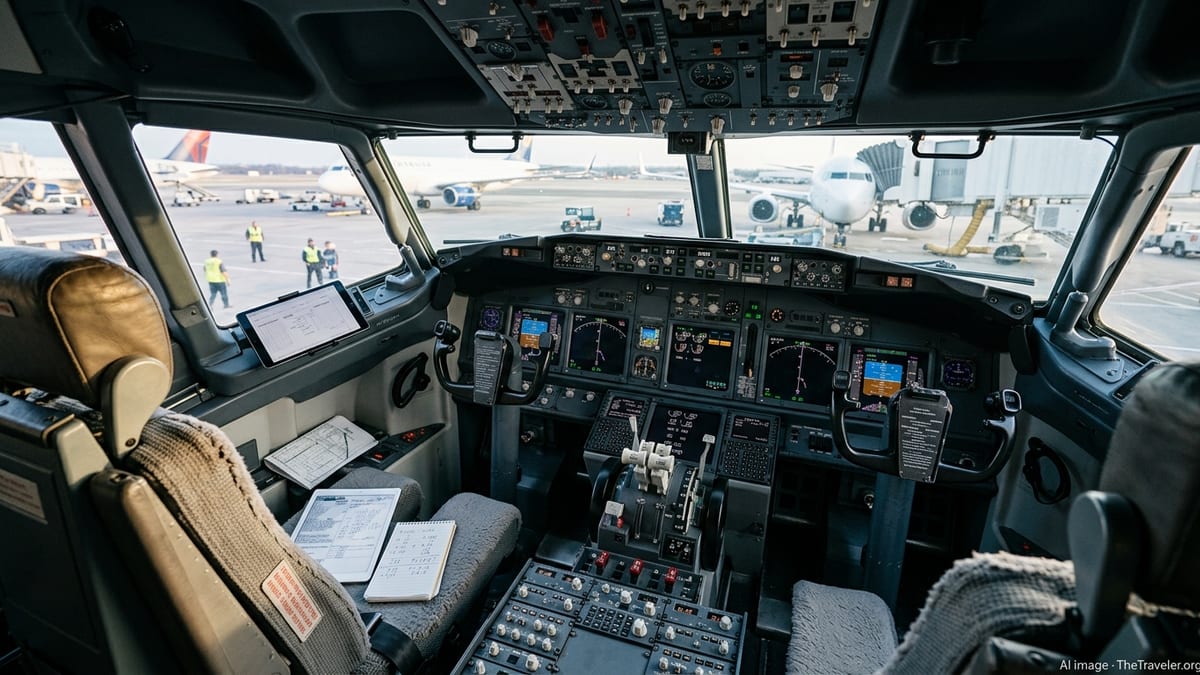
Unusual delay on Dallas to Monterey service
The incident occurred on American Airlines flight AA2140, a Boeing 737 MAX 8 operating from Dallas Fort Worth International Airport to Monterey Regional Airport. The flight was scheduled to depart midmorning, but publicly available flight data and local coverage indicate it left the gate more than two hours behind schedule after the cockpit door failed to open normally.
Passengers preparing to board reported that they were turned back at the jet bridge after the flight crew realized the pilots could not re enter the locked cockpit. Coverage from Texas based outlets and aviation focused sites describes a malfunctioning latch on the reinforced cockpit door that prevented standard access by keypad and handle.
Despite the unusual cause of the delay, the aircraft ultimately departed and arrived safely in California later the same day. No injuries were reported, and there have been no indications of a security issue or broader technical fault with the aircraft systems beyond the door mechanism itself.
Maintenance crews use external cockpit access
To resolve the problem, maintenance personnel were called to the aircraft while it remained parked at the gate. Aviation industry reporting indicates technicians deployed mobile air stairs to reach the forward fuselage and used an external cockpit window to gain entry to the flight deck, a rarely seen but certified method of access on modern airliners.
Most commercial jets are equipped with at least one cockpit window that can be opened from the outside using specialized tools in the event of an emergency or mechanical failure of the main door. In this case, those procedures allowed ground crews to reach the flight controls, troubleshoot the jammed latch, and restore normal operation of the reinforced door.
After the door was cleared, passengers re boarded and the flight continued as a regular scheduled service. Reports from travelers on board describe the crew offering brief explanations and lighthearted remarks once the situation had been resolved, underscoring that safety was not compromised even as schedules were disrupted.
Security focused cockpit doors can create rare access issues
The incident highlights how modern cockpit security measures, introduced and strengthened over the past two decades, can occasionally generate operational challenges when hardware problems arise. U.S. regulations require sturdy, locked cockpit doors designed to resist forced entry, with electronic access systems that give pilots control over who can enter the flight deck.
These reinforced doors are intended to remain locked during flight except for tightly controlled entry and exit. In normal operations, pilots and authorized crew use keypad codes and internal switches to manage access, with additional safeguards that allow pilots to block entry if they perceive a threat. When a mechanical fault affects the door or latch, however, access can become temporarily restricted even for the flight crew.
Industry guidance notes that backup options such as external cockpit windows exist precisely to manage low probability events in which the primary door cannot be opened from the cabin side. Though rarely needed, they form part of a multilayered safety and security architecture that balances protection of the flight deck with the ability to respond to technical anomalies.
Passenger disruption amid broader reliability concerns
For travelers on the Dallas to Monterey route, the jammed cockpit door translated into a delay of more than two hours, affecting onward connections and ground plans at both ends of the journey. Social media posts and traveler forums describe frustration at the extended wait, even as many acknowledged the unusual nature of the problem.
The timing of the episode comes amid heightened public scrutiny of airline reliability in the United States, including discussions about maintenance performance, staffing, and cascading delays across carrier networks. In this context, an isolated mechanical issue affecting a cockpit door has drawn wider attention than it might have during a less disrupted travel season.
Available reporting indicates that the door malfunction on AA2140 was treated as a maintenance issue specific to that airframe, with no immediate evidence of a systemic defect across the airline’s fleet. Even so, the circumstances are likely to feed into ongoing conversations about how carriers manage unusual technical events and communicate with passengers when delays stretch beyond typical turnaround times.
Safety protocols prioritized despite schedule impact
Aviation analysts typically emphasize that delaying a departure to investigate and correct an unexpected hardware issue is consistent with long standing safety principles in commercial flight. Although the jammed cockpit door in Dallas did not develop into a flight safety emergency, the inability of pilots to access the flight deck as designed left little option but to keep the aircraft on the ground until the problem could be fully resolved.
The episode serves as a reminder that highly secure cockpit doors, engineered to remain shut against external pressure or intrusion, must also perform reliably as everyday access points for flight crews. When they do not, airlines rely on a combination of maintenance expertise, backup design features such as external windows, and conservative operational decision making to restore normal conditions before departure.
For affected passengers, the experience meant an unexpected wait on a busy travel day. For the broader industry, it adds a new example of how modern safety and security systems, while effective at their primary purpose, occasionally create unusual but manageable disruptions in the tightly timed environment of commercial air travel.