


I grew up thinking I knew the Jersey Shore. I had never been, but I had watched enough reality TV to be sure it meant spray tans, all-night clubs, and boardwalk drama. When a free weekend opened up in early June, I finally decided to see it for myself. What I found between Asbury Park and the quiet streets of Spring Lake was not the caricature I had imagined, but a stretch of coast that felt surprisingly low-key, local, and in many ways, refreshingly grown up.
Get the latest updates straight to your inbox!
Trading TV Tropes for Train Tickets
The stereotypes in my head started to crack before I even saw the ocean. Instead of piling into a party bus, I boarded an NJ Transit train at New York Penn Station on a Saturday morning, coffee in hand and beach bag slung over my shoulder. The North Jersey Coast Line rolls directly toward the shore, with trains continuing all the way down to towns like Long Branch, Asbury Park, Bradley Beach, Belmar, and beyond. A one-way adult ticket from New York to Asbury Park typically falls in the mid-teens, which already felt more like a commuter’s errand than a weekend of excess.
On board, the crowd did not match the pop culture script either. There were families with coolers, couples in athleisure, and groups of friends planning which bakery to try first. Instead of slurred shouting about clubs, I overheard conversations about sunscreen, farmers markets, and the best towns for young kids. It felt less like a pilgrimage to a party and more like a suburban Saturday with a saltwater upgrade.
As the train moved south and glimpses of marinas and inlets flashed past the windows, the scene outside looked calm and everyday. These were towns where people picked up bagels for the beach and chatted with neighbors in line for coffee. It was a reminder that for most New Jersey residents, the shore is not a punchline at all. It is simply where they go to cool off, eat well, and let the week fall away.
Stepping off at Asbury Park station and walking the 10 or so minutes toward the ocean, I passed Victorian houses mid-renovation, neighborhood bars opening for lunch, and a yoga studio prepping for a weekend class. There was no bass thumping from car windows, no mobs in matching tank tops. For the first time all morning, I wondered if I had actually chosen the right stop.
A Boardwalk With More Books Than Brawls
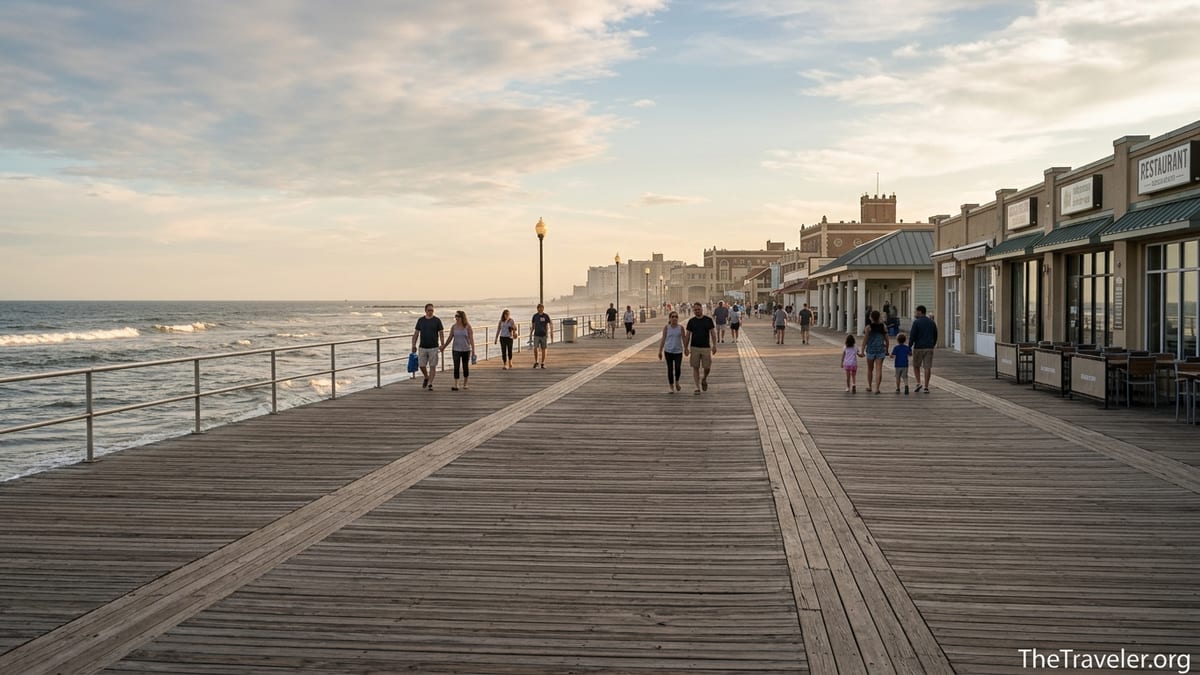
The Asbury Park boardwalk was the first real test of my assumptions. On screen, Jersey boardwalks are shorthand for carnivals of chaos, all neon signs and shouted insults. What I walked into was something different. Yes, there were families sharing pizza out of cardboard boxes and teenagers in flip-flops cruising the planks, but the overall energy was easygoing, almost sleepy in the late-morning sun.
Instead of wall-to-wall bars, the first things that caught my eye were small, independent businesses tucked into the historic pavilions. One storefront had racks of locally designed T-shirts and hand-poured candles. Another specialized in vintage vinyl and old concert posters, a nod to the city’s music legacy. A little further along, I found a small bookshop with beach reads stacked in the window and a chalkboard promising staff picks for “books to get lost in between dips in the ocean.”
Just off the boards, beach access points were marked by simple wooden stairways, with lifeguard stands already manned for the season. Day beach badges here cost around the low double digits per person in high season, slightly less in the shoulder weeks of June and September. I paid for a day pass, walked down into the sand, and waited for the Jersey Shore of my imagination to appear. Instead, I heard nothing louder than the steady crash of waves, kids negotiating rules for sandcastle building, and the occasional bell of a passing vendor cart.
Even the food felt more curated than chaotic. Yes, you can still find fried Oreos and foot-long hot dogs if nostalgia calls, but there were also stands selling fresh lemonade made to order and tacos with bright, crunchy slaw. One spot was offering cold brew coffee and chia puddings in recycled glass jars. It felt more like a beach town testing out a modern food market than a place frozen in a decade-old TV moment.
Discovering a Serious Food Scene in Asbury Park
If the beach reframed my image of the Jersey Shore, the food scene in Asbury Park shattered it entirely. I had not expected much beyond pizza slices and bar burgers. Instead, I found a city that locals talk about as one of the more interesting places to eat along the New Jersey coast, with options that range from quick boardwalk snacks to lingering date-night dinners.
For lunch, I joined the line at Porta, a high-energy, coastal Italian restaurant just off the boardwalk known for its wood-fired Neapolitan pizzas and lively atmosphere. Inside, long communal tables and open kitchen views made the space feel like a cross between a beachside beer hall and a rustic pizzeria. I ordered a classic margherita and a simple arugula salad. The pizza arrived blistered and fragrant, with a soft, chewy center and just enough char on the crust to hint at serious heat. It was the kind of pie you would expect in a city with a dedicated restaurant scene, not necessarily steps from the sand.
A few blocks inland, Cookman Avenue is packed with spots that underline just how far Asbury’s reputation has evolved. There are cocktail bars mixing drinks with small-batch spirits, contemporary American restaurants serving dishes like roast chicken with crisp potatoes and herb jus, and tiny global eateries where menus change with the seasons. It is possible to wander from Korean-influenced tacos to a wine bar with a carefully edited list and then end the night with ice cream made on-site, all within a few walkable blocks.
What impressed me was not only the quality of the food but also the absence of pretense. Dress codes were functionally nonexistent. Diners arrived in everything from sundresses to beach shorts, and staff seemed just as happy recommending a local lager as they were walking you through the nuances of a natural wine. The scene felt hip and creative, but it was grounded firmly in the reality that people had likely spent the day getting sandy and sunburned.
Prices were similar to what you might pay in a mid-range New York neighborhood. Wood-fired pizzas at busy spots hovered in the mid-to-high teens, while mains at sit-down restaurants generally landed in the twenty-something range. It is not a bargain destination, but you do not feel like you are paying a premium just for the privilege of eating near the ocean either.
Spring Lake: The Quiet, Refined Counterpoint
On Sunday morning I went looking for the opposite of everything I had ever heard about the Jersey Shore nightlife. The answer, several locals told me, was just a few stops south on the same rail line. Spring Lake, they promised, would feel like a different world entirely. They were right. From Asbury Park, it is a short train or car ride to this small, elegant town, often described as one of the most refined communities along the coast, with tree-lined streets, historic homes, and a noticeably slower pace.
Spring Lake’s beachfront is framed not by rides and game stalls but by graceful houses and a long, non-commercial boardwalk that feels more like a wide seaside path. There are benches at regular intervals, classic white railings, and views of the water unbroken by neon signs. On the June weekend I visited, the beach was dotted with umbrellas, but there was plenty of empty sand between groups. It was easy to find a quiet spot to stretch out, read a paperback, and barely notice the people around me.
The town center a few blocks inland was equally calm. Instead of thumping bass, the sounds were the clink of dishes from brunch spots and the jingle of bike bells. Shops leaned toward small boutiques, bakeries, and old-fashioned ice cream parlors. This was the shore for people who prefer chairs on porches to bar stools, who are more interested in morning walks around the lake than last call at a nightclub.
The most surprising moment of the weekend came as I sat on a bench overlooking Spring Lake itself, watching ducks skim across the water. It occurred to me that if someone had shown me only this scene, with its manicured lawns and peaceful shoreline, I might have guessed I was somewhere in a New England resort town, not in the same New Jersey that fuels so many summer stereotypes.
Evenings That Feel More Local Than Legendary
Reality TV would have you believe that the Jersey Shore truly comes alive only after dark, when clubs fill and drama spikes. The evenings I experienced could not have been more different. In Asbury Park, the post-sunset routine looked less like a televised event and more like any popular urban beach community with a year-round population.
On Saturday night, crowds did pick up, but the energy felt controlled and varied. Families lingered over late dinners on Cookman Avenue, kids split banana splits near the boardwalk, and couples stood in line outside small venues advertising local bands and tribute acts. At one historic music club near the ocean, a mixed-age crowd waited to see a touring rock band, chatting quietly as staff checked IDs. Further down, a cocktail bar filled with a stylish but relaxed set, more interested in the drink list than in making a scene.
There are certainly places to dance and drink late into the night, but they exist alongside and not in place of quieter options. I passed a courtyard where a jazz trio was playing to a handful of listeners nursing glasses of wine and another cafe where people debated dessert choices under string lights. Walking back to my hotel just after 11 p.m., I was struck by how quickly the sound of the waves reclaimed the soundscape once I stepped a block or two away from the main drag.
In Spring Lake, evening was even more subdued. By the time the sun fully slipped below the horizon, streets were largely empty. Porch lights flicked on one by one, and the most raucous noise came from a group of kids playing an impromptu game of tag on a side street while parents chatted nearby. If your expectation of the Jersey Shore involves clubs that do not quiet down until sunrise, this side of the coast offers a stark, and to me refreshing, alternative.
Practical Tips for a Low-Key Jersey Shore Weekend
The biggest surprise of my weekend was how easy it was to plan a shore escape that felt relaxed instead of wild. Getting there without a car is straightforward. NJ Transit’s North Jersey Coast Line connects New York Penn Station with a string of shore towns, including Long Branch, Asbury Park, Bradley Beach, Belmar, and beyond. Travel time from Manhattan to Asbury Park usually falls around the hour-and-a-half mark, depending on the specific train, and fares are priced in line with other regional commutes.
For accommodation, Asbury Park and the surrounding towns offer a mix of boutique hotels, classic motels, and rental apartments. In Asbury, many of the newer hotels sit a short walk from the boardwalk, often with rooftop bars or pools that come alive at sunset but still feel approachable to non-partygoers. Spring Lake leans more toward Victorian-style inns and bed-and-breakfasts, some of which include beach badges and breakfast in the nightly rate. Booking for peak summer weekends is essential; shoulder-season visits in June or September offer lower prices and thinner crowds.
Budget-wise, a realistic weekend might include train tickets, two nights of lodging, daily beach badges, and meals that range from coffee and bagels to a splurge dinner. While exact totals will vary widely, it is fair to expect costs similar to or slightly below a mid-range weekend in a small East Coast city. You can keep things more economical by packing snacks, choosing casual dining, and staying a bit farther from the sand.
Most importantly, you can shape your own version of the shore. If you want energy, focus on Asbury Park, neighboring towns like Belmar, or busier stretches with buzzing boardwalks. If you want calm, prioritize places like Spring Lake or the quieter edges of larger destinations, and lean into early mornings, long walks, and early dinners. The region is flexible enough to accommodate both party seekers and those, like me, who are far more interested in an early night and a good book.
The Takeaway
Leaving the coast on Sunday evening, watching sand slowly give way to suburbs from the train window, I realized how incomplete my picture of the Jersey Shore had been. Television had compressed an entire region into a single exaggerated image, one that focused on the loudest nights and the most theatrical personalities. What I met in person was more nuanced: a chain of communities where everyday rituals like morning coffee, long walks, and early dinners coexist with pockets of nightlife.
Asbury Park showed me that shore towns can reinvent themselves with creativity and food-forward ambition without losing their casual core. Spring Lake reminded me that quiet still has a place along one of the country’s most densely populated coastlines. Together, they offered a version of the Jersey Shore that felt accessible, relaxed, and surprisingly sophisticated.
If you arrive expecting a non-stop party, you may well find it in certain corners and on certain weekends. But if you come looking for something softer, slower, and more rooted in local life, you will find that too. My weekend at the Jersey Shore was nothing like the stereotypes I expected. It was better: sandier, calmer, more delicious, and far more real.
FAQ
Q1. Is the Jersey Shore really as wild as it looks on TV?
The reality is more varied. Certain pockets and peak holiday weekends can be raucous, but many towns and much of the season feel relaxed and family friendly.
Q2. Which Jersey Shore town should I pick for a quieter weekend?
Spring Lake is an excellent choice for calm beaches and a refined atmosphere, with a non-commercial boardwalk and a small, walkable downtown.
Q3. Can I visit the Jersey Shore without a car?
Yes. NJ Transit’s North Jersey Coast Line connects New York City to several shore towns, including Asbury Park, Bradley Beach, Belmar, and Spring Lake, making car-free weekends practical.
Q4. Is Asbury Park suitable for families, or is it more of a party town?
Asbury Park balances both. Families enjoy the beach and boardwalk by day, while at night there is a mix of mellow restaurants, live music venues, and a few louder bars and clubs.
Q5. How expensive is a weekend at the Jersey Shore?
Costs are similar to a mid-range city getaway. Expect train fares, beach badges, and lodging to add up, but you can manage your budget with casual dining and careful planning.
Q6. Do I need beach badges, and how do they work?
Most towns require daily beach badges in summer, typically priced in the low double digits per adult per day, with discounts for children and seasonal passes in some places.
Q7. When is the best time to visit for smaller crowds?
Late May, early June, and September often bring milder weather and noticeably fewer people than the height of July and August, especially on weekdays.
Q8. What should I pack for a low-key Jersey Shore weekend?
Bring beachwear, comfortable walking shoes, sun protection, a light layer for breezy evenings, and a small day bag for carrying snacks, a towel, and a book.
Q9. Are there good food options beyond typical boardwalk fare?
Yes. Towns like Asbury Park have diverse restaurant scenes with wood-fired pizza, creative American cooking, and global flavors alongside traditional boardwalk snacks.
Q10. Is the Jersey Shore a good option for travelers who do not like nightlife?
Absolutely. If clubs are not your thing, focus on quieter towns, early-morning beach time, long walks, and relaxed dinners, and you can easily avoid the party scene.