


More news on this day
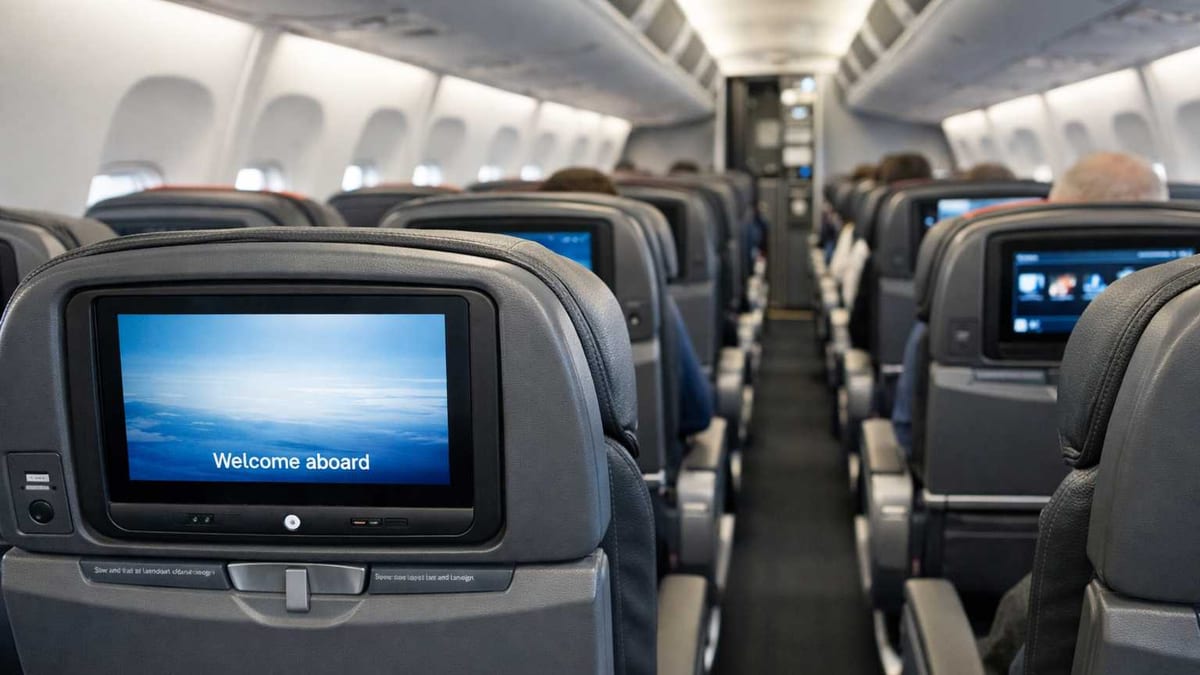
American Airlines is reversing a high-profile in-flight entertainment strategy, unveiling plans to install modern seatback screens throughout its narrowbody fleet from 2028 as part of a broader effort to upgrade cabins and narrow a competitive gap with major U.S. rivals.
Get the latest news straight to your inbox!
From BYOD Strategy to Fleetwide Screens
The decision marks a notable shift for the Fort Worth based carrier, which spent much of the past decade removing seatback screens from domestic single aisle aircraft and emphasizing a bring your own device approach supported by onboard Wi Fi streaming. Publicly available information and industry commentary have often highlighted American’s position as an outlier among large U.S. airlines, with Delta Air Lines already offering seatback entertainment across most of its fleet and United Airlines actively reintroducing screens on many aircraft.
According to recent coverage of the announcement, American now plans to bring seatback entertainment back to the forefront on its domestic fleet, beginning with new Boeing and Airbus deliveries and continuing through retrofits of existing jets. The initiative will focus on narrowbody aircraft, where passengers in recent years have relied primarily on personal phones, tablets or laptops to access entertainment.
The carrier has previously argued that personal electronic devices, combined with high speed connectivity, could offer a better experience than older seatback systems. However, evolving customer expectations, competitive pressure and advances in in flight technology appear to have contributed to a reassessment of that stance. The new plan suggests American sees value in offering both personal device streaming and embedded screens as complementary options rather than mutually exclusive choices.
Next Generation Screens and Power at Every Seat
Details emerging from American’s latest communications indicate that the new seatback systems are designed around larger, higher resolution displays than those found on many legacy aircraft. The screens are expected to support 4K quality, with improved responsiveness and a more modern interface than earlier generations of in flight entertainment hardware.
Reports describe a platform built to support Bluetooth connectivity for passengers’ own headphones and earbuds, as well as USB C power ports to charge devices during flight. The move to Bluetooth support is particularly notable, as it aligns with the broader consumer electronics trend away from wired headphone jacks and toward wireless audio accessories.
The entertainment software is expected to offer a more personalized experience, including curated recommendations for movies and television shows, interactive moving maps and real time flight information. The goal is to provide a system that feels closer to modern streaming platforms used at home, with improved navigation and content discovery compared with many legacy airline interfaces.
American has also been rolling out high speed Wi Fi, including partnerships with newer satellite providers on selected aircraft. The combination of upgraded connectivity, refreshed cabin interiors and the return of seatback screens positions the airline to offer multiple layers of digital engagement on board, from traditional movies to live messaging and work capabilities.
Timeline, Aircraft Types and Retrofit Complexity
While the news signals a broad strategic change, implementation will take time. Published reports indicate that installations will begin with new aircraft deliveries starting in 2028, including additional Boeing 737 family jets and Airbus A321neo aircraft. These deliveries will arrive with the new seatback systems installed from the factory, simplifying integration and reducing aircraft downtime.
Beyond new deliveries, American plans to retrofit a portion of its existing narrowbody fleet, a process that typically requires aircraft to be taken out of service for days or weeks while cabins are reconfigured. The airline has not publicly detailed the full scope or completion date for those retrofits, but the reference to fleetwide installations suggests a multi year program that could extend well into the next decade.
The carrier already equips international widebody aircraft such as Boeing 777 and 787 models with seatback entertainment, and certain specialized subfleets like the Airbus A321T and upcoming A321XLR are also configured with built in screens. The new strategy therefore focuses on domestic and shorter haul narrowbody aircraft that, in recent years, have offered only streaming to personal devices. Integrating a standardized system across both new and existing jets could ultimately simplify training and maintenance compared with the patchwork of configurations that has evolved over time.
Retrofit programs are capital intensive and logistically complex, particularly for airlines operating large fleets of different subtypes. Balancing aircraft availability with modification schedules will be critical as American works to maintain its route network while upgrading cabins.
More Premium Seats and Competitive Pressures
The return of seatback screens is part of a broader cabin refresh that also includes adding more premium seating. According to recent company communications summarized in media reports, American intends to increase the number of First Class and extra legroom Main Cabin Extra seats on new deliveries and selected retrofitted aircraft. That shift reflects strong demand for higher revenue cabins and follows similar moves by competitors that have invested heavily in premium products on both domestic and international routes.
For travelers, more premium seats combined with modern entertainment and power at every seat are likely to be presented as a tangible upgrade in comfort and choice. At the same time, customer reaction may vary depending on whether the additional premium seating comes at the expense of standard economy legroom, a tradeoff that has drawn scrutiny in the past when airlines pursued higher density configurations.
Analysts have noted that American’s earlier decision to remove screens from narrowbody aircraft placed it at a perceived disadvantage relative to Delta and United, particularly among frequent flyers who value the convenience of built in entertainment. The new commitment to restore seatback systems fleetwide indicates that competitive dynamics in the U.S. market continue to push large carriers toward more comprehensive onboard offerings, even as they seek to control costs.
How the move will influence traveler loyalty and fare premiums remains to be seen. However, by tying entertainment upgrades to a broader package of enhancements such as improved Wi Fi and cabin refurbishments, American appears to be positioning the initiative as part of a long term reset of the onboard experience rather than a single feature change.
What Passengers Can Expect in the Coming Years
In the near term, passengers are unlikely to see immediate changes on most American Airlines domestic flights, as the new systems are not expected to appear on aircraft until the first modified jets enter service later in the decade. Existing streaming platforms and personal device entertainment will continue to define the experience on many routes while the retrofit program ramps up.
Over time, however, travelers boarding newly delivered Boeing and Airbus narrowbodies should begin to encounter the upgraded cabins, with large format screens, Bluetooth audio, USB C charging and expanded premium seating. As more aircraft cycle through modification lines, those features are expected to become a standard part of the American Airlines narrowbody product rather than a special case limited to certain international or premium focused subfleets.
For now, the announcement signals a clear strategic pivot. After years of betting heavily on personal devices alone, American is once again embracing dedicated in seat screens as a core part of its passenger experience, setting the stage for a new round of competition in the cabin as U.S. airlines race to define what in flight entertainment should look like in the 2030s.