


More news on this day
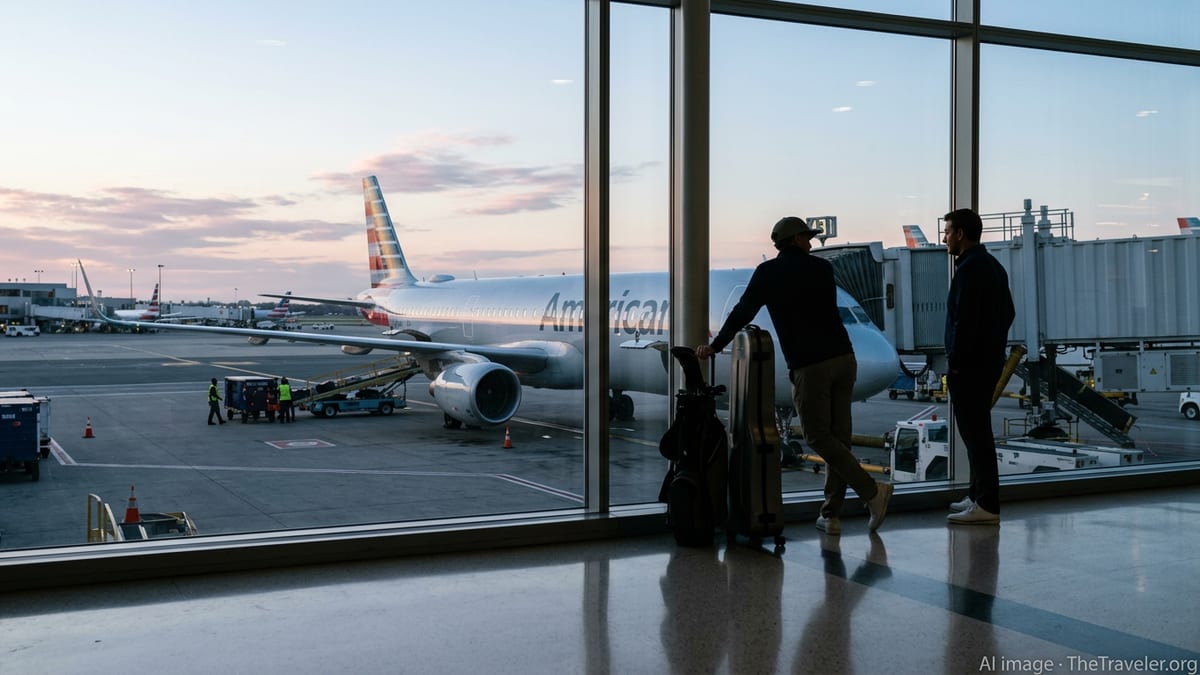
American Airlines is preparing for what industry data suggests could be its busiest summer on record, with a schedule approaching seven thousand daily flights and a particularly sharp focus on transatlantic travel linking the United States with the United Kingdom, Greece, Italy and Switzerland, setting the stage for an even more globally connected network in 2026.
Get the latest news straight to your inbox!
A Record Summer Built on Transatlantic Demand
Publicly available fleet and schedule data show that American Airlines and its regional partners already operate close to 6,800 flights per day across a network reaching nearly 350 destinations in 48 countries, placing the carrier at the top of the global league tables by daily departures. Analysts tracking the airline’s 2025 and 2026 filings report that the company is now leaning into pent up leisure demand and resilient corporate traffic to push its peak summer operation toward the symbolic seven thousand flight mark.
Reports from aviation schedule specialists indicate that much of this growth is being funneled into transatlantic routes, where American has been steadily adding frequencies and new city pairs. The United Kingdom remains the backbone of this strategy, with London serving as a key connecting hub for premium and business travelers, while secondary UK cities bolster inbound tourism and diaspora travel to the United States.
According to airline industry coverage, Greece and Italy have emerged as standout beneficiaries of this expansion, reflecting the surge in interest for Mediterranean destinations that offer both cultural depth and resort style escapes. Switzerland’s financial centers and gateway role for the Alps are similarly reinforcing its importance in American’s summer network, especially for high yield business and luxury segments.
By the time the 2026 peak season begins, route maps shared in industry publications suggest that American’s transatlantic structure will be defined less by a few marquee capitals and more by a web of mid sized cities on both sides of the ocean, stitched together by hub connections in the United States and key European partners.
How Hubs in the United States and Europe Are Evolving
American’s domestic hubs are central to making a seven thousand flight day viable. Dallas Fort Worth remains the largest node in the network, with Miami, Charlotte and Philadelphia playing increasingly specialized roles feeding Europe and the broader long haul system. Network analyses show Philadelphia growing as a primary springboard for transatlantic flights, including services to Italy and the wider Mediterranean, while Miami continues to concentrate Latin America and Caribbean connectivity.
On the European side, London stands out as a linchpin, supported by an expanding cast of cities in Italy, Greece and Switzerland. Coverage of the airline’s recent and planned schedules highlights new or resumed services to Italian cities such as Rome, Milan and seasonal leisure hotspots, as well as strengthened links to Athens and island gateways in Greece. Zurich and other Swiss points are positioned to capture both banking sector demand and year round alpine tourism.
Aviation industry reporting also points to the growing importance of secondary European markets connected via American’s partners. Travelers originating in the United Kingdom, Greece, Italy or Switzerland increasingly have the option to begin their journeys in regional airports and connect seamlessly into American’s long haul flights, rather than funnelling exclusively through a single national gateway.
This hub and spokes evolution is expected to be even more apparent in summer 2026, when new routes announced for that year, including additional Central and Eastern European cities, begin to interact with the already dense corridor tying the United States to Western and Southern Europe.
What Global Travelers Should Expect in 2026
For travelers looking ahead to 2026, the headline takeaway is more choice and more complexity. Industry outlook reports forecast steady growth in international demand through 2026, but with a sharper focus on flexible, experience driven itineraries rather than rigid business travel patterns. American’s record summer operation is being built for this environment, emphasizing multiple daily frequencies on key routes, seasonal adjustments and a wider mix of aircraft types.
Network analyses suggest that travelers flying between the United States and the United Kingdom, Greece, Italy and Switzerland will see more nonstop options from a broader range of American hubs, alongside increased opportunities to connect through partner carriers in Europe. That means shorter total travel times to resort areas, wine regions and secondary cities that previously required overnight rail journeys or long intra European connections.
At the same time, industry commentary warns that such an ambitious schedule leaves little slack in the system during peak periods. With aircraft and crews working intensively, travelers in 2026 should build in buffer time for connections, monitor schedules closely and take advantage of proactive rebooking tools that airlines and travel agents now commonly offer during disruptions.
Another key expectation for 2026 is a more differentiated onboard experience. Airline filings and product announcements indicate that American is continuing to roll out upgraded cabins on flagship long haul aircraft, while also refining premium economy and extra legroom products that appeal to long haul leisure travelers willing to pay for added comfort without moving all the way to business class.
Operational Pressures and Reliability Risks
Expanding to nearly seven thousand daily flights places significant pressure on operations, from airport infrastructure to staffing and maintenance. Industry analysts note that American has been investing in technology, including enhanced scheduling tools and expanded high speed inflight connectivity, to keep flights running as smoothly as possible even as the network grows more intricate.
However, recent seasons across the global airline sector have shown that weather, air traffic control constraints and tight staffing in key specialties can quickly ripple through large schedules. Publicly available performance data for major US carriers demonstrate that recovery from irregular operations tends to be slower during the busiest summer weekends, when spare aircraft and crews are limited.
Travel experts therefore suggest that passengers using busy hubs such as Dallas Fort Worth, Miami or London in 2026 consider earlier departures when making same day connections, and avoid itineraries with minimum allowable connection times where possible. Flexibility in travel dates, especially for Greece and Italy’s peak holiday weeks, can also reduce exposure to congestion related delays.
For those planning complex itineraries that link multiple countries, including Switzerland’s alpine gateways or Greek island connections, building in overnight stays between long haul and regional segments may become an increasingly attractive strategy as transatlantic schedules reach new density levels.
Fares, Cabins and the Search for Value
With capacity surging across the Atlantic, particularly on routes linking the United States to leisure heavy markets like Greece and Italy, fare dynamics are expected to be nuanced in 2026. Airline pricing data and independent fare trackers suggest that base economy prices may remain competitive on many routes due to strong competition among carriers, including low cost rivals and joint venture partners.
At the same time, demand for premium cabins and flexible tickets remains robust, especially from corporate travelers and high income leisure customers traveling between major cities in the United States, the United Kingdom and Switzerland. Industry forecasts point to continued strength in business class and premium economy yields, even as overall capacity rises.
Travelers seeking value in 2026 are likely to find it in shoulder season travel to Greece and Italy, creative routings via secondary hubs, and early bookings on newly announced routes before demand fully matures. Reports on consumer behavior show growing interest in bundled offers that include seat selection, bags and lounge access, which can simplify the experience on complex itineraries traversing multiple hubs.
For many global travelers, the combination of American Airlines’ record summer schedule, expanding European footprint and evolving cabin products will make 2026 one of the most opportunity rich years yet for transatlantic travel, provided they plan carefully and remain nimble in the face of a busy and occasionally unpredictable peak season.