


More news on this day
As Chicago O’Hare once again wrestles with hundreds of weather and congestion related cancellations, American Airlines’ response is drawing attention for how a major carrier can stabilize operations and protect passengers in one of the country’s most complex hub battles.
Get the latest news straight to your inbox!
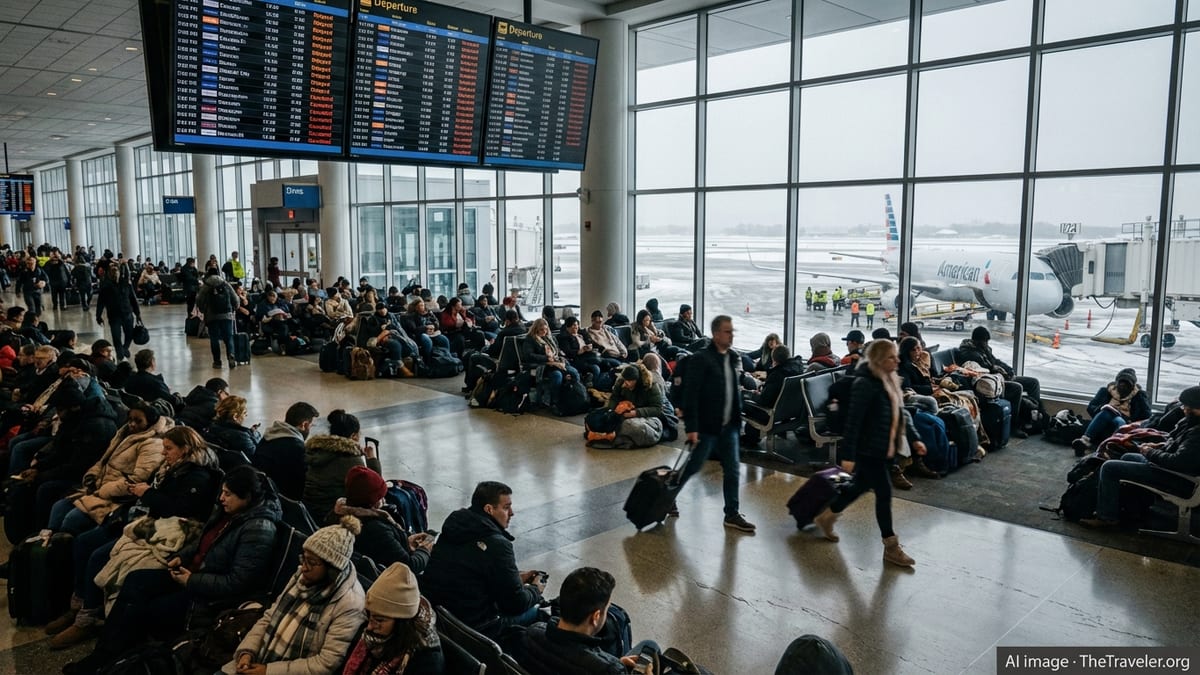
Severe Disruption Highlights Chicago’s Fragile Summer Operations
Recent summer travel days have underscored how vulnerable Chicago O’Hare International Airport remains to cascading disruption, with tracking data showing the airport repeatedly leading the United States for delays and cancellations. On one recent peak day, publicly available figures compiled from FlightAware and reported by industry outlets showed more than 3,000 delays and over 100 cancellations nationwide, with O’Hare the hardest hit airport as thunderstorms, congestion and staffing constraints converged.
Reports indicate that a shortage of air traffic controllers, combined with seasonal convective storms over the upper Midwest, has turned busy Fridays in particular into stress tests for airlines operating at O’Hare. The airport’s dual hub structure for United Airlines and American Airlines amplifies that pressure, since both carriers are pushing high summer schedules through a finite number of runways and departure slots.
Federal aviation planners have already warned that O’Hare’s peak schedules risk outstripping available capacity. According to published coverage of recent Federal Aviation Administration discussions, regulators have pressed United and American to pare back certain flights to prevent gridlock, a move that reflects concern that even minor weather events can now trigger widespread cancellations and delays radiating across the national network.
Against that backdrop, days with hundreds of disrupted flights at O’Hare have become a barometer of how different carriers manage recovery. While all airlines are exposed to the same weather and airspace constraints, their decisions on scheduling, spare aircraft and crew allocation can sharply influence how quickly they stabilize their operations once storms clear.
American’s Strategy: Capacity With Control
American Airlines has been rebuilding its O’Hare hub with an emphasis on both growth and control over its operation. Publicly available corporate commentary and earnings materials describe Chicago as a critical test of American’s broader turnaround plan, with the airline adding flights, upgrading aircraft and leaning on premium cabins to strengthen yields.
Industry analysis notes that American is working to refine what it calls a profit optimizing schedule, carefully deploying capacity where its network, loyalty program and corporate contracts are strongest. The strategy is intended to avoid overcommitting aircraft and crews at the most fragile times of day, a key distinction when storms force ground stops or traffic management initiatives at O’Hare.
According to coverage of American’s Chicago buildup, the airline has also invested in operational adjustments that support resilience, such as revising taxi patterns on crowded concourses and tweaking turn times. These granular changes, while less visible to passengers than a new route announcement, can reduce bottlenecks when the airport is trying to work through long queues of arrivals and departures after weather passes.
Data services that track on time performance at O’Hare show that several American mainline flights have posted solid reliability over the busy summer period. While no carrier has been immune from large scale disruption, American’s ability to keep a higher proportion of its schedule operating during some of the worst congestion days has been cited by analysts as evidence of a more disciplined approach to growth at its Chicago hub.
Hub Rivalry With United Shapes Passenger Experience
The dynamic between American and United at O’Hare is shaping how each carrier responds when the airport is under strain. Reports from financial and aviation industry outlets describe an increasingly intense contest for dominance in Chicago, with United emphasizing scale and American focusing on targeted growth and product upgrades.
United has pressed forward with an aggressive capacity push at O’Hare, arguing that its larger operation gives Chicago travelers more choices in destinations and frequencies. At the same time, commentary from airline analysts and competitors has suggested that flooding the schedule during peak periods raises the risk of operational breakdowns when the weather deteriorates or when air traffic control constraints intensify.
Coverage from aviation trade publications indicates that United has questioned whether American’s expansion at O’Hare is economically sustainable, referring to the carrier’s strategy as potentially irrational in an already crowded hub. Yet some industry observers counter that American’s more measured build up, combined with investments in premium seating and operational efficiency, may leave it better positioned to ride out days of mass cancellations without eroding passenger trust.
This rivalry has direct implications for travelers. When disruptions hit and hundreds of flights are canceled or delayed, the robustness of each carrier’s schedule, the availability of spare aircraft and crews, and the ability to rebook passengers quickly can translate into starkly different experiences even for customers departing from the same terminal complex.
Passenger-Centric Measures During Irregular Operations
During heavy disruption at O’Hare, publicly available information shows that American has leaned into tools that give passengers clearer visibility into their options. The airline has encouraged the use of its mobile app and website for proactive rebooking, allowing many travelers to select alternate flights without waiting in long airport lines, a practice that consumer advocates increasingly view as a best in class standard.
Travel industry reports note that American, like its major rivals, now details its service commitments during cancellations and long delays on a dedicated customer service dashboard. This transparency on meal vouchers, hotel accommodations and refund eligibility can help passengers understand what support they can expect when thunderstorms or congestion force schedule changes at O’Hare.
Analysts also point to American’s focus on premium cabins and loyalty customers at Chicago as a factor in how it manages disruption. With a higher proportion of seats tied to business and frequent travelers, the airline has strong incentive to maintain schedule integrity, protect key connecting banks and offer timely rebooking options when cancellations are unavoidable.
Consumer advocates caution that no airline consistently delivers seamless service on the worst weather days at O’Hare. Nonetheless, comparative coverage of recent disruption periods suggests that American’s investment in digital tools, plus a more calibrated approach to capacity, has helped it avoid some of the most severe knock on cancellations that have periodically plagued competitors during similar storm systems.
What American’s Example Means for Competitors
The latest waves of cancellations at Chicago O’Hare are reinforcing an industry wide lesson. Pushing maximum schedules through a constrained hub during peak travel months can backfire when weather and staffing issues collide, producing disruption that erodes customer loyalty and drives up costs for airlines.
American’s evolving strategy in Chicago, as described in financial disclosures and independent reporting, offers a contrasting template that rivals may study. By pairing capacity growth with operational fine tuning, and by channeling investment into both the onboard product and the behind the scenes mechanics of moving aircraft and crews through O’Hare, the airline is attempting to balance competitive ambition with reliability.
For other carriers at O’Hare and across the national network, the message is clear. In an era when flight tracking data and social media bring real time scrutiny to every cancellation wave, the ability to design schedules and recovery plans that can withstand summer storms may matter as much as the raw number of departures on the board.
As regulators, airport managers and airlines continue to debate how much flying O’Hare can realistically handle during peak seasons, American’s performance during recent rounds of mass cancellations will likely remain a key reference point. For travelers choosing between carriers on crowded days, the contrast in strategies could influence not just a single trip, but long term loyalty in one of the United States’ most important aviation markets.
Chicago O'Hare tops US flight chaos coverage
FAA and airline capacity concerns at O'Hare
Analysis of American's Chicago showdown with United
Coverage of capacity strategy tensions between United and American