


More news on this day
Thunderstorms sweeping across key East Coast hubs, coupled with already tight airline schedules and ongoing airspace constraints, are driving a fresh wave of flight delays and cancellations across the United States as the summer 2026 travel season winds down.
Get the latest news straight to your inbox!
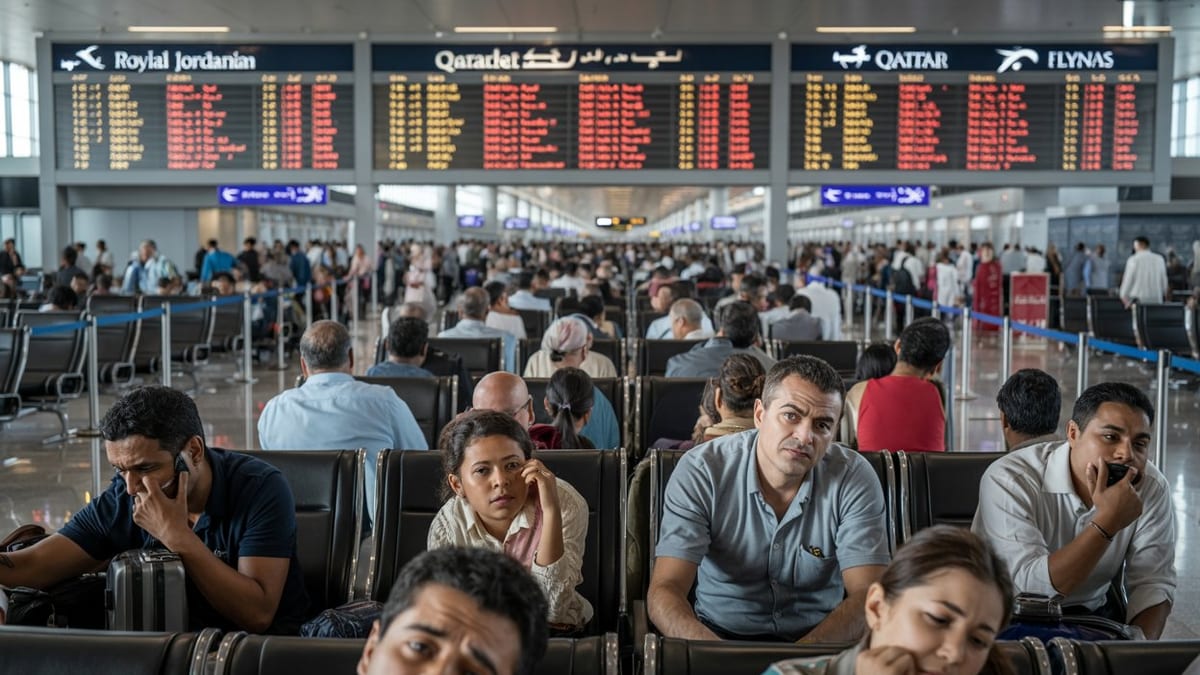
Weather and Congested Hubs Strain the System
Live aviation status feeds show significant departure delays at major Northeast airports heading into the Labor Day period, with Newark, John F. Kennedy, LaGuardia, and Philadelphia all reporting weather-related hold times of around an hour or more for many departures. Publicly available dashboards that aggregate Federal Aviation Administration (FAA) programs attribute much of today’s disruption to thunderstorms and low visibility in the New York and Mid-Atlantic corridor.
FAA airport advisories indicate that holding patterns, ground delay programs, and occasional ground stops are being used at several facilities to manage traffic, particularly at busy hubs where runway and airspace capacity are already heavily utilized. These measures are designed to maintain safety when storm systems move through, but they also quickly ripple through the national network, affecting flights well beyond the immediate weather-affected region.
Independent tracking sites that visualize delays and cancellations in real time report that weather-sensitive hubs on the East Coast are currently seeing some of the highest concentrations of disruption. These conditions add to longer-running operational restrictions at select high-traffic airports, where temporary limits on scheduled flights remain in place to help ease congestion and reduce chronic delays.
For travelers, the immediate result is a familiar pattern: late-afternoon and evening departures from the Northeast are especially vulnerable to rolling delays, missed connections, and, in some cases, same-day cancellations when crews and aircraft run out of position or exceed duty limits.
Data Shows a Network Under Pressure
While today’s conditions are shaped by fast-moving thunderstorms, federal data points to a broader story of a system operating with limited slack. The US Department of Transportation’s most recent Air Travel Consumer Reports, which summarize monthly airline performance through mid-2026, show that on-time arrival rates dipped during the early summer peak as storms and heavy demand converged.
According to a consolidated analysis of those government figures, industry-wide on-time arrivals hovered in the low- to mid-70 percent range for June 2026, down from shoulder-season months. In that same period, Alaska Airlines and Delta Air Lines led the major US carriers on punctuality, while several low-cost and leisure-focused airlines trailed the industry average with higher delay shares. The data underscores how even small storms or staffing issues can tip a tightly scheduled network into broader disruption.
Cancellation rates remain well below the extreme spikes seen during the pandemic recovery, but they are still elevated compared with pre-2020 baselines at some carriers. DOT reporting also breaks out the causes of delays and cancellations, splitting them across categories such as carrier-controlled issues, late-arriving aircraft, air traffic system constraints, security, and weather, highlighting that no single factor fully explains current traveler frustrations.
Transportation statistics compiled by the Bureau of Transportation Statistics further indicate that many of the largest US airports experienced a noticeable deterioration in on-time performance during the early summer, especially at hubs exposed to convective weather and heavy transcontinental traffic flows.
Labor Day Crowds Magnify Disruptions
Travel forecasts for the Labor Day period point to one of the busiest end-of-summer weekends in recent years, with national travel groups reporting strong demand for late-season getaways despite higher airfares and lingering operational uncertainty. Booking data and forward-looking analysis suggest that domestic air travel volumes around the holiday are set to edge above last year’s levels.
Consumer-facing advisories from travel organizations are urging passengers to build in additional time at the airport, monitor flight status closely, and be prepared for schedule changes as airlines work through both routine congestion and intermittent storms. Warnings emphasize that travelers departing from New York, New Jersey, and other East Coast gateways could be particularly exposed if storm systems stall over the region.
Historic Labor Day performance data compiled from federal on-time records show that the holiday weekend has often brought elevated delays at certain hubs, with some major carriers posting above-average cancellation rates on key days. Analysts note that tight turn times, full flights, and limited spare aircraft availability make it more difficult for airlines to recover when early delays cascade through the day.
With many peak-day flights already near capacity, rebooking options may be constrained once irregular operations take hold, leaving some travelers facing overnight stays or multi-stop routings in order to reach their destinations.
Airlines Balance Schedules, Staffing, and Reliability
Behind the scenes, airlines continue to adjust schedules and crew deployment in response to a more demanding operating environment. According to recent summaries of DOT performance data, several large carriers have modestly improved their year-over-year cancellation rates in 2026, helped by more conservative scheduling and incremental additions to spare aircraft and crew reserves.
However, public discussion among frequent flyers and aviation analysts suggests that some passengers are experiencing more frequent maintenance-related delays and same-day schedule changes, even as headline metrics show gradual improvement. Online forums and route-level data visualizations highlight the tension between maximizing aircraft utilization and maintaining enough buffer to absorb shocks from weather, airspace constraints, or equipment issues.
Federal notices relating to slot-managed and constrained airports indicate that regulators are continuing temporary flight caps at selected high-traffic hubs into 2026 to help keep congestion and delays in check. These measures are intended to prevent a return to the severe gridlock seen when airlines aggressively rebuilt capacity after the height of the pandemic but were still working through staffing shortages in key roles such as air traffic control.
Industry observers note that the persistence of these caps, combined with lingering staffing challenges in some parts of the aviation system, means that airlines have less room to add flights, especially at peak times, limiting flexibility when disruptions occur.
What Travelers Can Expect in the Coming Weeks
Looking ahead to the rest of September, historical statistics suggest that average delays often moderate slightly as the peak summer rush subsides. Nonetheless, the combination of active late-summer weather patterns and a system running close to capacity means that travelers should continue to expect pockets of disruption, particularly at large East Coast and Midwest hubs.
Real-time tracking tools from aviation data providers have become a central resource for many passengers trying to navigate this environment. These platforms aggregate airline and FAA data to show live cancellation counts, airport-specific delay programs, and network “misery maps” that visualize where bottlenecks are forming on a given day.
Analysts who work with federal on-time datasets point out that early-morning departures generally retain the highest likelihood of operating on schedule, while late-evening flights, and those involving tight connections through weather-prone hubs, remain the most vulnerable. As the latest round of storms passes and schedules normalize after Labor Day, performance data for late summer 2026 will offer a clearer view of whether the system is stabilizing or if elevated disruption is becoming a longer-term feature of US air travel.
For now, publicly available information indicates that the combination of strong demand, complex summer weather, and ongoing structural constraints in the air traffic system continues to put pressure on reliability across much of the US airline network.
Live Airline Flight Cancellations Statistics – FlightAware
US DOT Air Travel Consumer Reports – On-Time Performance and Cancellations
Flight Delays Today – Live US Airport Status
Bureau of Transportation Statistics – On-Time Performance Database
AAA Labor Day 2026 Travel Outlook