


More news on this day
American Airlines Group saw its share price gain about 1.6% as investors assessed a premium-focused strategy that is not expected to fully pay off until around 2028, signaling cautious confidence in the carrier’s long-term push to capture higher-yield travelers.
Get the latest news straight to your inbox!
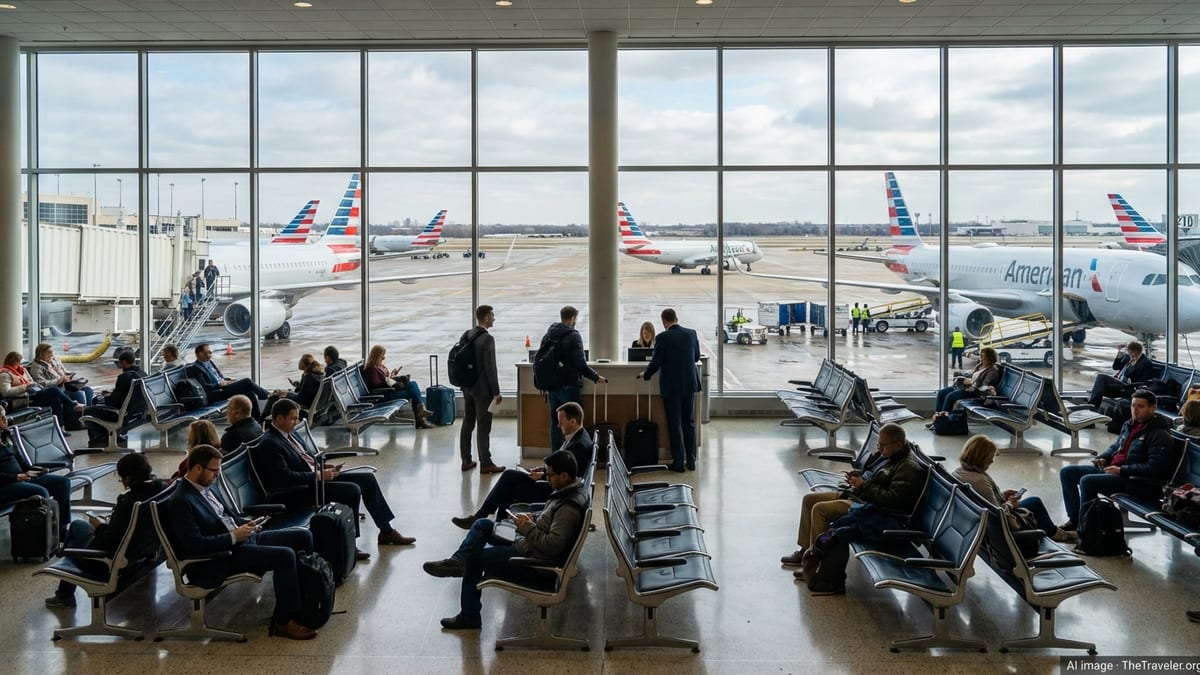
Market Reaction to a Long-Dated Turnaround Story
The latest move in American Airlines stock followed fresh scrutiny of its multiyear plan to rebuild around premium demand, including higher-spending leisure travelers and a gradual recovery in corporate traffic. Recent coverage of the carrier’s financial outlook indicates that Wall Street is balancing optimism about stronger premium revenue against concerns over weaker near-term earnings guidance.
Reports indicate that American is projecting a wide range of possible 2026 results, with adjusted earnings guidance stretching from a modest loss to a small profit. That spread reflects persistent cost pressures, volatile fuel prices and stiff competition from Delta Air Lines and United Airlines, which already generate higher margins from their premium-heavy networks. Despite that backdrop, the stock’s 1.6% gain suggests some investors see value in American’s discounted share price if its premium strategy can close the profitability gap over the next several years.
The market response also comes after a choppy run for the U.S. airline sector, where investors have alternated between enthusiasm for resilient demand and concern about rising capacity and pricing pressure. In that context, American’s shares appear to be trading as a leveraged play on a broader premium travel upcycle that analysts expect to extend into the late 2020s.
Inside American’s 2028-Oriented Premium Strategy
Public filings and investor materials show that American is in the midst of a sweeping effort to reconfigure its fleet around high-yield cabins. Presentation slides filed with regulators describe a goal of lifting lie-flat business and premium economy seating by roughly 50 percent by the end of the decade, anchored by new Boeing 787-9 and Airbus A321XLR aircraft and extensive retrofits across existing widebody jets.
On long-haul routes, American is upgrading Boeing 777-300ER aircraft with a new premium interior that increases business class capacity significantly while adding or expanding premium economy sections. Similar work is planned for 777-200ERs and select 787s, giving the airline more high-margin seats on transatlantic and transpacific flights where premium demand has remained comparatively robust.
The strategy is not limited to international flying. Investor presentations highlight ongoing retrofits of Airbus A319 and A320 aircraft, which are receiving refreshed cabins, larger overhead bins, powered seats and additional domestic first class seats. Executives have emphasized on recent earnings calls that these changes are designed to capture both traditional corporate travelers and a growing cohort of self-funded premium leisure passengers who are willing to pay more for comfort and amenities.
Taken together, these aircraft investments support the company’s stated ambition to compete as a premium global airline by the time it celebrates its centennial later this decade. However, the full revenue impact from the reconfigured fleet will build only gradually through 2028 and beyond.
Seatback Screens, Cabin Retrofits and a Narrowbody Refresh
A key component of the premium push involves a reversal of earlier decisions to strip back in-seat entertainment on domestic aircraft. Coverage from industry outlets and mainstream news organizations in recent days indicates that American plans to restore seatback screens to its narrowbody fleet, beginning with new Airbus and Boeing single-aisle deliveries arriving in 2028.
The carrier has also signaled a “massive retrofit” program to install personal entertainment displays on hundreds of existing narrowbody jets into the early 2030s. Combined with upgraded cabins and more first class seats, the project is intended to align the onboard experience more closely with rivals that have long marketed their screen-equipped cabins as a differentiator for business travelers and families.
Complementing these changes, American is continuing to roll out updated interiors on A319 and A320 aircraft, adding connectivity, new finishes and additional premium seating. Company communications in recent weeks have underscored that these enhancements are part of a broader effort to elevate the overall customer experience and justify higher average fares, particularly on high-frequency domestic routes where competition from low-cost carriers remains intense.
Analysts tracking the project note that the timeline means most of the benefits from the narrowbody refresh will not be fully visible in earnings metrics until late in the decade. That lag helps explain why investors are watching the interim financial performance closely, even as they reward signs of execution with incremental share price gains.
Balancing Debt Reduction, Capital Spending and Profit Gaps
American’s premium strategy is unfolding alongside significant balance sheet repair. Recent earnings releases and call transcripts show the airline has been paying down debt accumulated during the pandemic, with a stated goal of bringing total debt below a specified threshold by the end of 2027. Achieving that target while funding substantial aircraft deliveries and cabin retrofits presents a complex financial juggling act.
Publicly available information indicates that American expects higher premium revenue to help service this debt over time, but that assumption depends on continued strength in high-yield demand and disciplined capacity growth. Any downturn in the macroeconomy, renewed fare wars, or supply chain delays affecting aircraft deliveries could pressure the timeline for meeting both profitability and leverage goals.
At the same time, the airline is working to narrow its profit gap with Delta and United, which already operate large fleets of premium-equipped widebodies and have deeper track records of monetizing corporate contracts. Analysts point out that American’s plan to grow premium seating by about half by 2029 is ambitious, but argue that execution risks and competitive responses remain significant.
With the stock still trading at a discount to some peers on traditional valuation metrics, the modest 1.6% gain reflects a market trying to calibrate those risks against the potential upside if American succeeds in transforming its cabin mix and revenue base by the 2028 target horizon.
What the 2028 Target Means for Travelers
For passengers, the 2028 milestone effectively marks a pivot point when a critical mass of American’s aircraft is expected to feature the new premium products. By that stage, more long-haul flights should offer expanded business class suites and premium economy cabins, while a growing number of domestic and short-haul international routes are likely to see additional first class seats and refreshed interiors.
Travel industry research suggests that many high-income leisure travelers are prioritizing comfort, privacy and digital entertainment when choosing airlines, sometimes even over price. American’s decision to emphasize seatback screens, upgraded cabins and more premium seating is aligned with that trend, although the carrier will still need to compete on reliability, schedule and loyalty program value.
In the near term, customers may encounter a mixed experience as older cabin configurations operate alongside freshly retrofitted aircraft. By the late 2020s, however, American’s network is expected to look and feel more consistently premium, particularly at major hubs where retrofitted jets and new deliveries are concentrated.
For now, the modest lift in American’s share price following the latest round of premium-focused disclosures indicates that investors are willing to wait for 2028, but only so long as quarterly results continue to show tangible progress toward the strategy’s financial and operational goals.