


More news on this day
The death of a man who was sucked into the engine of a Frontier Airlines plane during its late-night takeoff roll from Denver International Airport is drawing renewed attention to a series of recent jet-engine fatalities on and around U.S. runways, raising concerns about perimeter security, ground-safety procedures, and the experience of ordinary travelers caught up in such incidents.
Get the latest news straight to your inbox!
Denver Runway Tragedy Under Intensifying Scrutiny
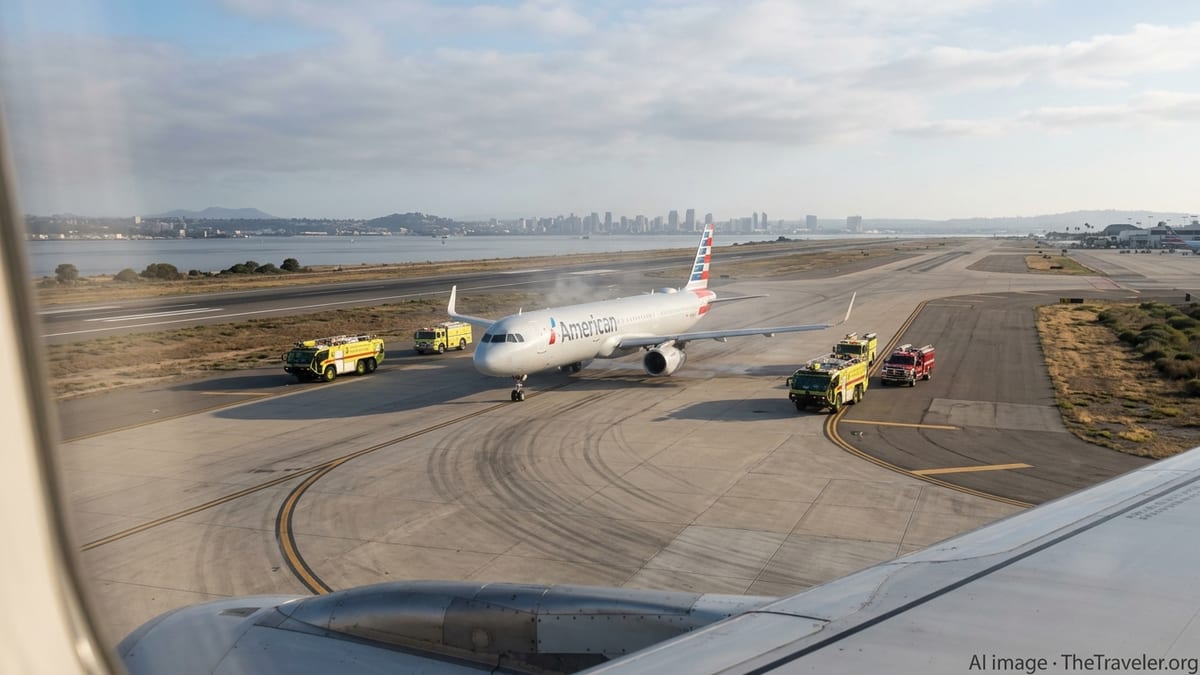
Published coverage indicates that the incident occurred on a Frontier Airlines flight departing Denver for Los Angeles, when the jet was accelerating along Runway 17L late at night. Reports describe a man breaching the airport perimeter, reaching the active runway and moving into the path of the aircraft just seconds before impact. The collision triggered a violent engine fire, forcing an immediate rejected takeoff and emergency evacuation of passengers onto the tarmac.
According to publicly available information, the Denver medical examiner later identified the trespasser as 41‑year‑old Michael Mott and determined that he died from multiple blunt and sharp force injuries consistent with being struck and ingested by the engine. Coverage in national and international outlets further reports that investigators concluded his death was a suicide, based on video evidence and background details that suggested he intentionally entered the runway.
CCTV footage described in broadcast and online reports shows the man climbing or crossing an outer fence, then walking with apparent deliberation across the pavement as the Frontier jet approached at high speed. Data cited from aviation tracking services indicates the aircraft had nearly reached takeoff speed before the pilots initiated maximum braking, leaving visible tire marks and debris scattered along the runway.
Passengers aboard the aircraft have described, in various media interviews, a sudden bang, a flash of light and the smell of smoke, followed by a chaotic evacuation down slides in darkness. While there were no additional fatalities, several travelers reported minor injuries and lingering psychological distress from witnessing the aftermath of the strike and the fire.
A Disturbing Record of Jet-Engine Ground Deaths
Analysts note that the Denver case is not an isolated event, but part of a troubling pattern of deaths linked to operating jet engines in recent years. Separate investigations by the National Transportation Safety Board, summarized in prior public reports, have detailed instances in which ground workers were fatally pulled into running engines during routine airline operations at U.S. airports.
One widely reported case involved a ramp agent at a regional carrier who died after being ingested into an engine as the aircraft parked with its power still running. NTSB documentation reviewed by aviation media indicates that the worker had been warned repeatedly not to get too close while the engine was on. The report concluded that proximity to the intake, even at relatively low power settings, posed a lethal risk that can be underestimated in noisy, high-pressure ramp environments.
Other documented incidents have involved maintenance or ground-service personnel who moved in front of engines that were still spinning down, or who entered restricted zones around intakes while aircraft were being repositioned. Safety specialists interviewed in trade publications say that, although such accidents are rare compared with overall flight volume, their circumstances often reveal gaps in training, supervision, or adherence to written procedures.
Viewed alongside the Denver fatality, these episodes underscore how lethal jet engines can be to anyone, authorized or not, who enters their immediate vicinity. Unlike previous cases centered on airline employees, however, the Frontier event involved an off-airport trespasser who circumvented security barriers and surveillance systems to reach an active runway at precisely the wrong moment.
Security Breach Raises Questions for Airports Nationwide
Reports from aviation and general news outlets state that the Denver incident has prompted a broader review of airport perimeter security, especially at large hubs bounded by long stretches of fencing, open fields and service roads. Security specialists quoted in recent analyses note that many U.S. airports rely on fences of six to eight feet topped with barbed wire, along with cameras, patrols and intrusion-detection systems, but that determined individuals can still find weak points.
Published commentary highlights that most U.S. perimeter breaches do not end in fatal collisions, often involving confused travelers, intoxicated individuals or people in mental health crisis who wander into restricted areas. However, the Denver case has intensified debate about whether current fencing standards, lighting and motion sensors are sufficient around high-speed runway environments where any intrusion can become catastrophic within seconds.
Industry observers point out that airports must balance security with operational needs, such as access roads for emergency vehicles and maintenance crews, while also working within budget and regulatory constraints. Retrofitting miles of fencing with higher barriers or advanced sensor networks can be costly, and there is ongoing discussion about which upgrades yield the most meaningful risk reduction.
For travelers, the most immediate consequence of such breaches tends to be operational disruption. In Denver, public information shows that the Frontier flight was canceled following the accident, with the runway temporarily closed and subsequent departures delayed or rerouted while investigators documented the scene and engineers inspected the affected engine and pavement.
Frontier’s Safety Reputation Under the Microscope
Although Frontier Airlines did not cause the trespasser’s decision to enter the runway, the graphic nature of the Denver crash has renewed scrutiny of the ultra-low-cost carrier’s overall safety and reliability record. Aviation databases and regulatory filings cited in news coverage generally describe Frontier as having a young fleet and no history of fatal passenger crashes, but the airline has faced a series of headline-grabbing incidents and customer complaints in recent years.
Reports have chronicled emergency landings involving Frontier aircraft, such as an Airbus experiencing brake or tire problems on arrival, as well as inflight disturbances that required passengers and crew to restrain disruptive individuals. While many of these episodes ended without serious injury, they have contributed to a perception among some travelers that budget carriers may be more chaotic or less predictable, even if their core safety statistics remain comparable to larger airlines.
Travel forums and consumer columns frequently cite frustrations with customer service, rebooking policies and lengthy delays when Frontier flights are canceled or diverted. Analysts caution, however, that such complaints speak more to operational and commercial issues than to underlying engineering safety or maintenance standards, which remain subject to the same federal oversight as other U.S. carriers.
In the wake of the Denver engine death, airline-industry commentators suggest that the incident could further shape public attitudes toward flying with Frontier, particularly among infrequent travelers who are more sensitive to sensational headlines than to statistical safety data. At the same time, they note that the event highlights risks that extend beyond any single airline, encompassing airport design, mental health crises and gaps in ground-security systems shared across the industry.
What the Pattern Means for Future Travelers
The string of jet-engine ground fatalities, culminating in the dramatic Denver runway death, is prompting calls from safety advocates and some policymakers for a more holistic approach to risk management around airports. Rather than focusing solely on airlines or flight crews, these voices are urging regulators and airport operators to pay closer attention to the interface between secure zones, surrounding communities and people in distress.
Proposals discussed in public forums and policy papers include enhancing mental health outreach near major transportation hubs, improving coordination between local law enforcement and airport security teams, and upgrading perimeter monitoring with smarter sensors capable of distinguishing wildlife from human intruders. Some commentators also argue for revisiting guidance on when aircraft should begin high-power acceleration in relation to the proximity of fences and service roads.
For passengers, the most visible changes may come in the form of occasional delays, diversions or heightened security presence when anomalies are detected near runways or taxiways. Travel experts point out that, while these interruptions can be frustrating, they are often a sign that safety systems are functioning as intended by halting operations until potential threats are resolved.
As the investigation into the Frontier engine death continues and additional recommendations emerge, the Denver tragedy is likely to remain a touchstone in the wider discussion of how to keep modern air travel safe not only in the skies, but also in the complex, tightly choreographed environment on the ground.