


More news on this day
American Cruise Lines is accelerating a new era in United States river cruising, rolling out next generation vessels for both the Mississippi and the Columbia and Snake river systems as demand for domestic, small ship travel climbs to record levels.
Get the latest news straight to your inbox!
New Tonnage on Two Historic River Systems
Publicly available fleet data and recent company materials indicate that American Cruise Lines is in the midst of one of the most aggressive expansion programs in US river cruising, with new tonnage dedicated to both the Mississippi River basin and the Columbia and Snake Rivers in the Pacific Northwest. The latest round of newbuilds and redeployments is designed to give the company broader coverage of these historic waterways and to lengthen itineraries that connect multiple regions in a single voyage.
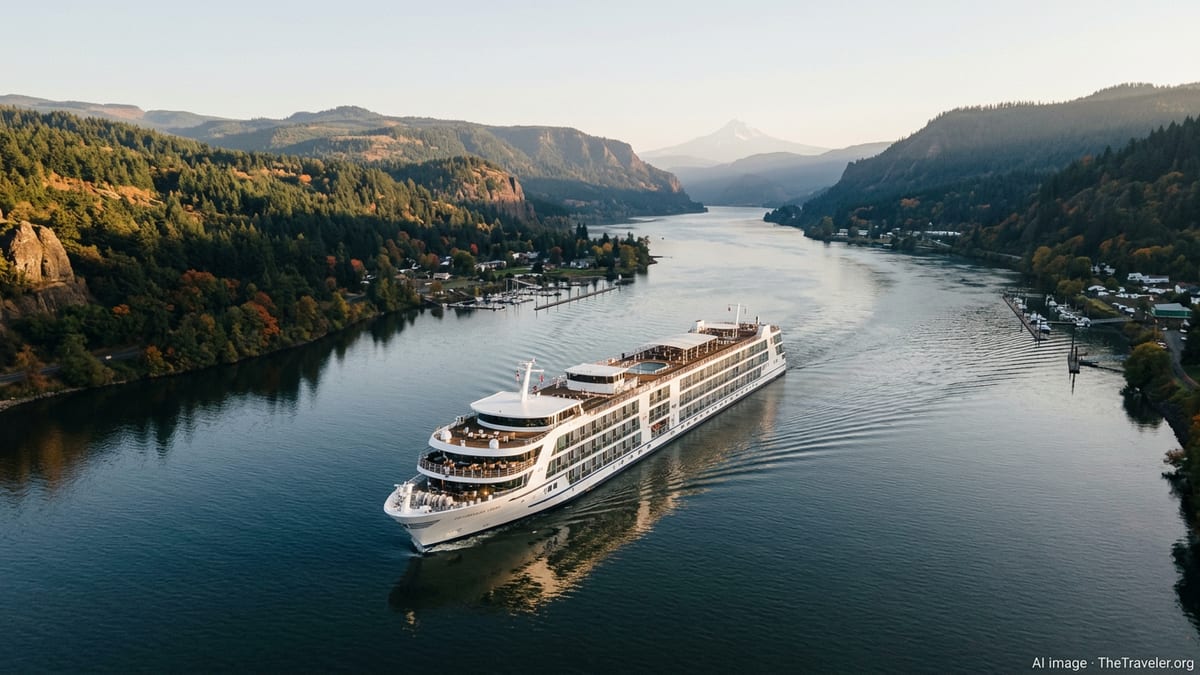
On the Columbia and Snake, the next generation riverboat American Encore has become the line’s newest flagship in the region, sailing extended seasons between May and November. The vessel is part of a trio of modern riverboats, alongside American Anthem and American Grace, scheduled to operate in the Pacific Northwest between 2026 and 2028. These ships are built with contemporary profiles, large balcony cabins and hotel style amenities intended to appeal to travelers who might otherwise head to Europe’s Danube or Rhine.
Along the Mississippi system, American Cruise Lines continues to deploy its modern riverboat class, including ships such as American Melody, American Symphony and American Serenade, and has integrated this new capacity into a broader web of itineraries that extend onto tributaries such as the Ohio, Cumberland, Tennessee and Arkansas Rivers. Company releases over the past year describe a network approach, with vessels able to move between segments of the Mississippi basin as new one way and extended cruises are added.
Together, these moves have positioned the Connecticut based operator as the central player in what industry observers describe as a US river cruise revival, with the Mississippi and the Columbia systems acting as the twin pillars of growth.
Mississippi Network Expands With Longer Routes
Recent announcements about Mississippi expansion show American Cruise Lines leaning into longer, more complex itineraries that link cities and regions previously offered only as standalone cruises. New extended sailings, tied in part to commemorations of the United States’ 250th anniversary in 2026, now string together stretches of the Lower and Upper Mississippi with secondary rivers, effectively turning the inland waterways into a cross country cruise grid.
One example highlighted in published company material is an itinerary that pushes deep into the Tennessee River, marketed under the Mississippi program because it connects directly into the broader Mississippi network. Other cruises now reach into the Arkansas River and additional tributaries, made possible by the shallow draft and flexible design of the modern riverboat fleet. These ships are able to dock at smaller riverfront communities that could not previously accommodate larger vessels.
The company has paired tonnage growth with investments in infrastructure along the river. Information released in 2025 outlined new dock projects in communities such as Natchez, Mississippi and Kenner, Louisiana, as well as work on additional landings along the Mississippi and its tributaries. The goal, according to these materials, is to secure more dedicated berths and improve waterfront access, both for cruise guests and for local residents.
For travelers, the result is a menu of Mississippi based voyages that can run from classic weeklong segments to multi week journeys that cross several states, mirroring the style of European grand river itineraries but staying entirely within US borders.
Columbia and Snake Rivers Enter a New Era
On the opposite side of the country, the Columbia and Snake Rivers are undergoing a parallel transformation. According to a March 2026 release, American Encore has completed sea trials and is leading a new wave of modern riverboats purpose built for the region, with additional sister ships American Anthem and American Grace scheduled to follow later in the decade.
The Columbia and Snake program now features cruises ranging from around nine to sixteen days, including national parks themed itineraries that connect river sailing with land based exploration in Yellowstone, Glacier and Grand Teton. The company’s materials emphasize that the expanded fleet, which includes eight riverboats dedicated to the Columbia and Snake, enables longer routings that explore the full sweep of the rivers, from the mouth of the Columbia at the Pacific to the dramatic landscapes of Hells Canyon.
In March 2026, American Cruise Lines also unveiled a new sixteen day Grand Columbia and Snake Rivers cruise, scheduled to begin in 2027 aboard the brand new riverboat American Anthem. That itinerary, operating roundtrip from the Portland, Oregon area, is planned to sail west to Astoria at the Pacific coast before turning back east through the Columbia Gorge, into the Snake River and up to Hells Canyon, effectively tracing the entire navigable corridor.
The concentration of capacity and the introduction of longer voyages along the Columbia and Snake have turned the Pacific Northwest into one of the most competitive river cruise regions in North America, providing an alternative to international trips at a time when many US travelers are seeking to stay closer to home.
Next Generation Design Targets New Cruisers
American Cruise Lines describes its latest vessels as modern riverboats, intentionally distinct from traditional paddlewheelers that long dominated US river cruising. Fleet lists and images show sleek superstructures, expansive glass, multi story lounges and a high proportion of staterooms with private balconies, features more commonly associated with European river cruise hardware.
The ships slated for duty on the Mississippi and the Columbia systems follow that template. American Encore, already in service in the Pacific Northwest, and its upcoming sister ships incorporate large cabin footprints, open sundecks and casual dining venues intended to appeal to a younger and more active demographic than the classic river passenger profile. Publicly available descriptions also highlight upgraded technology on board, including enhanced connectivity and more efficient propulsion.
At the same time, the company is maintaining a mix of vessel styles, keeping refurbished paddlewheelers such as American Heritage on select routes while deploying modern riverboats on others. This blend allows itineraries that can be marketed to fans of nostalgic river travel, alongside voyages that resemble contemporary small ship cruising.
Travel trade coverage suggests that this hardware strategy is helping to expand the overall river cruise market in the United States, attracting guests who might previously have chosen coastal or ocean cruising and introducing them to inland itineraries instead.
Economic Ripple Effects Along US Waterways
The acceleration of shipbuilding and itinerary development on both the Mississippi and the Columbia systems is also generating wider economic effects along the river corridors. Company communications emphasize partnerships with small towns and ports, citing examples where new docks and dedicated landings have been added to enable regular calls by the new vessels.
These projects are particularly significant for communities that sit off the main interstate and air travel grid. With ships now bringing hundreds of guests at a time to riverfront downtowns, local tour operators, restaurants, museums and shops receive a new flow of seasonal business. In the Pacific Northwest, the enhanced Columbia and Snake schedule is expected to push more visitor traffic into smaller river communities, not only major hubs such as Portland.
On the Mississippi and its tributaries, American Cruise Lines’ expansion into rivers such as the Tennessee and Arkansas has opened new tourism corridors in regions better known for road trips than for cruising. Reports indicate that local officials have supported dockside improvements as a tool for long term economic development, with river cruising viewed as a way to diversify visitor profiles beyond traditional drive market travelers.
With more new ships scheduled to enter service through 2028, both on the Mississippi and on the Columbia and Snake, analysts expect the US river cruise market to continue growing from a niche segment into a more visible part of the country’s tourism landscape, anchored by American Cruise Lines’ latest vessels on these two storied waterways.